Suriname is set to pull its fast-growing crypto sector into a formal licensing regime, a shift that could reshape how digital-asset firms operate in the country and how regulators manage financial stability, foreign exchange and illicit-finance risks.
Suriname Drafts Crypto Licensing Rules for Firms
Bitcoin
Under the draft Wet Toezicht Virtuele Activa Dienstverleners, companies offering services tied to cryptocurrencies and other virtual assets would need authorization from the Centrale Bank van Suriname, or CBvS, before operating professionally. That matters because it would end the current free-entry model and replace it with a gatekeeper system designed to bring Suriname closer to international anti-money-laundering and counter-terrorist-financing standards.
Sentiment Indicators
The policy change is economically significant for a small, open economy that depends heavily on confidence in its financial system and access to external capital. By explicitly allowing the central bank to weigh the impact of virtual-asset businesses on monetary policy, payment flows, foreign-exchange markets and financial stability, the bill suggests Suriname is treating crypto not as a niche technology but as a potentially system-relevant financial activity.
For investors, the move is a double-edged development. A licensing regime can reduce regulatory uncertainty, improve market credibility and make the country more investable for compliant platforms, payment firms and fintech providers. But it also raises compliance costs and may shut out smaller operators that cannot meet capital, governance and fit-and-proper requirements. The CBvS would be able to attach conditions or restrictions to licences, giving it broad discretion over who can participate and on what terms.
The bill’s emphasis on reliability checks for management and on the financial strength of applicants mirrors a wider global tightening after a series of crypto breaches and control failures across the industry. That backdrop matters for Suriname because regulators are under pressure to prevent gaps in oversight from turning the country into a weak link in cross-border financial supervision.
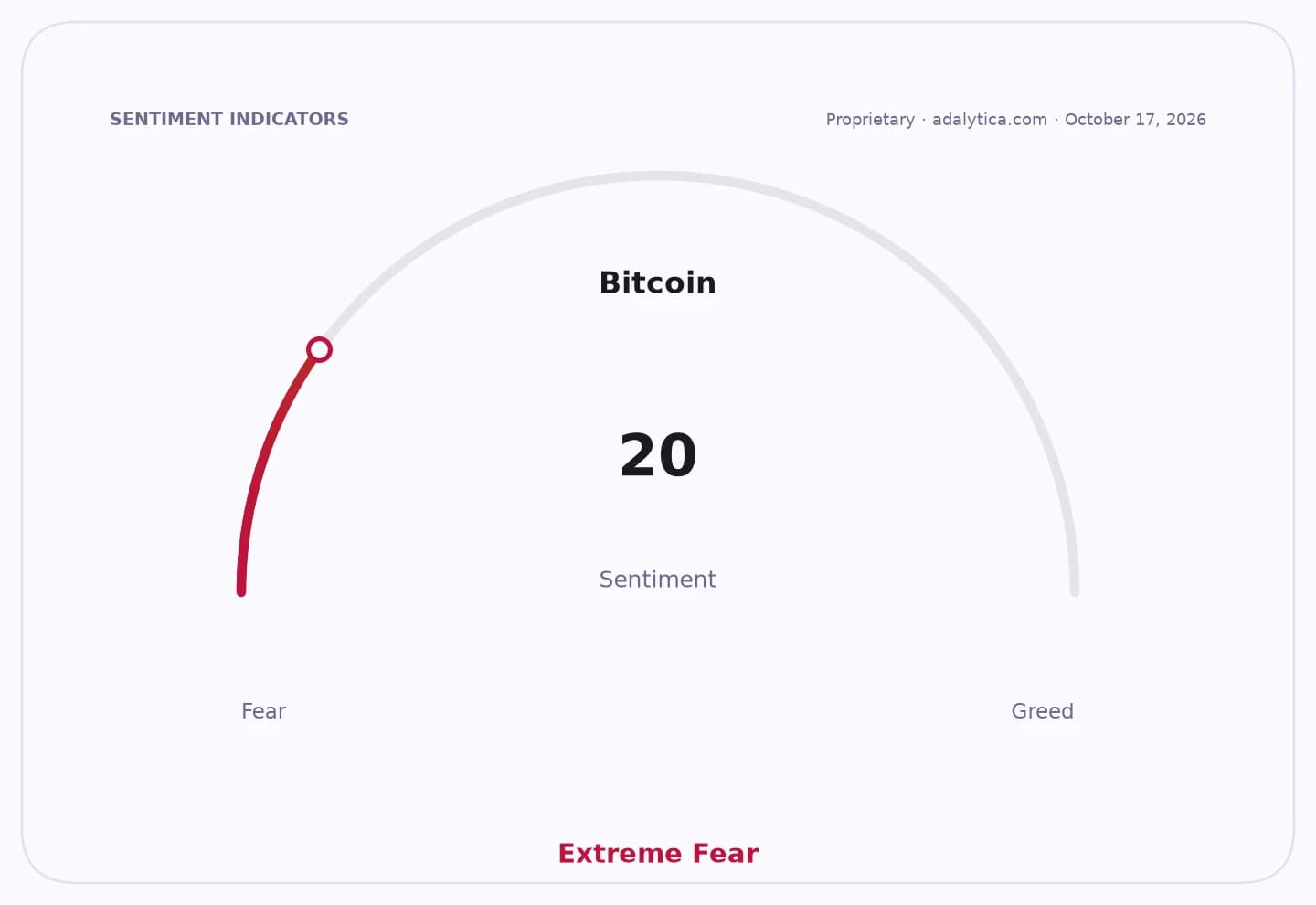
The timing is notable against a volatile market backdrop. Bitcoin has been trading well below its recent highs, and standard technical indicators point to renewed weakness: the token is below its 50-day moving average, its RSI has slipped toward oversold territory and momentum has turned negative again. Adalytica’s Bitcoin Fear & Greed Index sits at 4, or “Extreme Fear,” underscoring how fragile risk appetite remains across digital assets.
Listed crypto-related shares have also reflected that strain. Coinbase and MicroStrategy have both fallen sharply from recent levels, showing that regulation, market structure and risk sentiment still move valuations almost as much as coin prices themselves. For exchanges and service providers, clearer rules in Suriname may not move the global market, but they add to a broader pattern: the industry is being pushed away from the era of lightly supervised expansion and toward one where licensing, governance and capital discipline are becoming a competitive advantage.
For Suriname, the key question is execution. If lawmakers and the CBvS implement the framework with clarity and consistency, the country could gain a more orderly market and better control over financial risks. If the regime is overly restrictive or slow to approve firms, it may suppress innovation and drive activity offshore. Either way, the decision marks a clear turning point: crypto in Suriname is moving from an open-access market to a supervised financial sector.
| Entity | Gains | Losses |
|---|---|---|
| CBvS / Surinamese regulators | ▲More oversight power | ▼Less laissez-faire access |
| Licensed crypto firms | ▲Regulatory clarity | ▼Higher compliance costs |
| Unlicensed operators | ▲None | ▼Market exclusion |
| Investors / users | ▲Better safeguards | ▼Fewer easy market entrants |