Suriname’s inflation rate slipped to 7.3% in September, a sign the country’s price surge is continuing to cool and giving households and policymakers a little more breathing room.
Suriname inflation falls to 7.3% in September
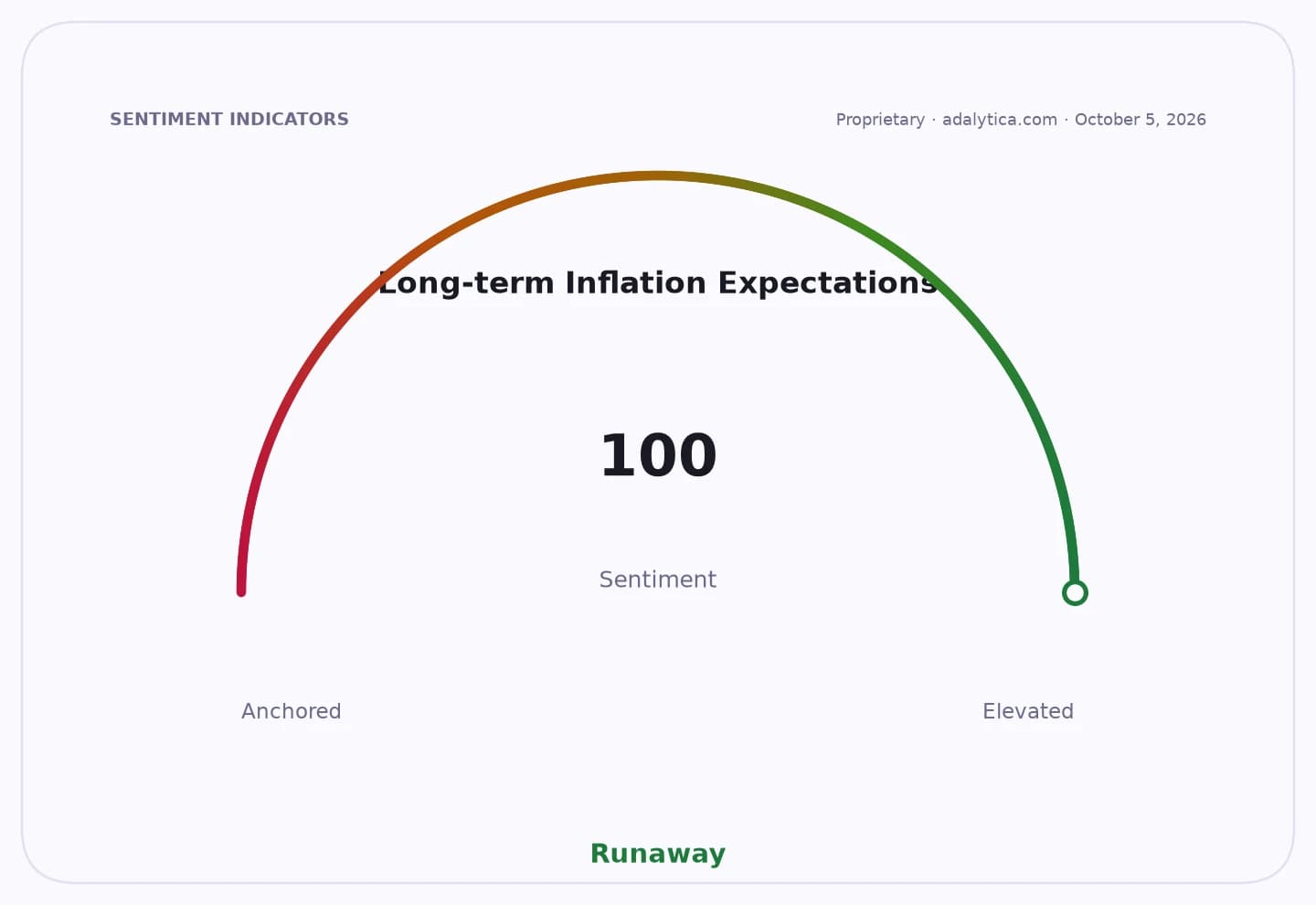
Long-term Inflation Expectations
That matters because inflation is still elevated, but the direction is finally moving the right way. Consumer prices rose just 0.1% from August, according to the Statistics Bureau, after annual inflation stood at 8% in August. For a small import-dependent economy like Suriname, even a modest easing can help stabilize real incomes, reduce pressure on wages and improve confidence that the worst of the price spike may be passing.
Sentiment Indicators
For investors, the key question is whether this is the start of a durable disinflation trend or just a temporary pause. A slower inflation path can support consumer spending, improve visibility for businesses and reduce the need for tighter policy. It also tends to matter for local borrowing costs, currency stability and the valuation of any assets tied to Suriname’s domestic economy, because lower inflation generally means less erosion of purchasing power and fewer shocks to operating margins.
The broader backdrop suggests caution, not complacency. Inflation is still far above levels that would feel comfortable for households, and the latest monthly increase shows prices are not falling outright, only rising more slowly. But the trend is improving, and that is often how stabilization begins: not with a dramatic drop, but with several months of smaller gains that gradually rebuild trust in the currency and the economy.
Adalytica’s long-term inflation expectations gauge is flashing extreme fear, which underscores how fragile confidence remains even as headline inflation eases. That makes the next few readings important. If the slowdown persists, Suriname could move closer to a more predictable inflation environment, which is exactly what long-term investors want to see before committing capital. For now, this looks worth watching rather than celebrating.
| Entity | Gains | Losses |
|---|---|---|
| Suriname households | ▲purchasing power improves | ▼real living costs stay elevated |
| Domestic businesses | ▲pricing stability | ▼margin pressure from higher costs |
| Policymakers | ▲room to avoid tighter policy | ▼little room for complacency |
| Savers and investors | ▲better inflation visibility | ▼inflation-linked uncertainty fades slowly |