Auto demand for new crossovers and SUVs has jumped 24% in six months, and that shift matters far more than a single monthly sales print: it is steering capital, pricing power and product strategy toward the vehicles that now define the market.
SUV demand boosts automakers and suppliers
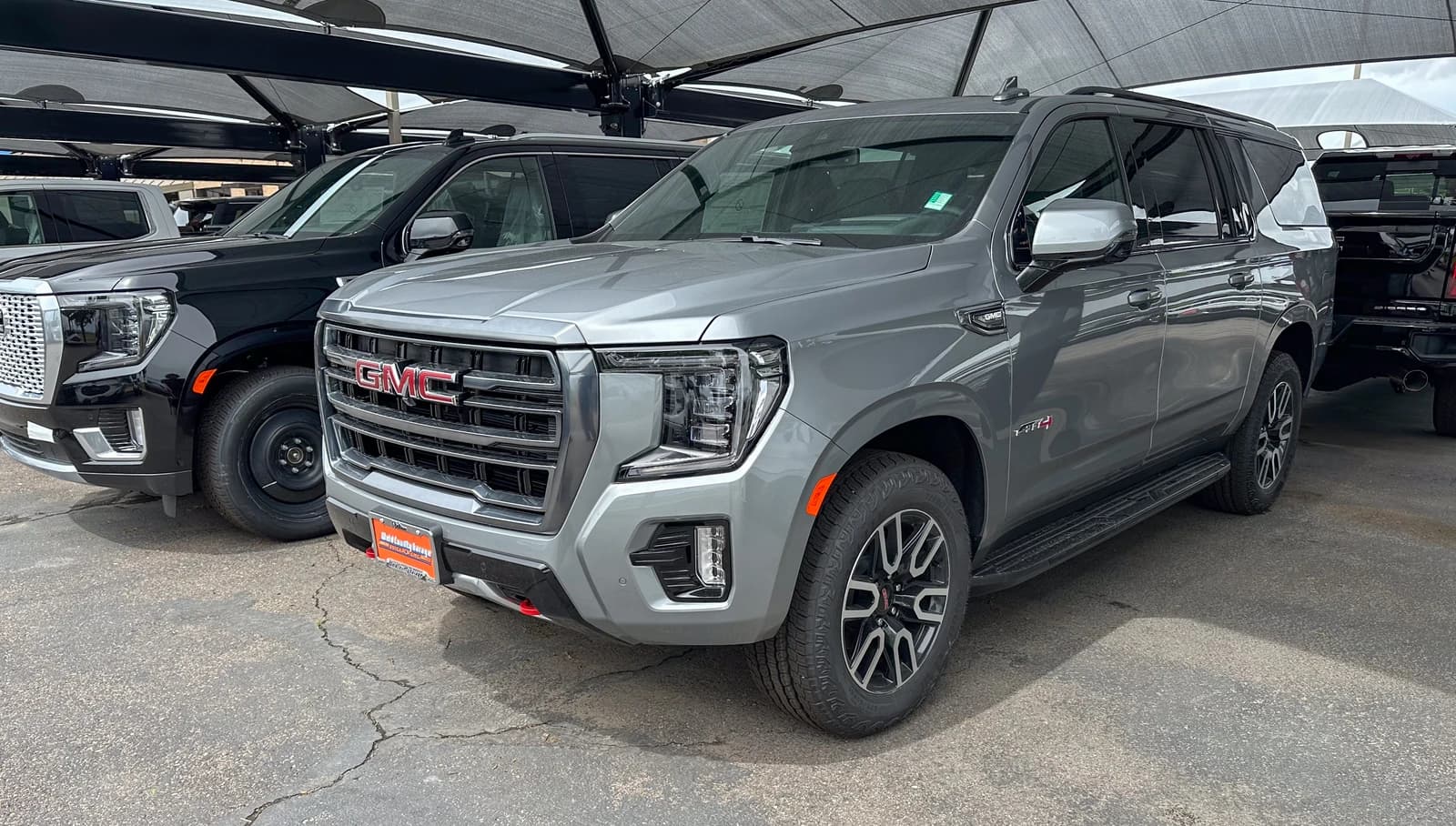
The economic significance is straightforward. Crossovers and SUVs are the profit center of the global auto industry, carrying richer margins than small cars and giving manufacturers more room to absorb input costs, promotions and tariff noise. When shoppers move up the size and feature ladder, the entire value chain re-rates: makers can push higher average selling prices, suppliers see stronger demand for larger platforms and content-heavy trims, and dealers get a product mix that supports profitability even if unit growth stays modest.
Sentiment IndicatorsⓘProprietary · adalytica.com · July 15, 2026
This is a snapshot — live sentiment, awareness and momentum for 130+ markets update continuously in the dashboard.Open AlphaPulse

The latest data underscore that this is not a one-off blip. U.S. industrial production has continued to grind higher, pointing to an economy that is still producing enough income to support bigger-ticket vehicle purchases even as housing weakens. At the same time, housing starts have slumped, a reminder that consumers are not reallocating toward homes so much as toward mobility and discretionary durability. That is exactly the kind of backdrop that favors SUVs: they are aspirational, practical and easier to sell when families want value without sacrificing utility.
The market is already beginning to sort winners from laggards. Tesla’s shares have been volatile and its recent technical profile, with the stock around its 200-day moving average and a softer RSI reading, suggests investors are no longer willing to pay peak enthusiasm for a company that still depends on product cadence and margin resilience. Ford, by contrast, has shown better relative momentum as investors lean into the company's truck and SUV franchise, where demand is more durable and the commercial logic is clearer. General Motors also stands to benefit from mix improvement if the SUV cycle stays hot, especially because larger vehicles help offset pressure in lower-margin segments.
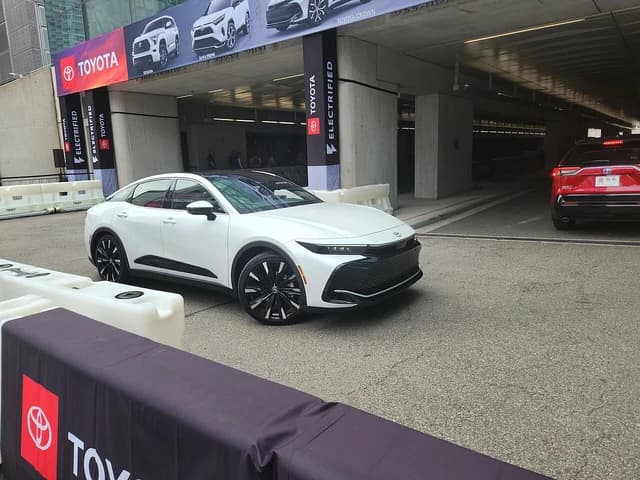
Investors should also pay attention to the second-order effect: the SUV boom is not just about the automakers, it is about the industrial ecosystem around them. Platforms built for crossovers and SUVs require more content, more software, more battery capacity in the electric versions and more safety features, which supports suppliers, chargers, materials and semiconductor demand. That is why the market underestimates this trend when it treats it as a simple preference shift rather than a capex cycle.
The newer models being rolled out globally reinforce the thesis. Nissan’s Tekton is drawing record bookings ahead of launch, Kia is widening its compact SUV lineup, and Toyota, Genesis, Honda and Volkswagen are all pushing deeper into both conventional and electric SUV offerings. That is the industry saying the same thing consumers are saying: this is where the volume and the margins are going.
The next catalyst is likely to be product-driven, not macro-driven. As more launches hit showrooms and electric SUV offerings expand, the companies with the strongest SUV pipelines should keep taking share. For investors, that argues for staying overweight the automakers and suppliers most exposed to crossover and SUV demand, while remaining selective on pure EV names that lack the same mix advantage. In this market, the asymmetric opportunity is not in chasing every carmaker — it is in owning the toll roads of the SUV boom before consensus fully catches up.
| Entity | Gains | Losses |
|---|---|---|
| SUV makers | ▲Higher margins | ▼Small-car producers |
| Ford & GM | ▲Better mix | ▼EV-only growth stories |
| Suppliers | ▲More content demand | ▼Low-margin commoditized parts |
| Tesla | ▲None from legacy SUV boom | ▼Valuation multiple support |