Sweden’s government deadlock is being shaped less by arithmetic in parliament than by an old-fashioned clash over migration, with think tanks linked to the Centre Party and the Sweden Democrats saying a joint governing arrangement is effectively off the table.
Sweden coalition deadlock centers on migration
That matters because Sweden’s next coalition will help determine whether the country gets a stable majority or another round of policy paralysis. For investors, the bigger issue is not which party wins a procedural vote, but whether a fragmented parliament can still deliver the predictability businesses and markets need on taxes, labor supply and immigration policy.
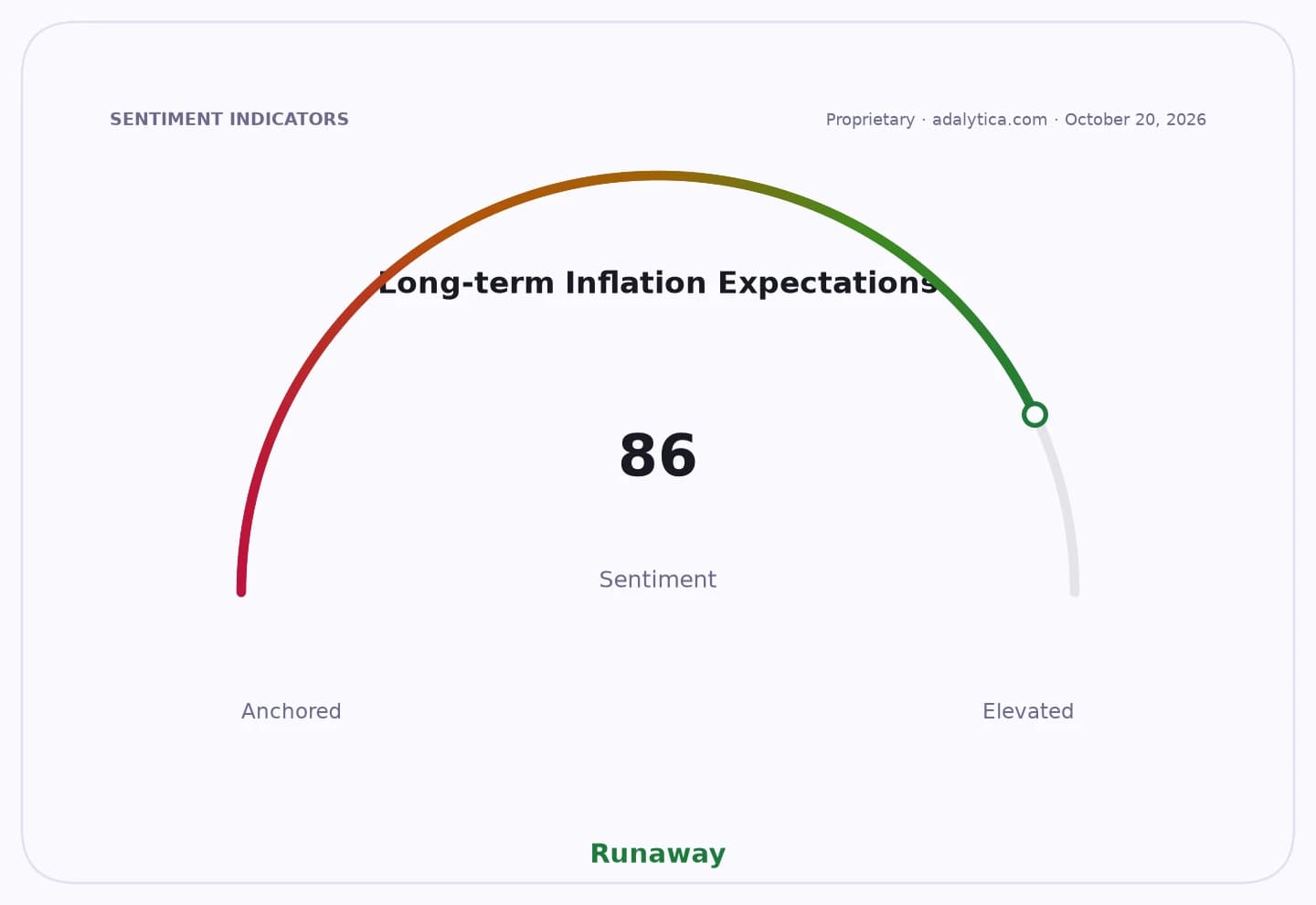
Sentiment IndicatorsⓘProprietary · adalytica.com · October 23, 2026
This is a snapshot — live sentiment, awareness and momentum for 130+ markets update continuously in the dashboard.Open AlphaPulse
The latest comments from Fores and Oikos underline how hard compromise has become. Arvid Hallén of the SD-linked Oikos said migration policy is central to the Sweden Democrats’ identity and that the party will not retreat. Eric Luth at the Centre Party-linked Fores said any cooperation would require major concessions, including a more liberal stance on labor immigration and an end to the current deportation policy. He also said the Sweden Democrats would have to drop its demand for ministerial posts. In plain terms, the ideological gap is still too wide to bridge.
That leaves Sweden’s political landscape in a familiar bind. The Centre Party is being asked to play kingmaker after Magdalena Andersson failed to secure enough backing to form a government, but the route to a stable cabinet still runs through parties that disagree sharply on migration and coalition rules. The result is a more fragile policy outlook at a time when investors generally reward clarity over drama.
For long-term investors, the immediate market reaction may be muted, but the economic significance is real. Sweden depends on migration policy both as a political fault line and as a practical lever for labor supply, especially in sectors that already face worker shortages. A prolonged standoff could keep reform bottled up, complicate hiring conditions and delay decisions that matter more over years than days. That is why coalition math in Stockholm can matter to the investment case for Swedish assets just as much as earnings season does.
The broader message is simple: the Centre Party and the Sweden Democrats may be forced into the same parliamentary ecosystem, but that does not mean they can govern together. Until one side softens its stance on migration or accepts a looser support arrangement, Sweden’s next government will remain difficult to build and even harder to stabilize. Investors should keep it on the watchlist, because political deadlock is rarely a good backdrop for compounding.
| Entity | Gains | Losses |
|---|---|---|
| Centre Party | ▲Kingmaker leverage | ▼Policy flexibility |
| Sweden Democrats | ▲Agenda visibility | ▼Coalition access |
| Swedish businesses | ▲None yet | ▼Policy certainty |
| Investors in Sweden | ▲Potential reform clarity | ▼Government stability |