Sweden’s far right has suffered its first electoral setback after years of setting the tone on immigration, a result that matters far beyond one party’s fortunes because it could slow Europe’s drift toward harder-line politics.
Sweden Democrats Lose Ground in Election
The Sweden Democrats, long the country’s most powerful anti-immigration force, saw support fall for the first time in the party’s history in the Sept. 13 general election, even after years of influence that helped push restrictive policies into the mainstream. Prime Minister Ulf Kristersson resigned four days later, opening the way for center-left Social Democrats to try to build a coalition, but the broader policy direction may not change much unless the next government is willing to reverse a raft of measures already on the books.
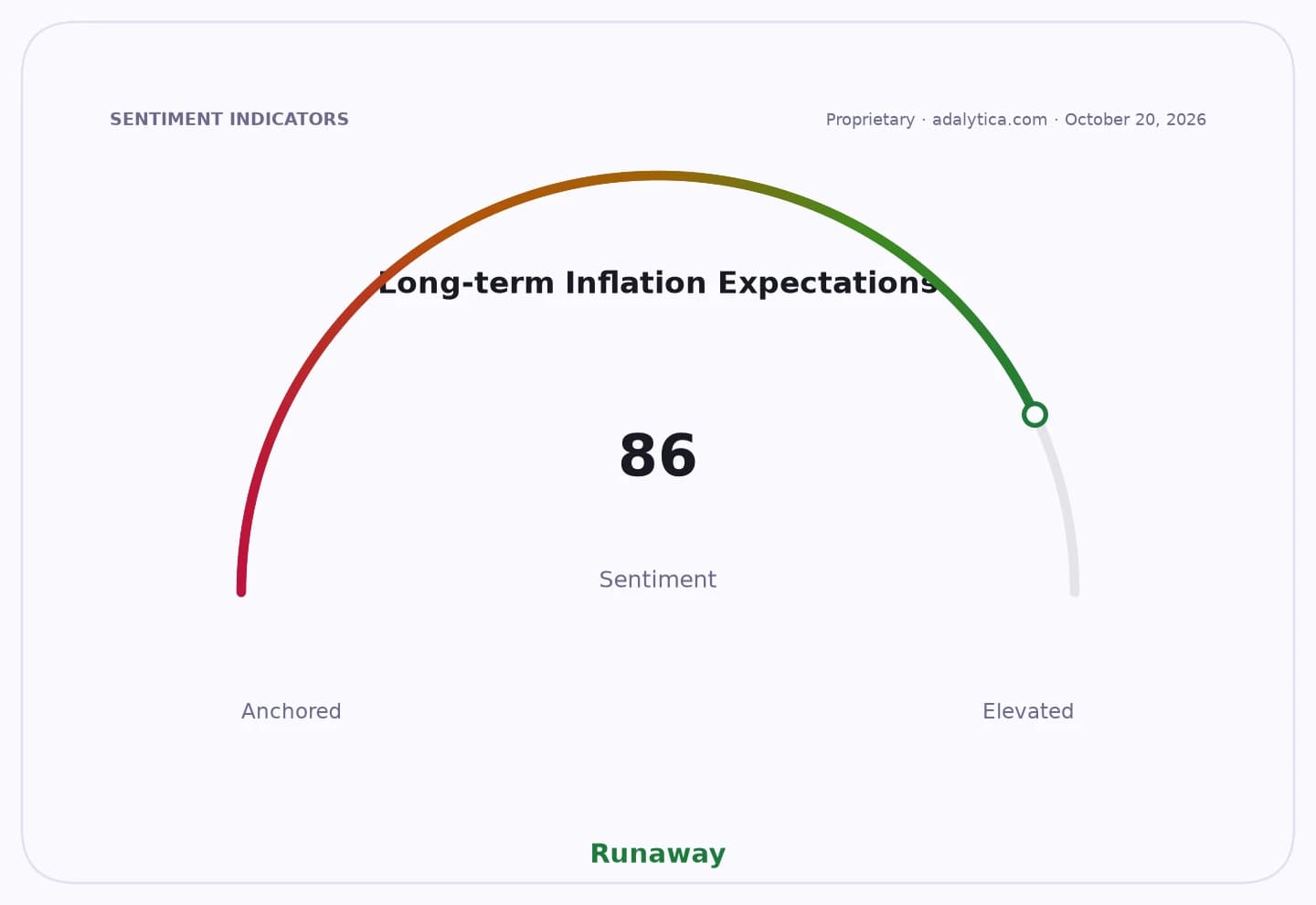
Sentiment IndicatorsⓘProprietary · adalytica.com · October 10, 2026
This is a snapshot — live sentiment, awareness and momentum for 130+ markets update continuously in the dashboard.Open AlphaPulse
That is the key investment-style lesson for policymakers and investors alike: politics in Sweden is fragmenting, but the policy consensus on immigration is still more restrictive than it was a decade ago. The election did not deliver a clean repudiation of the far right so much as a warning that anti-immigrant rhetoric has limits once voters are forced to weigh it against the economy, schools and health care.
For investors watching Europe, that matters because Sweden is a useful bellwether. The country has been one of the clearest examples of how mainstream parties adopt far-right talking points in an effort to blunt the original, only to normalize tougher policies anyway. That dynamic has repeated across the region and can influence labor supply, public services and social cohesion — all issues that feed into long-term growth and fiscal stability.
The Sweden Democrats’ rise had already reshaped policymaking. After winning 20.5% of the vote in 2022 and coming second nationally, they gained enough leverage to help prop up a minority center-right government without formally taking ministries. Kristersson then went further this year, saying he wanted a majority government with the Sweden Democrats and offering them cabinet posts that could have put them in charge of immigration policy. Instead, the party lost ground just as migration had become less dominant in the campaign than the economy and welfare services.
That shift matters economically because Sweden’s labor market and welfare model depend heavily on immigration, even if the politics around it have turned hostile. The previous government tightened the rules further by replacing permanent asylum pathways with temporary permits, broadening conduct requirements that can be used to deny or revoke residency, and adopting a so-called whistleblower law that requires some public employees to report suspected undocumented migrants. Critics say that risks discouraging people from using hospitals and other public services, which is not just a civil-liberties issue but a practical one for a country with an aging population and heavy dependence on public-sector workers.
The result also points to a more fragmented parliament. Social Democrats fell to their weakest vote share in more than a century, while smaller parties, especially the Greens and the Left, gained support from younger voters. Neither bloc has an easy path to a majority: a four-party center-left coalition would have 176 seats, just above the 175 needed, while a four-party right-wing bloc would have 173. That leaves investors with the prospect of prolonged bargaining and policy compromise rather than a decisive break.
For markets, the immediate takeaway is not a dramatic rerating of Swedish assets, but a reminder that political risk in Europe is shifting from outright populist takeover to messy coalition arithmetic. The Swedish krona, local equities and companies exposed to labor availability and consumer sentiment are all likely to remain more sensitive to policy uncertainty than to any single party result.
Long term, the more important question is whether Sweden’s mainstream parties decide to keep imitating the far right or to draw a clearer line against it. If they continue to compete on immigration restriction, the Sweden Democrats may remain smaller, but their ideas will keep winning. If they choose a different course, Sweden could become one of the first European countries to show that the far right can be checked without adopting its agenda. For investors, that is worth watching, because stable institutions and predictable policy still matter more than slogans.
| Entity | Gains | Losses |
|---|---|---|
| Sweden Democrats | ▲Anti-immigrant agenda normalized | ▼Electoral momentum |
| Social Democrats | ▲Chance to lead coalition talks | ▼Historic vote share pressure |
| Mainstream right | ▲Space to regroup in opposition | ▼Policy control |
| Migrants and civil society | ▲Potential policy pushback if center-left shifts | ▼Tighter rules and uncertainty |