Sweden’s trade union confederation LO is pushing back against employers’ demand for a smaller pay rise in the next round of wage talks, arguing that stronger export companies leave room for higher wages without jeopardizing competitiveness.
Sweden LO Pushes for Higher Wage Rise in Talks
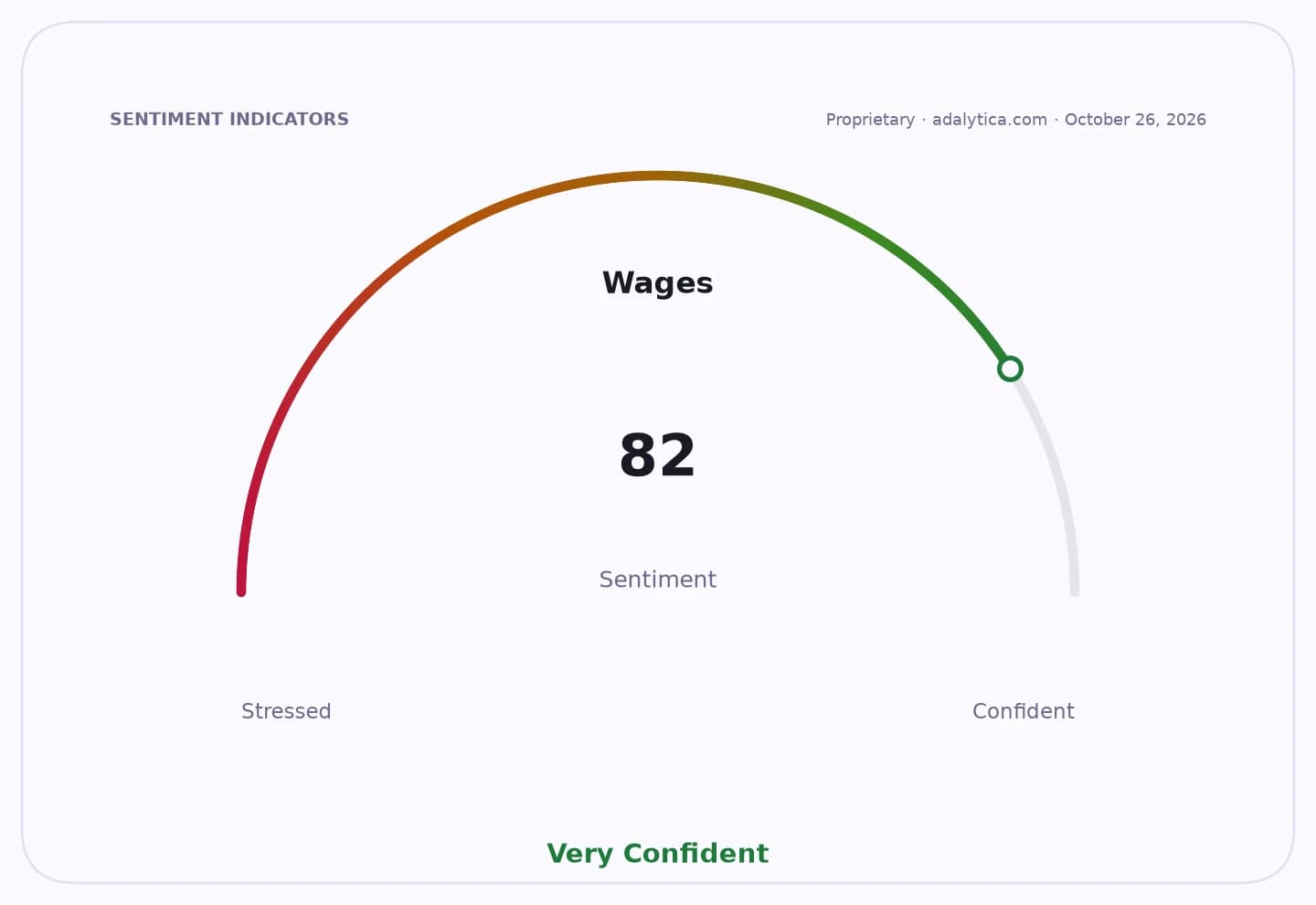
The stance matters because the wage-setting round will help determine how much household income rises across large parts of the Swedish labor market at a time when inflation is still elevated and the central bank is trying to keep price pressures contained. A larger wage settlement would support consumer spending, but it could also complicate the Riksbank’s job if firms pass on higher labor costs.
Sentiment Indicators
The argument from labor is that exporters are performing well enough to absorb more generous pay increases. That raises the stakes for the so-called avtalsrörelse, in which contracts covering millions of workers are renegotiated and often set the benchmark for the rest of the labor market.
For investors, the immediate read-through is for Swedish companies with heavy domestic labor exposure, including retailers, services firms and transport groups, which would face pressure on margins if wage growth comes in above employer demands. Export-heavy industrial groups may be better placed to handle higher labor costs, especially if they continue to benefit from solid global demand.
The bigger issue is that wage settlements feed directly into the inflation outlook. Recent U.S. labor and price data have underscored how quickly wage pressure can complicate monetary policy, and Sweden’s own inflation backdrop means the Riksbank will be watching the talks closely for signs of a wage-price spiral.
The next catalyst is the pace of negotiations, with the battle over shorter working hours pushed back for now but pay levels likely to dominate the coming talks.
| Entity | Gains | Losses |
|---|---|---|
| Swedish workers | ▲Higher pay gains | ▼Smaller wage increases |
| Export companies | ▲Can absorb stronger wages | ▼Face higher payroll costs |
| Domestic consumer firms | ▲Wage-led spending support | ▼Margin pressure from labor costs |
| Riksbank | ▲Clearer wage signal | ▼More inflation risk |