Russia’s job market is turning in employers’ favor, and workers are finally pulling back on pay demands after years of rapid wage inflation.
Russia wage expectations fall for first time since 2018

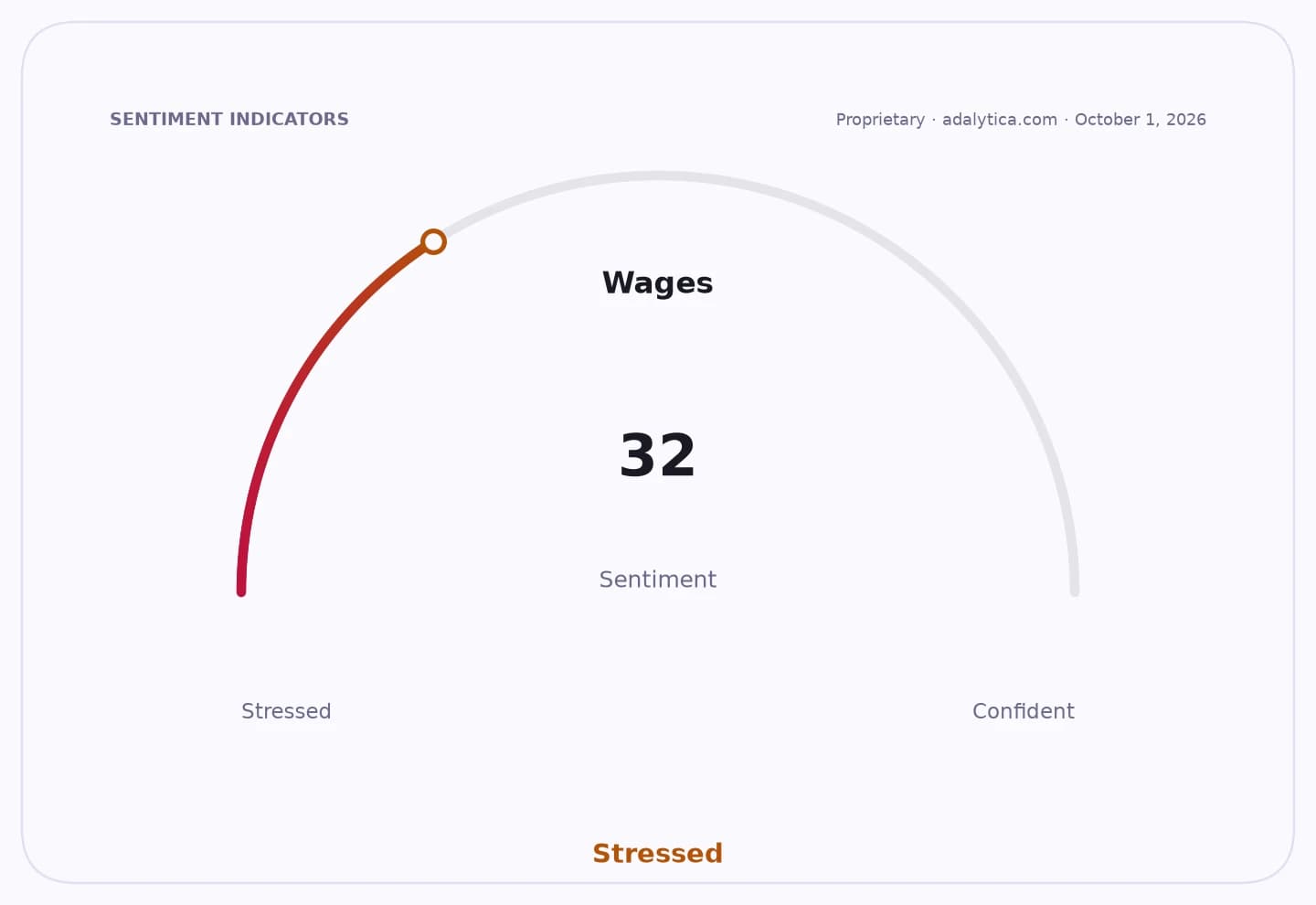
The average desired salary in Russia fell 1.95% from a year earlier to 151,000 rubles a month at the end of the third quarter, while the median target dropped 4.2% to 114,000 rubles, according to a study by the Financial University under the Russian government cited by Vedomosti. It is the first decline in expected pay since the survey began in 2018, a sign that a slowing economy is weakening workers’ bargaining power.
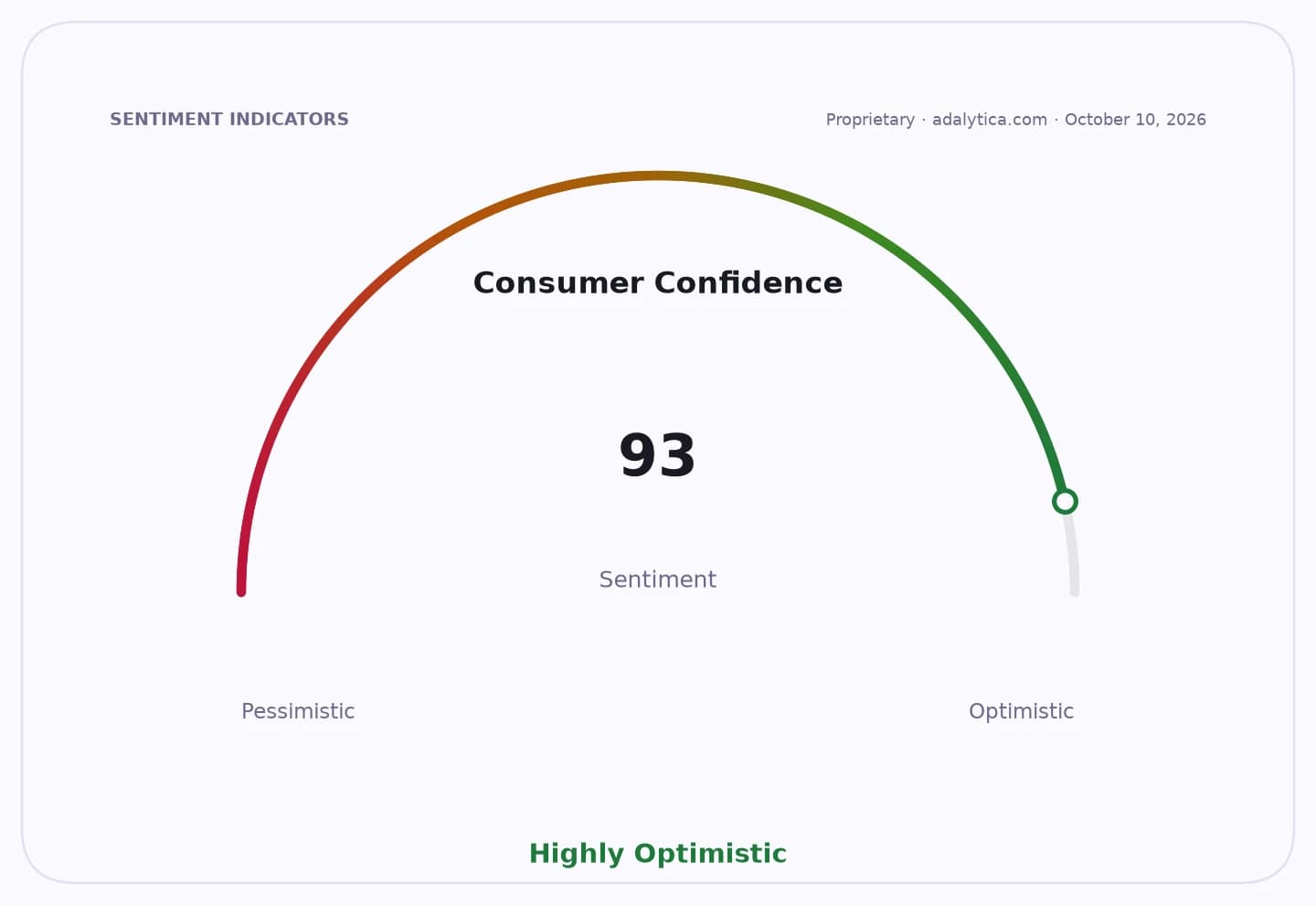
Sentiment IndicatorsⓘProprietary · adalytica.com · October 10, 2026
This is a snapshot — live sentiment, awareness and momentum for 130+ markets update continuously in the dashboard.Open AlphaPulse
That matters because wage expectations are one of the clearest real-time gauges of labor market heat. When workers believe they can ask for more and get it, that typically feeds higher payroll costs, tighter margins and more persistent inflation. A reversal points the other way: a cooler labor market, softer household income growth and less pressure on employers to keep raising compensation.
The shift comes after a year in which salary expectations were still rising at double-digit rates. A year ago, average desired pay was up 14.07% and the median target was 22.68% higher than the prior year. Now those gains have not just slowed; they have gone negative. For investors, that is an early warning that consumer demand may be losing momentum, especially in sectors that depend on wage-supported spending.
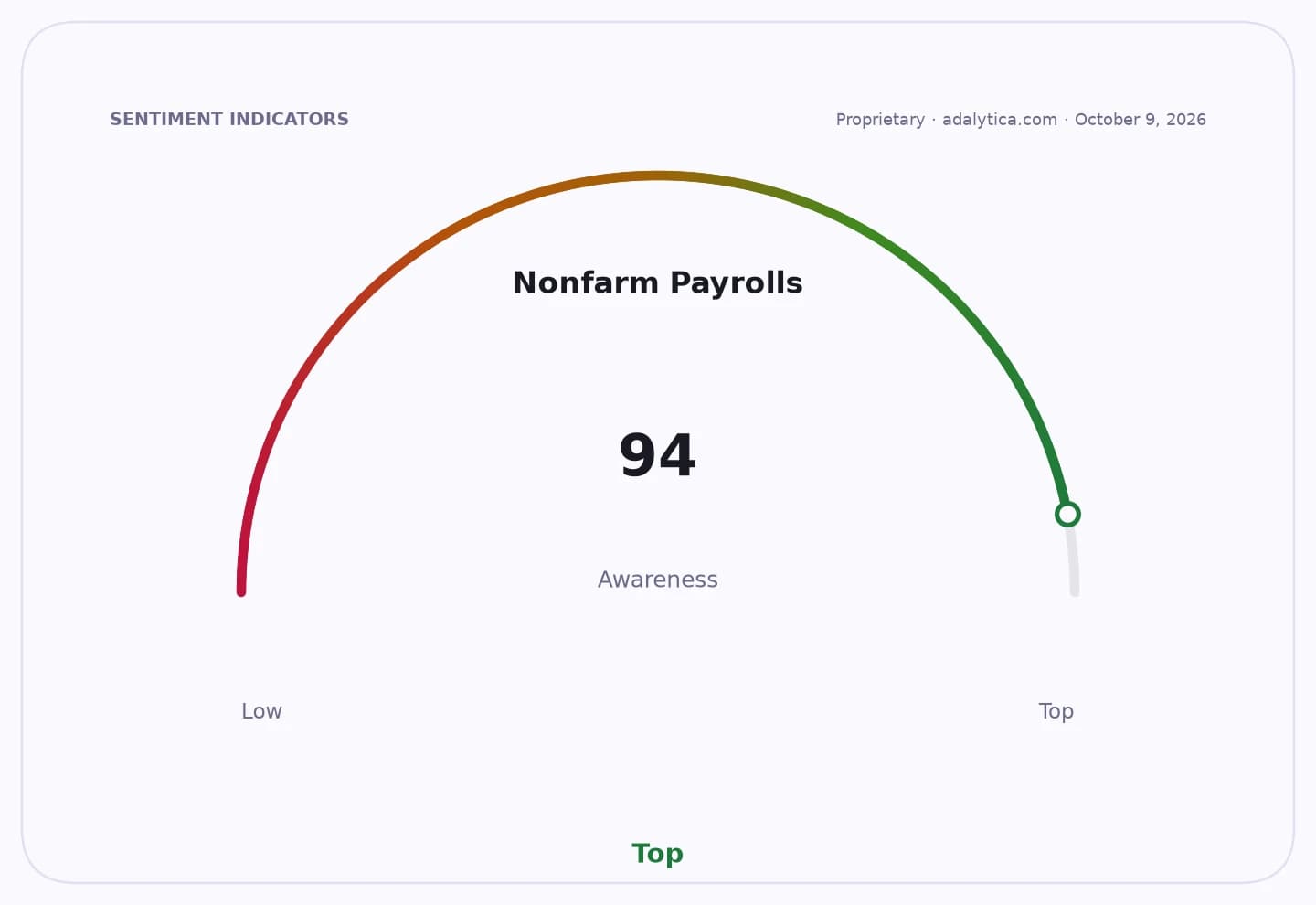
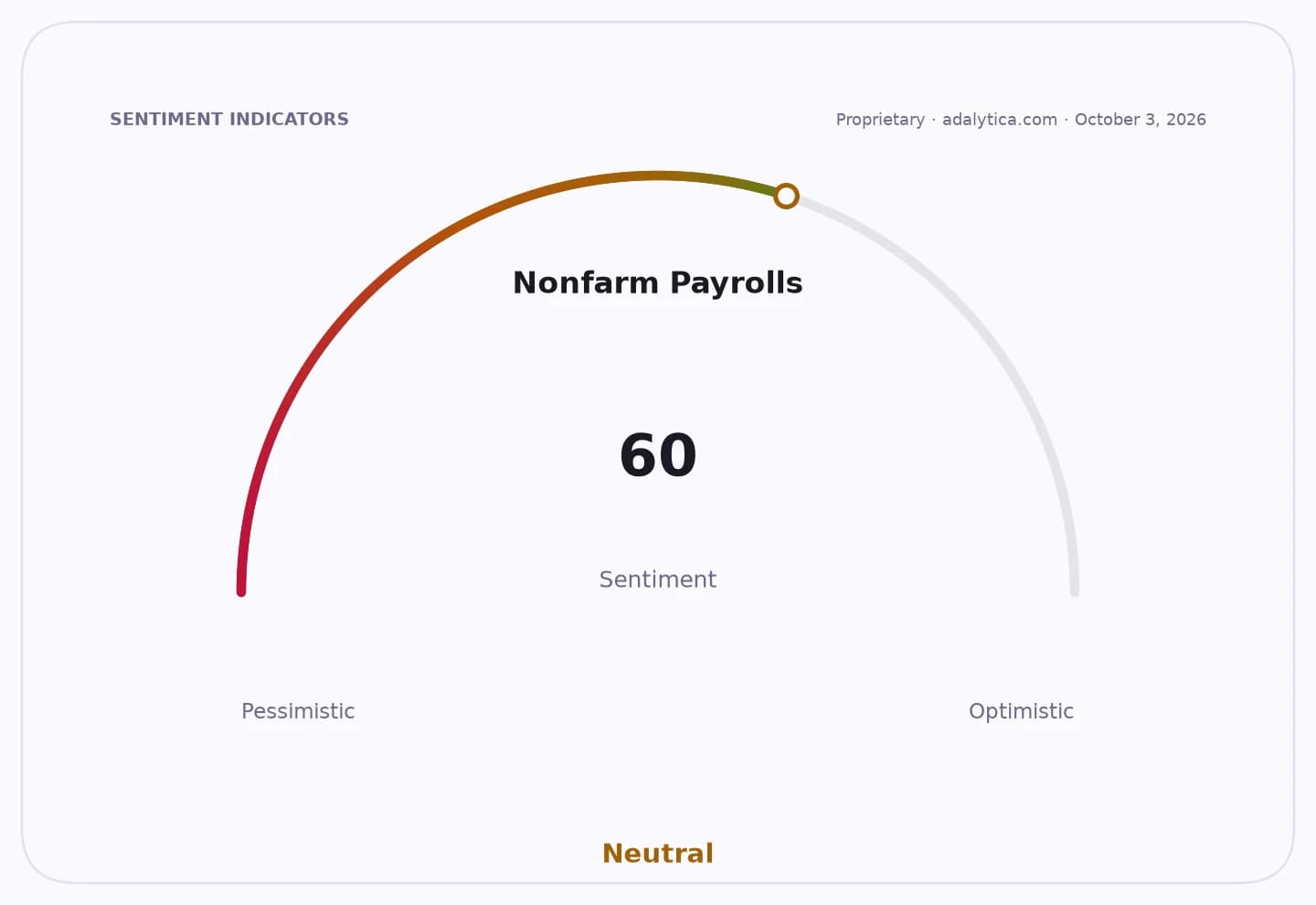
The broader backdrop is a labor market that is still not collapsing, but is clearly less tight. Employment data show Russia’s payrolls holding near 159 million and unemployment around 4.2%, a level that still looks low by international standards. But low unemployment alone no longer guarantees stronger wage power if hiring demand is softening and firms regain pricing leverage over labor.
That is the real story here: the market is moving from worker-led wage setting back toward employer discipline. In practical terms, that should help margins for businesses facing rising costs, but it also suggests less room for continued consumer outperformance. The implication for investors is to favor companies with hard pricing power and cost flexibility, while being more selective on retailers, consumer lenders and other names exposed to household strain.
In Russia’s case, the labor market has been distorted by years of geopolitical shock, sanctions pressure and state-linked spending. A cooling of salary expectations does not erase those structural forces, but it does indicate the next phase may be defined less by wage acceleration and more by normalization. If that continues, it could ease inflationary pressure, but it would also confirm that the economy is slowing enough to change behavior at the household level.
The key question now is whether this is a one-quarter adjustment or the start of a broader reset in pay negotiations. If employer leverage continues to improve, wage growth will likely fade further, reinforcing the slowdown narrative and keeping pressure on domestic demand-linked assets.
| Entity | Gains | Losses |
|---|---|---|
| Employers | ▲Lower wage pressure | ▼Workers’ bargaining power |
| Workers | ▲None | ▼Slower pay growth |
| Consumer-facing firms | ▲Easier cost control | ▼Softer household spending |
| Inflation-sensitive policymakers | ▲Less wage-driven inflation | ▼Growth momentum |