Sweden’s central bank has renewed its push for a digital krona, warning that foreign-currency stablecoins and a future digital euro could chip away at the kroona’s role in everyday payments and weaken the Riksbank’s grip on monetary control.
Sweden Riksbank Pushes E-krona Plan
The issue matters because Sweden is already one of the world’s most cashless economies. If cash continues to disappear without a public digital alternative, the Riksbank fears households and businesses could migrate toward private or foreign payment rails that are more convenient across borders, but less aligned with domestic policy objectives. That would complicate everything from payment resilience to the transmission of interest rates through the economy.
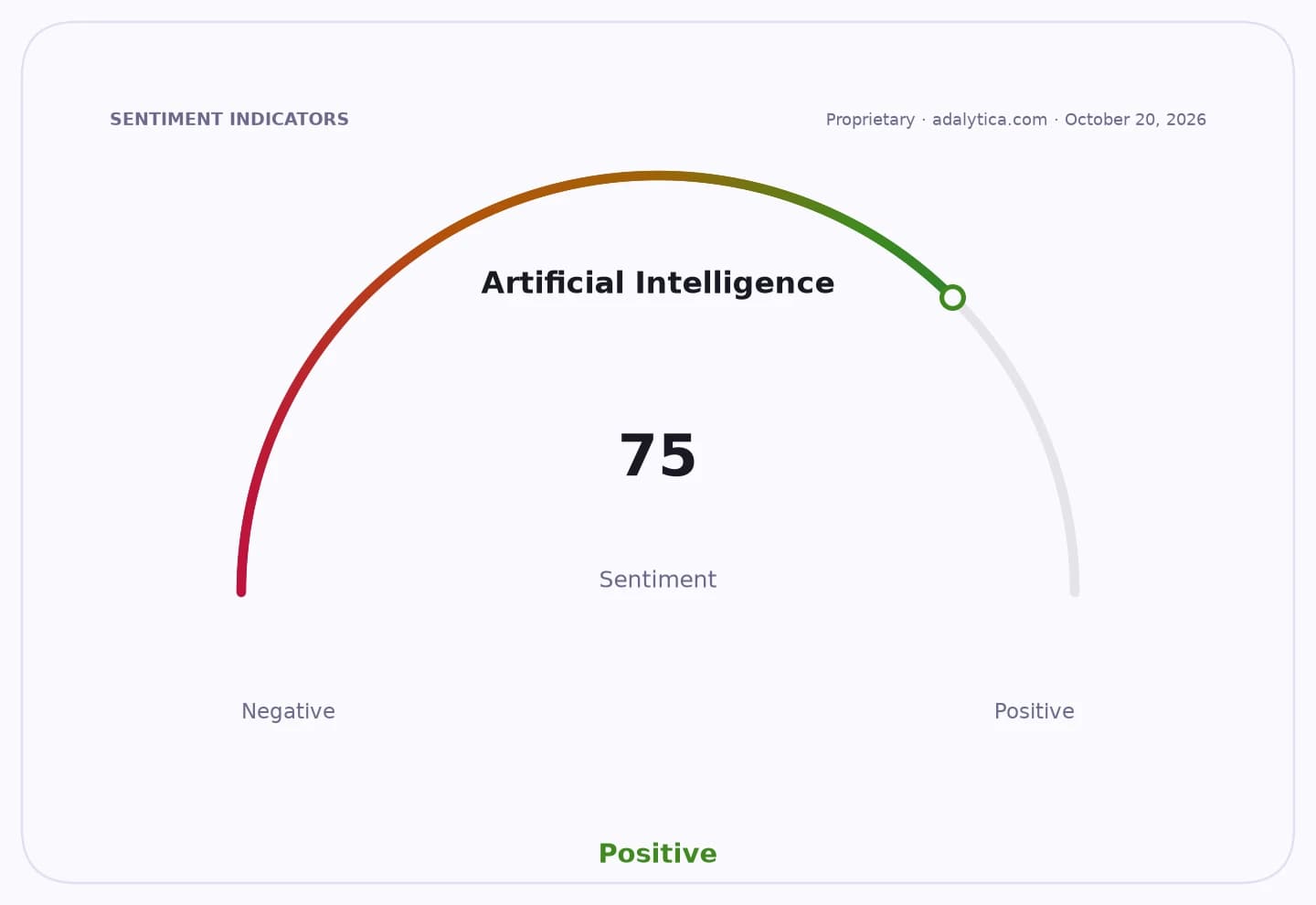
Sentiment Indicators
Deputy Governor Per Jansson said the central bank wants lawmakers to begin preparing legislation now, even though an e-krona would still take at least five years to launch. The bank is not formally deciding whether to issue one, but is pressing for readiness before the policy window closes. A 2023 government inquiry concluded there was not enough need at the time, yet the Riksbank says that view may no longer fit the pace of change in payments and security risks.
The warning is rooted in a sharp decline in cash usage. Only 5% of Swedes surveyed used cash for their last purchase, according to Riksbank data cited by Reuters. That leaves the country exposed if digital payments are increasingly dominated by instruments outside the central bank’s direct control. The Riksbank argues an e-krona could preserve access to central bank money in digital form and act as a backstop during power or telecom outages, including with offline functionality.
For investors, the debate reaches beyond Sweden. It highlights a broader policy race between public money and private digital substitutes just as stablecoins gain traction and the European Central Bank moves toward a digital euro, which could debut in 2029 if EU lawmakers approve the needed rules. If Sweden waits too long, the e-krona could become a defensive tool rather than a strategic advantage, especially if euro infrastructure becomes the regional standard.
The market context also matters. The euro has shown renewed sensitivity to central bank policy shifts, while the Swedish krona remains under pressure and has been among the weaker major currencies recently. That makes Sweden’s payment architecture not just a domestic policy issue, but a question of currency relevance, financial stability and how much of the payment stack remains anchored to the state rather than to foreign or private issuers.
The bull case for the Riksbank is that early preparation reduces the risk of payment fragmentation and preserves monetary sovereignty. The bear case is that launching a central bank digital currency could be expensive, slow and potentially redundant if private payment innovation continues to improve. For now, the central bank is betting that inaction carries the bigger risk.
| Entity | Gains | Losses |
|---|---|---|
| Riksbank | ▲payment control | ▼policy inaction |
| Swedish consumers | ▲backup payments | ▼fewer public options |
| Stablecoin issuers | ▲wider adoption | ▼weaker demand if e-krona advances |
| Digital euro project | ▲regional relevance | ▼first-mover uncertainty |