Sweetgreen is overhauling its menu and service model as the salad chain tries to win back traffic from diners who have come to see it as too expensive, a shift that could determine whether the company can stabilise sales in a consumer environment still shaped by price sensitivity.
Sweetgreen rolls out lower-priced wraps nationwide
The Los Angeles-based fast-casual chain this year rolled out four nationwide wraps priced below $15 and averaging about $12.50, part of a broader effort to lower the chain’s entry price and change how customers perceive it. Sweetgreen’s finance chief said the company had too many items above $15 and too few below that level, leaving the brand psychologically positioned as pricey even when some peer items were comparable.
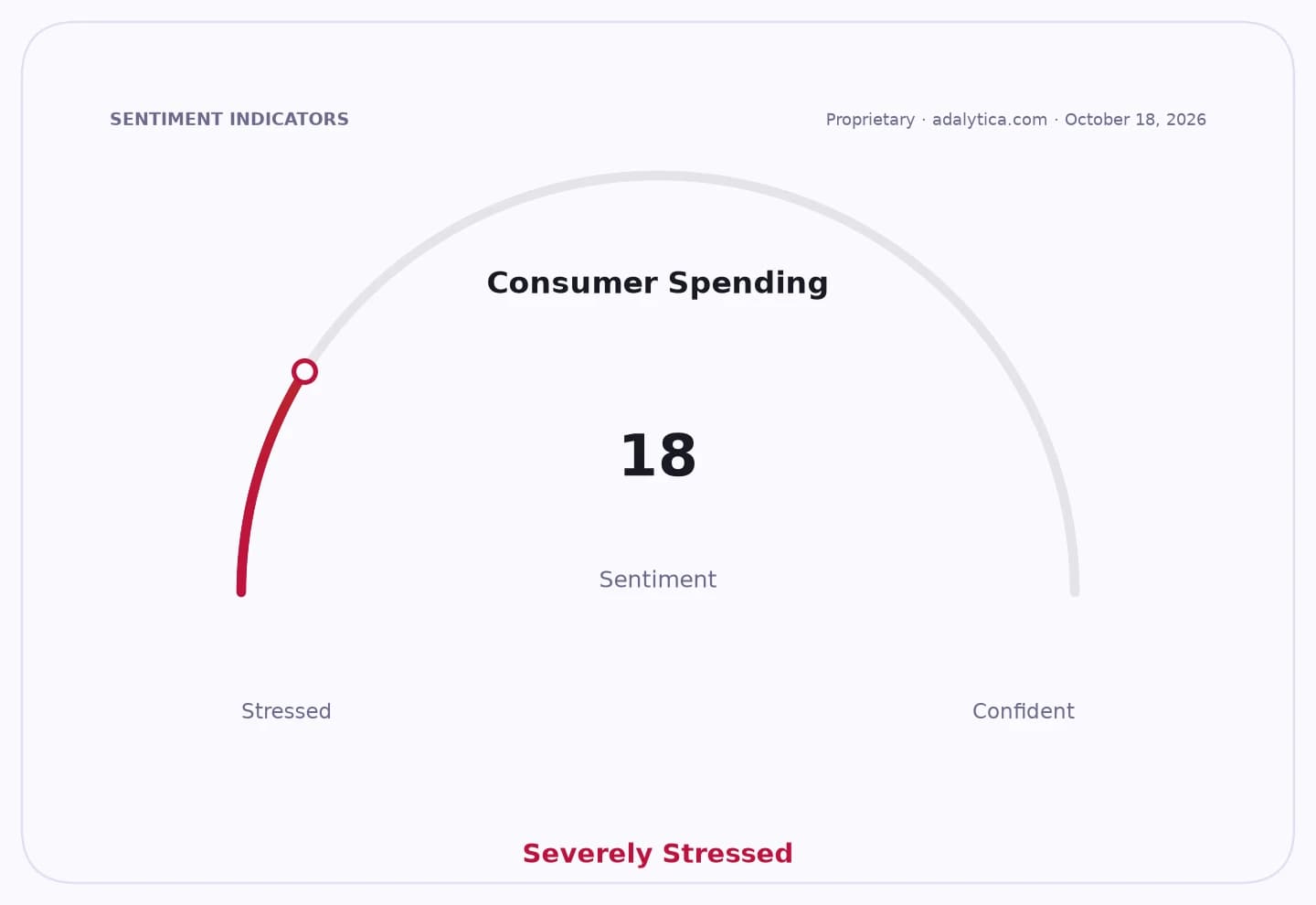
Sentiment IndicatorsⓘProprietary · adalytica.com · October 18, 2026
This is a snapshot — live sentiment, awareness and momentum for 130+ markets update continuously in the dashboard.Open AlphaPulse
That matters because Sweetgreen is trying to repair demand after a sharp deterioration in same-store sales. Comparable sales fell 6.2% in its latest quarter, prompting the company to cut its full-year outlook to a decline of 7% to 8%, from an earlier forecast for a drop of 2% to 4%. For a concept built on premium positioning and customization, that kind of swing points to a brand problem as much as a macro one.
The new wraps are Sweetgreen’s most visible attempt to address that problem. Management said the items were developed over several years and tested in New York, the Midwest and Los Angeles before being launched nationally. The company says it wants to make the chain feel like an “everyday choice,” not just a lunch splurge.
Sweetgreen is also trying to remove some of the sticker shock from its core salad business. Instead of allowing customers to build bowls that can rise quickly in price, it is working to make pricing more transparent. Management said a customer can still get a protein, two bases and four toppings for around $13, with dressing and bread included, but the aim is to make that option more obvious at the start of the ordering process.
Operationally, the changes go beyond pricing. Sweetgreen is assigning workers to wrap assembly at busy locations during peak periods, part of an effort to address another longstanding customer complaint: speed. The company wants guests to be able to get in and out in under five minutes, a meaningful target in a sector where convenience is increasingly important to repeat visits.
The timing is not accidental. Broader consumer spending remains under pressure, with inflation accelerating in September as energy costs rose. In that environment, higher-priced lunch options tend to face more scrutiny, and premium chains can lose traffic if value perception deteriorates. Sweetgreen’s move is therefore both defensive and strategic: it is trying to defend its core brand while broadening the pool of occasions for which customers might choose it.
Investors will be watching whether the new menu architecture can do two things at once — lift traffic without destroying margins. The bull case is that lower-priced wraps, clearer pricing and faster service help Sweetgreen reset customer habits and expand frequency. The bear case is that discounting and operational changes may prove insufficient if consumers continue to trade down, leaving the company with lower average checks and still-weak visits.
For the stock, the key question is not whether Sweetgreen can sell cheaper items; it is whether it can rebuild a value proposition that supports growth while preserving the premium economics that once justified its valuation. The next several quarters should show whether the reset is working at the register, or whether the brand’s price image has already done lasting damage.
| Entity | Gains | Losses |
|---|---|---|
| Sweetgreen | ▲Wider traffic appeal | ▼Premium-price image |
| Value-focused diners | ▲Lower entry prices | ▼Less luxury positioning |
| Existing premium rivals | ▲Higher-value comparison | ▼More pressure on pricing |
| Shareholders | ▲Traffic recovery potential | ▼Margin dilution risk |