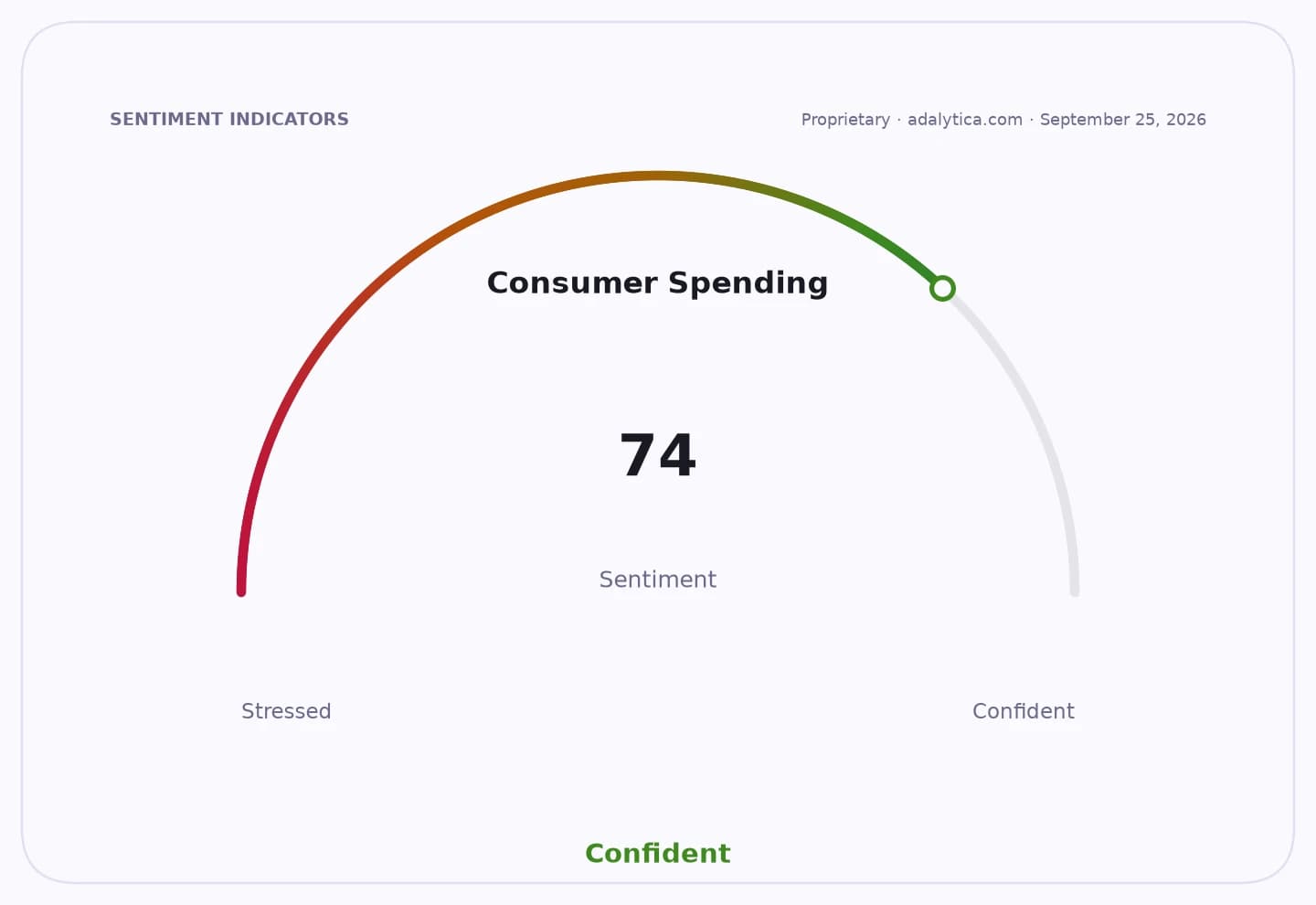
Swiss consumers turned more cautious in July, a warning sign that Europe’s most stable economy is not immune to the drag from higher borrowing costs, softer demand and a more uncertain global backdrop.
Swiss consumer confidence falls in July
That matters because confidence is one of the first places a slowdown shows up. When households pull back, spending on retail, travel and discretionary services tends to cool with a lag, and that can feed directly into a weaker second half for Switzerland’s domestic economy. For investors, the message is not just about sentiment — it is about earnings risk for retailers, consumer names, banks and domestically focused cyclicals that have leaned on resilient Swiss demand.
The timing is important. Swiss households are facing a more uncomfortable mix of sticky living costs, tighter financial conditions and a growth outlook that looks less forgiving than it did earlier in the year. Even if inflation is mild by international standards, the combination of elevated rates and cautious wage behavior can still pressure real spending power. In a small, open economy like Switzerland, that can quickly translate into slower momentum in services and goods demand.
For markets, weakening confidence reinforces the view that the Swiss National Bank has room — and arguably a reason — to stay supportive if growth softens further. A more dovish policy backdrop would matter for the franc, for local bond yields and for rate-sensitive sectors that have already been trading on expectations of lower policy pressure ahead. The bigger picture is that consumer sentiment is now flashing the kind of early-cycle caution that investors should not ignore.
The investment takeaway is straightforward: the market underestimates how quickly a confidence slide can filter into revenues and margins for domestic Swiss businesses. I believe investors should favor exporters and global earners over purely home-market plays, and keep an eye on defensive balance sheets if Switzerland’s consumer softness proves more than temporary.
| Entity | Gains | Losses |
|---|---|---|
| Swiss exporters | ▲weaker franc tailwind | ▼slower domestic spending |
| Domestic retailers | ▲defensive sales mix | ▼margin pressure |
| Swiss National Bank | ▲more policy flexibility | ▼less room if growth slips |
| Consumer cyclicals | ▲selective downside protection | ▼demand slowdown |