Swiss voters are set to decide whether cantonal minimum wages should continue to override collective bargaining deals, after unions and the left filed more than 100,000 signatures to trigger a referendum against a parliamentary reform.
Swiss Voters Weigh Minimum Wages vs Collective Deals

The vote matters because it goes straight to the price of labor in Switzerland’s lower-paid sectors and to the balance of power between cantons and social partners. If the reform stands, nationwide industry agreements could take precedence over local wage floors, potentially easing payroll costs for employers in some regions while weakening a protection that unions say is especially important for women-heavy sectors.
Sentiment IndicatorsⓘProprietary · adalytica.com · October 8, 2026
This is a snapshot — live sentiment, awareness and momentum for 130+ markets update continuously in the dashboard.Open AlphaPulse
Under the current rules, a collective labor agreement can only be extended if it does not conflict with federal or cantonal law, which means cantonal minimum wages prevail today. Parliament backed a change to reverse that practice, although safeguards were added for Geneva and Neuchâtel, two cantons that have already decided their minimum wages must come first.
The Swiss Trade Union Federation, Travail.Suisse, the Social Democrats and the Greens say the reform is an “attack on wages” and an encroachment on cantonal powers and popular decisions. They argue minimum wages matter most in industries where women are overrepresented, making the ballot fight politically sensitive as well as economic.
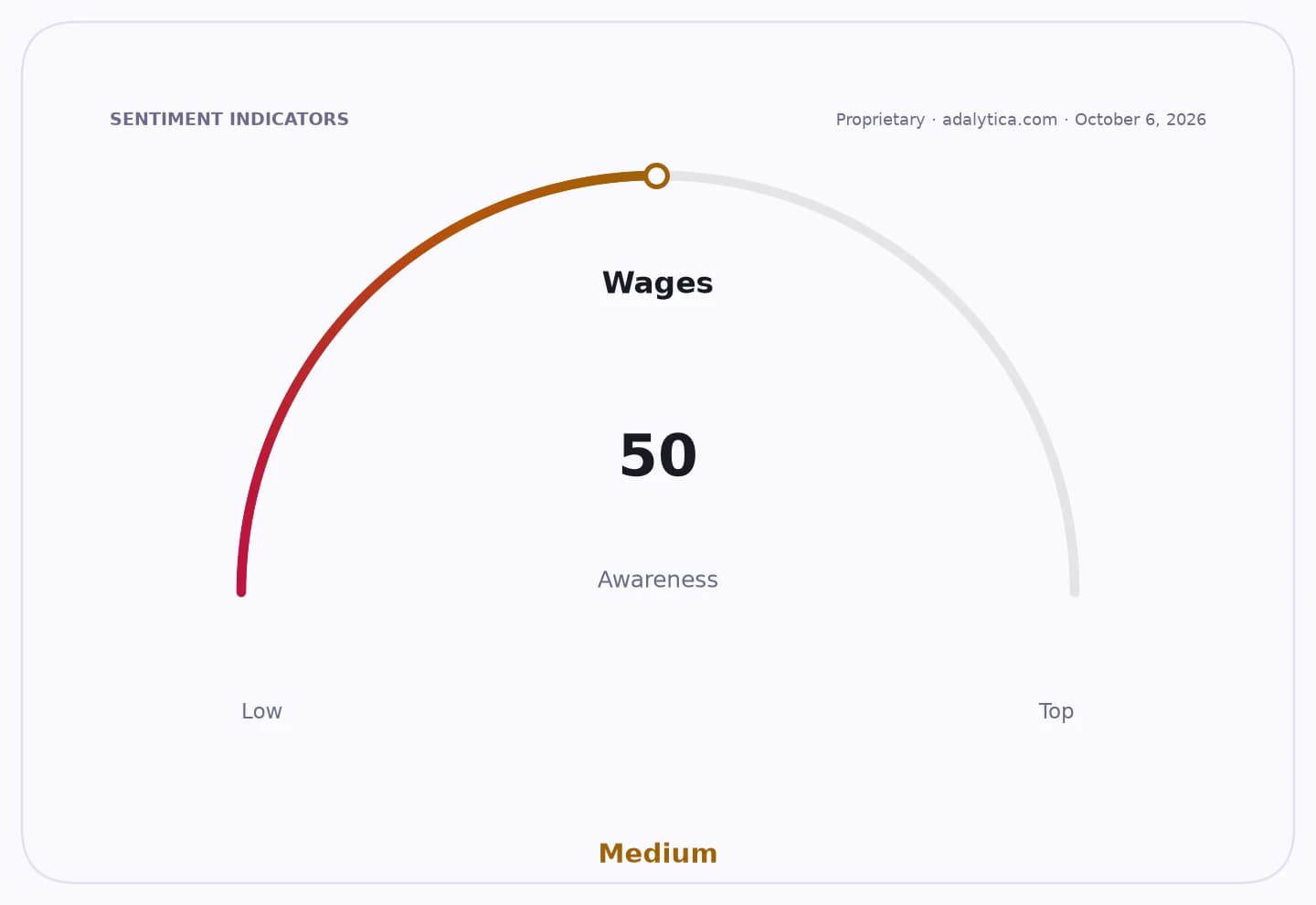
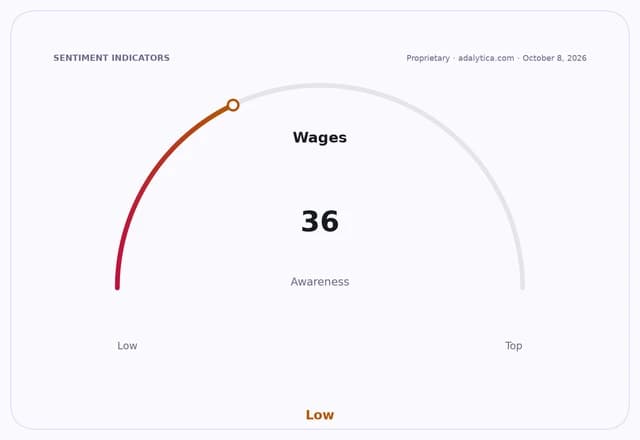
Wages — 30-day sentimentadalytica.com
Explore this data interactively — full history, time series and cross-market comparisons.Open AlphaPulse

For investors and employers, the issue is less about broad market direction than about labor-cost visibility. A stronger role for collective agreements would favor companies bound by sector-wide accords and could reduce wage dispersion across cantons, while a victory for unions would preserve a patchwork of local wage floors that can lift operating costs in lower-wage regions.
The referendum also adds another layer of uncertainty for businesses already navigating Swiss labor shortages, sticky wage pressure and rising political scrutiny of pay standards. The vote will now become a test of whether voters prefer centralized wage-setting through collective agreements or local protections set by cantons.
| Entity | Gains | Losses |
|---|---|---|
| Swiss unions and left parties | ▲Preserve wage floors | ▼Lose leverage if reform passes |
| Employers tied to CCTs | ▲Lower wage-bill uncertainty | ▼Face higher pay floors if unions win |
| Cantons with minimum wages | ▲Keep local authority | ▼See powers narrowed if reform passes |
| Low-wage workers, especially women | ▲Stronger pay protection | ▼Weaker floor if CCTs take priority |