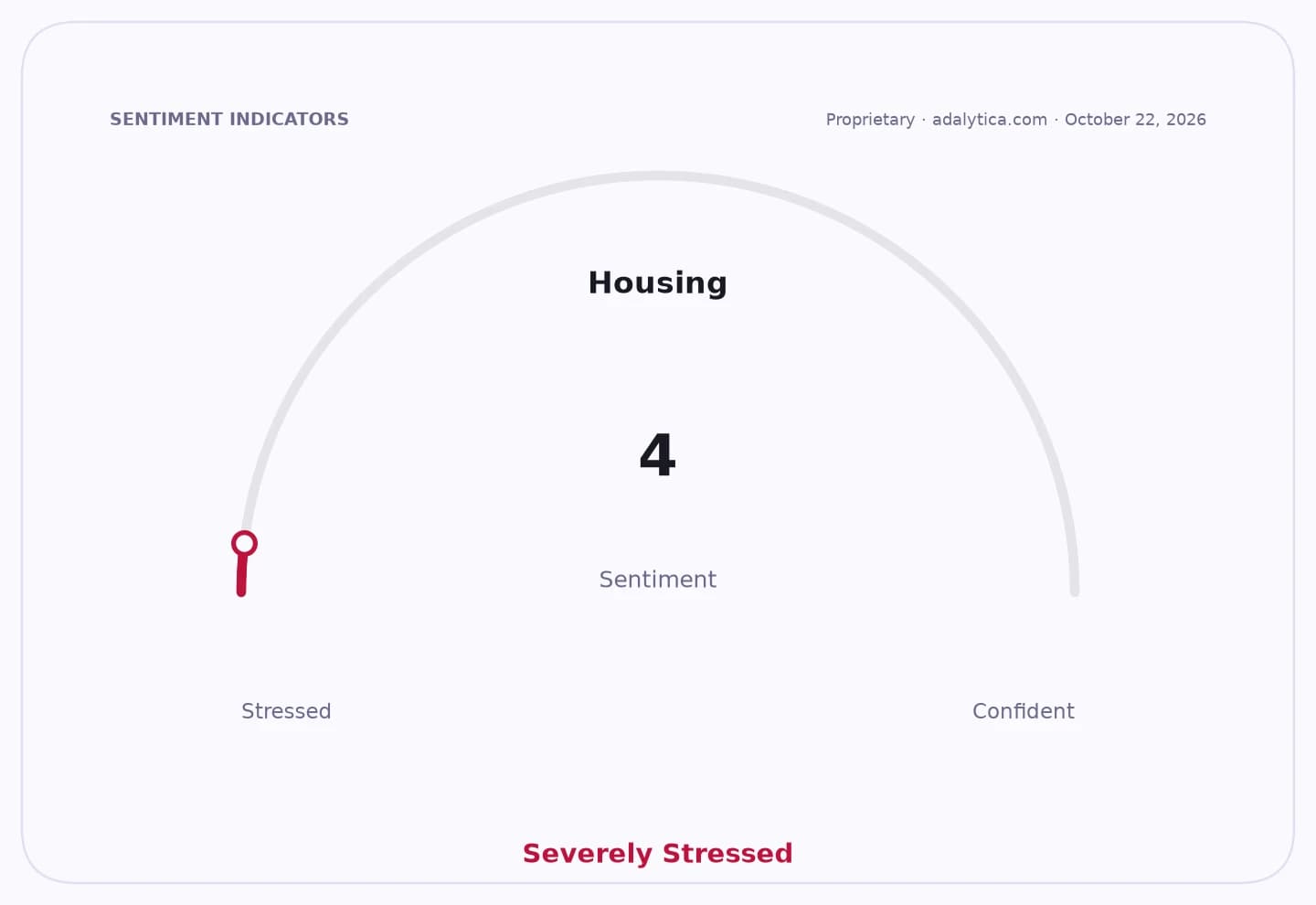
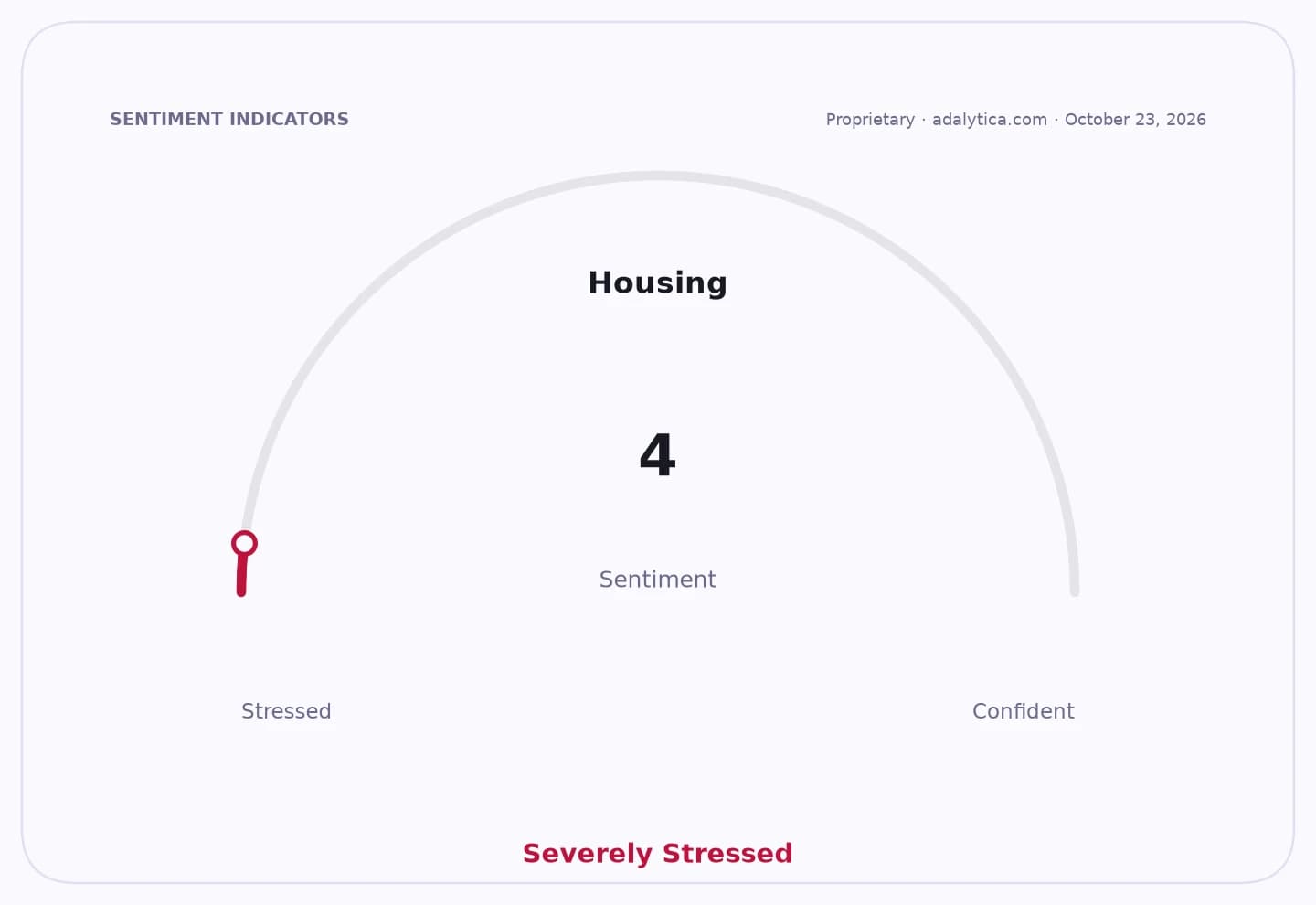
Swiss homeowners are facing a fresh cost trap as fixed mortgage rates rise again, and the spread between lenders has widened enough to cost borrowers thousands of francs a year.
Swiss mortgage rates rise as bond yields climb
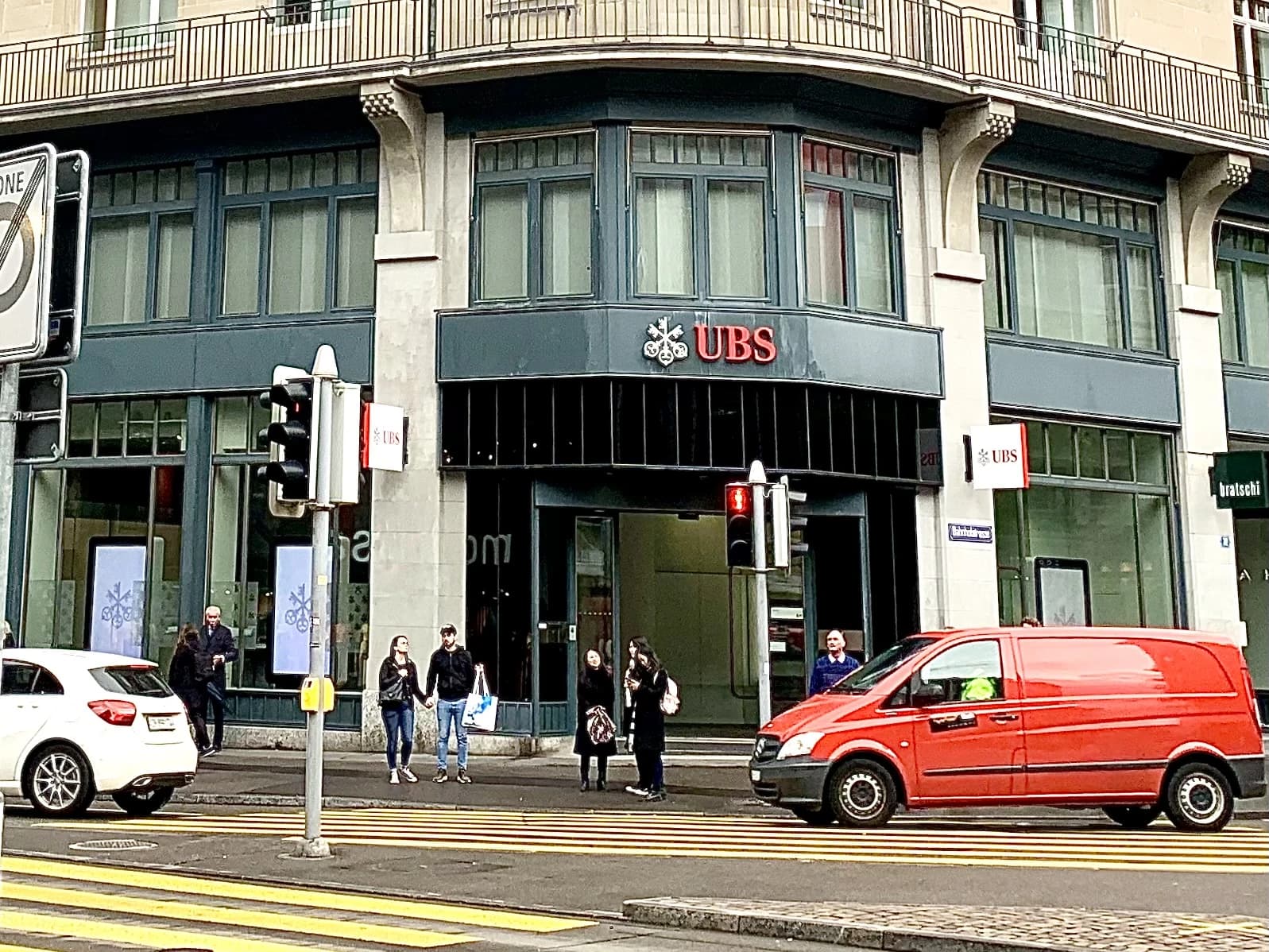
The biggest new development is not just that mortgage rates are climbing, but that the jump is being driven by higher long-term bond yields, which matter far more for fixed-rate loans than for SARON-linked mortgages. That puts households, and by extension the Swiss property market, back on the wrong side of global rate volatility just as affordability remains stretched.
Sentiment IndicatorsⓘProprietary · adalytica.com · October 23, 2026
This is a snapshot — live sentiment, awareness and momentum for 130+ markets update continuously in the dashboard.Open AlphaPulse
In Switzerland, the average mortgage rate has risen to about 1.7% from below 1.6% in early summer and 1.44% at the start of the year, according to hypotheke.ch. The pressure is coming from the international bond market: the U.S. 10-year Treasury yield recently moved above 5.3%, while Swiss 10-year government bond yields briefly climbed from below 0.4% to more than 0.65% before easing back to around 0.54%.
For homeowners, those moves quickly turn into real money. On a 1 million franc mortgage, a 30-basis-point rate gap means about 3,000 francs in extra annual interest. The difference between Raiffeisen and Generali on some tenors can reach as much as 3,600 francs a year, while the widest market gap is around 6,000 francs annually. Over the life of a loan, that becomes tens of thousands of francs.
The market is also splitting between lenders. Banks are generally pricier than insurers and pension funds, especially on longer maturities, because they face heavier capital requirements. That gives insurers and pension funds an edge in pricing, and explains why they often show up among the cheapest providers. For a 10-year fixed mortgage, the average rate at banks is about 2.1%, versus roughly 1.84% at insurers and pension funds.
That matters economically because Swiss household borrowing costs feed directly into consumption and housing demand. A sustained rise in fixed mortgage rates can cool transaction volumes, squeeze disposable income and pressure property valuations. It also reinforces a broader shift in financing conditions: borrowers looking for certainty are paying more for it, while those willing to take floating-rate risk may be tempted by SARON loans.
Investors should care because the story points to a sturdier-for-longer rate backdrop in developed markets, with direct implications for banks, insurers, pension funds and real estate-linked assets. The bond selloff is also an important signal for mortgage originators and housing-exposed businesses that rely on refinancing activity and turnover. In the U.S., where 10-year Treasury yields remain above 5%, the same dynamic is already weighing on housing sentiment and sales; the Swiss market is just seeing the lagged transmission.
The investment narrative here is simple: higher long-end yields are re-pricing everything tied to duration, and mortgages are one of the most visible channels. The winners are lenders and balance sheets that can fund long-term assets cheaply; the losers are borrowers and housing markets that need cheaper money to keep demand elastic.
For investors, the key takeaway is to watch who benefits from the spread: insurers and pension funds with mortgage books may keep taking share, while traditional banks face pressure to defend volume in a more expensive funding environment. The next move in long-term yields will decide whether this is a temporary reset or the start of another sustained affordability squeeze.
| Entity | Gains | Losses |
|---|---|---|
| Insurers and pension funds | ▲Share gains in mortgages | ▼Borrowers seeking the lowest fixed rates |
| Swiss homeowners | ▲Strongest buyers with high equity | ▼Leveraged owners refinancing now |
| Banks | ▲Higher pricing power on risk | ▼Mortgage volume and competitiveness |
| Swiss housing market | ▲None | ▼Affordability and transaction demand |