Swiss Re is putting a hard dollar value on one of the fastest-growing corners of the AI buildout, arguing that data centers and the power infrastructure around them could generate nearly $200 billion in insurance premiums by 2030 and become a major profit pool for reinsurers.
Swiss Re sees $200B AI data center insurance

That matters because the AI boom is no longer just a software story. It is turning into a physical capex cycle that needs land, steel, turbines, batteries, fiber, cooling systems and, crucially, insurance. The Swiss Re Institute said the construction and operation of AI data centers alone could produce about $91 billion in cumulative premiums by 2030, with renewable energy projects adding another $111 billion. In other words, the real economy is now absorbing the AI trade — and insurers are being paid to underwrite that transformation.
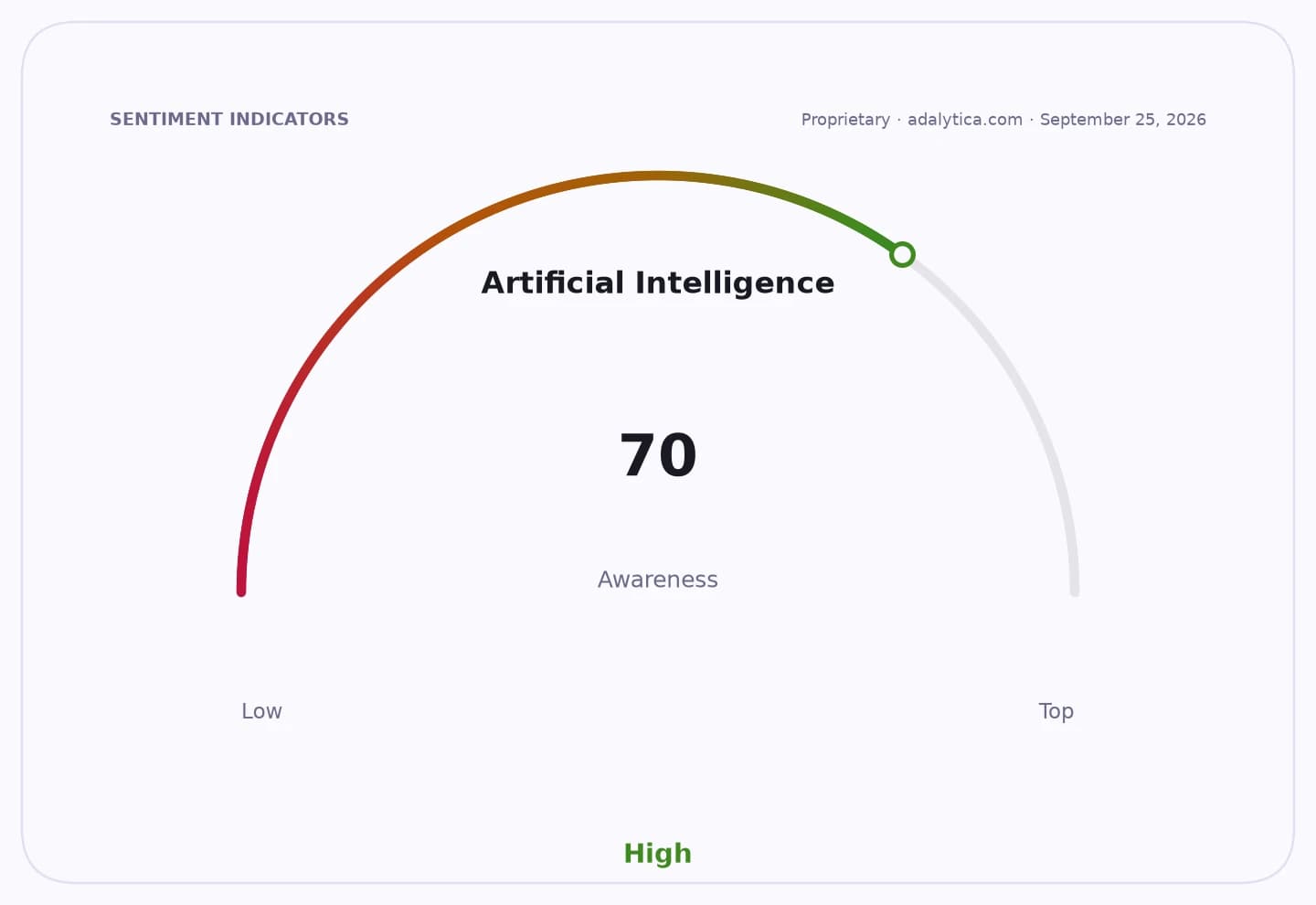
Sentiment IndicatorsⓘProprietary · adalytica.com · September 6, 2026
This is a snapshot — live sentiment, awareness and momentum for 130+ markets update continuously in the dashboard.Open AlphaPulse
For investors, the implication is broader than Swiss Re’s own balance sheet. The companies building and financing AI infrastructure create a second-order winner set: reinsurers, specialty insurers, brokers, engineering firms, power equipment suppliers and data-center operators. Public markets already know the obvious names in semiconductors and cloud software. The market is still underestimating the toll-road businesses that sit around the boom and get paid every step of the way.
Swiss Re says the opportunity is also high quality, not just large. Coverage demand starts at construction and expands once the facilities go live, when property, business interruption and liability risks multiply. That is important because AI campuses can be worth billions of dollars apiece, with Swiss Re estimating the replacement value of a single fully equipped AI data center can run as high as $50 billion. The risk is not only size but correlation: one outage can hit multiple tenants, shared power systems, telecom links, cloud dependencies and supply chains at once.
That accumulation risk is exactly why reinsurers matter. Primary insurers can only take so much balance-sheet concentration before they need capacity, loss-spreading and capital relief. Swiss Re is effectively saying the next phase of AI spending will require more reinsurance, more syndicated programs and more alternative capital. That is a structural tailwind for the sector, especially as underwriters refine models for a risk profile with limited loss history and rapidly rising scale.
The market backdrop already reflects some of that enthusiasm. Equinix has surged to around $1,036 a share from roughly $781 at the end of October, while Digital Realty has climbed to about $188 from the low $160s, showing how investors are bidding up the infrastructure layer of AI. But the insurance layer has not yet been fully repriced for the scale of the opportunity Swiss Re is describing.
Our thesis is simple: the AI trade is moving from compute scarcity to infrastructure scarcity, and that is where the next durable profits will accrue. I believe investors should look beyond chipmakers and hyperscalers and start treating reinsurers, specialty carriers and data-center landlords as core AI infrastructure holdings. Swiss Re has just confirmed what the market is only beginning to price — this boom needs a financial backstop, and that backstop can be highly profitable.
The next catalyst will be the speed of data-center construction, the size of renewable power investment and whether insurers can keep loss ratios under control as these mega-projects proliferate. If AI spending continues to compound, the underwriters who learn to price the risk early will own one of the most asymmetric opportunities in the entire megatrend.
| Entity | Gains | Losses |
|---|---|---|
| Swiss Re and reinsurers | ▲Higher premium volume | ▼Greater accumulation risk |
| Data-center builders/operators | ▲Faster project financing | ▼Higher insurance costs |
| Specialty insurers/brokers | ▲New underwriting demand | ▼Complex loss modeling |
| Power-grid and renewable suppliers | ▲More capex and coverage needs | ▼Execution and reliability pressure |