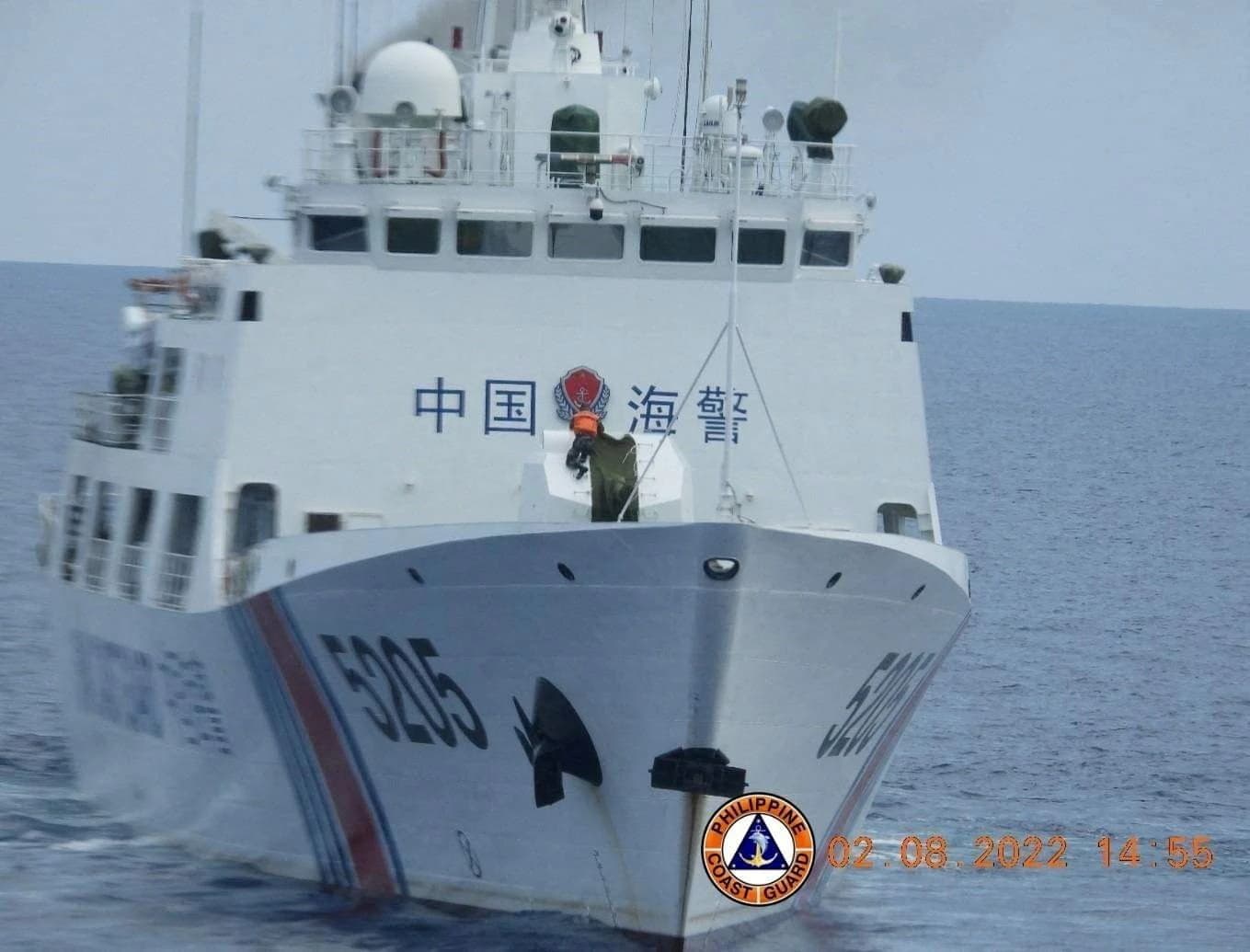
Taiwan’s coast guard said it observed Chinese ships near the island, the latest sign of military pressure that keeps the Taiwan Strait among the most closely watched geopolitical flashpoints for markets.
Taiwan coast guard reports Chinese ships near island

The immediate economic significance is not the patrol itself, but the risk of miscalculation in a waterway that sits at the center of Asian trade and semiconductor supply chains. Any sustained escalation around Taiwan can ripple through regional shipping, insurance costs, defense spending and risk sentiment toward China-linked assets.
Sentiment IndicatorsⓘProprietary · adalytica.com · September 3, 2026
This is a snapshot — live sentiment, awareness and momentum for 130+ markets update continuously in the dashboard.Open AlphaPulse
That backdrop has helped keep investors cautious on exposure to Chinese equities even as the market has stabilized in recent sessions. The FXI China large-cap ETF was last at $35.33, up slightly on the day, but still well below its 200-day moving average of $36.48, underscoring that longer-term sentiment remains fragile. Short-term technicals are firmer, with the fund above its 50-day moving average of $34.67 and its RSI at 58.6, suggesting recent buying interest has improved near-term momentum without erasing the broader discount.
The tension also matters beyond Chinese stocks. Taiwan’s strategic position at the heart of advanced chip production means any deterioration in cross-strait relations can quickly become a supply-chain issue for global technology, autos and industrials. Traders have increasingly treated every patrol, drill or warning as a reminder that the geopolitical risk premium around the region has not gone away.
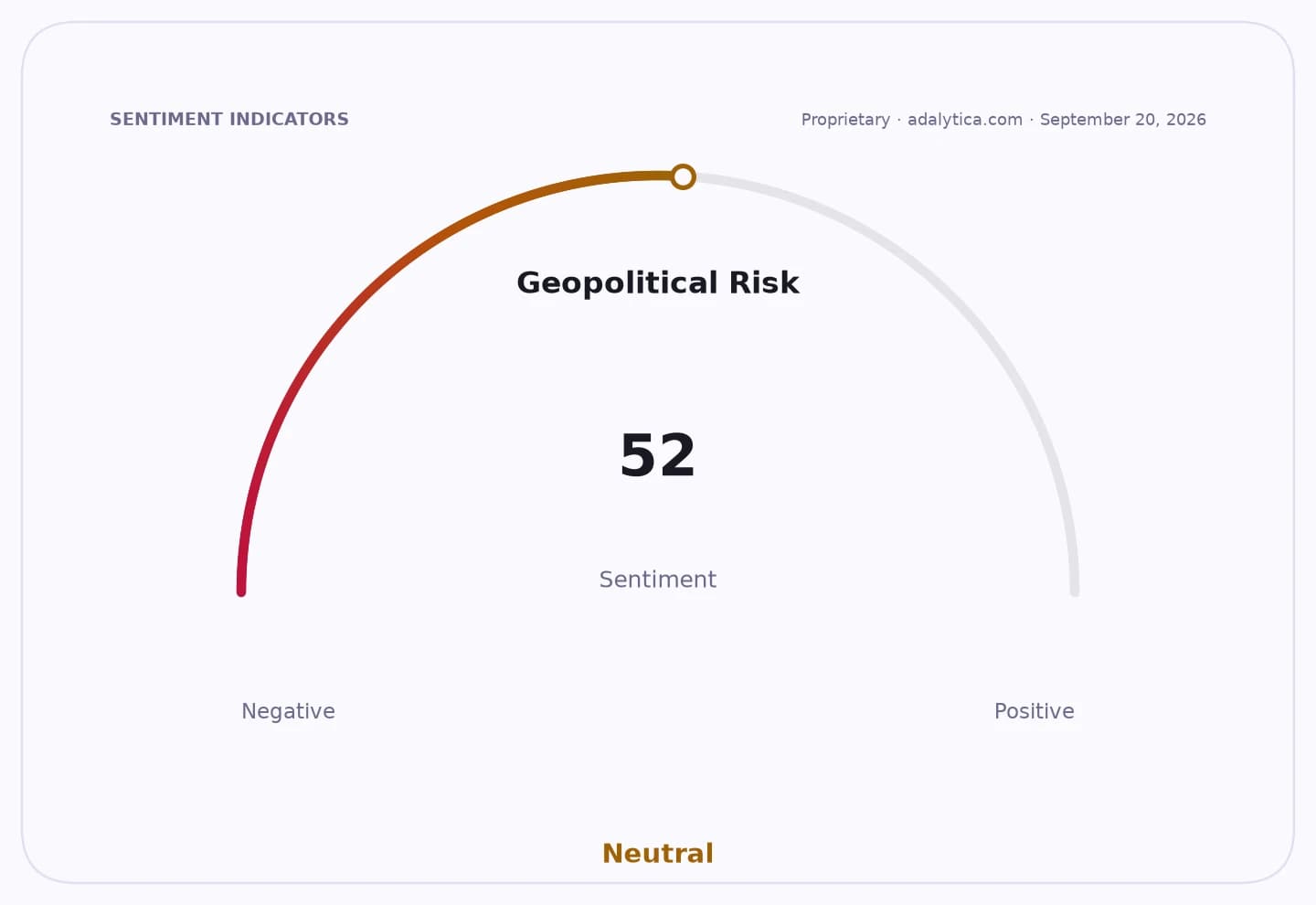
Geopolitical Risk — 30-day sentimentadalytica.com
Explore this data interactively — full history, time series and cross-market comparisons.Open AlphaPulse
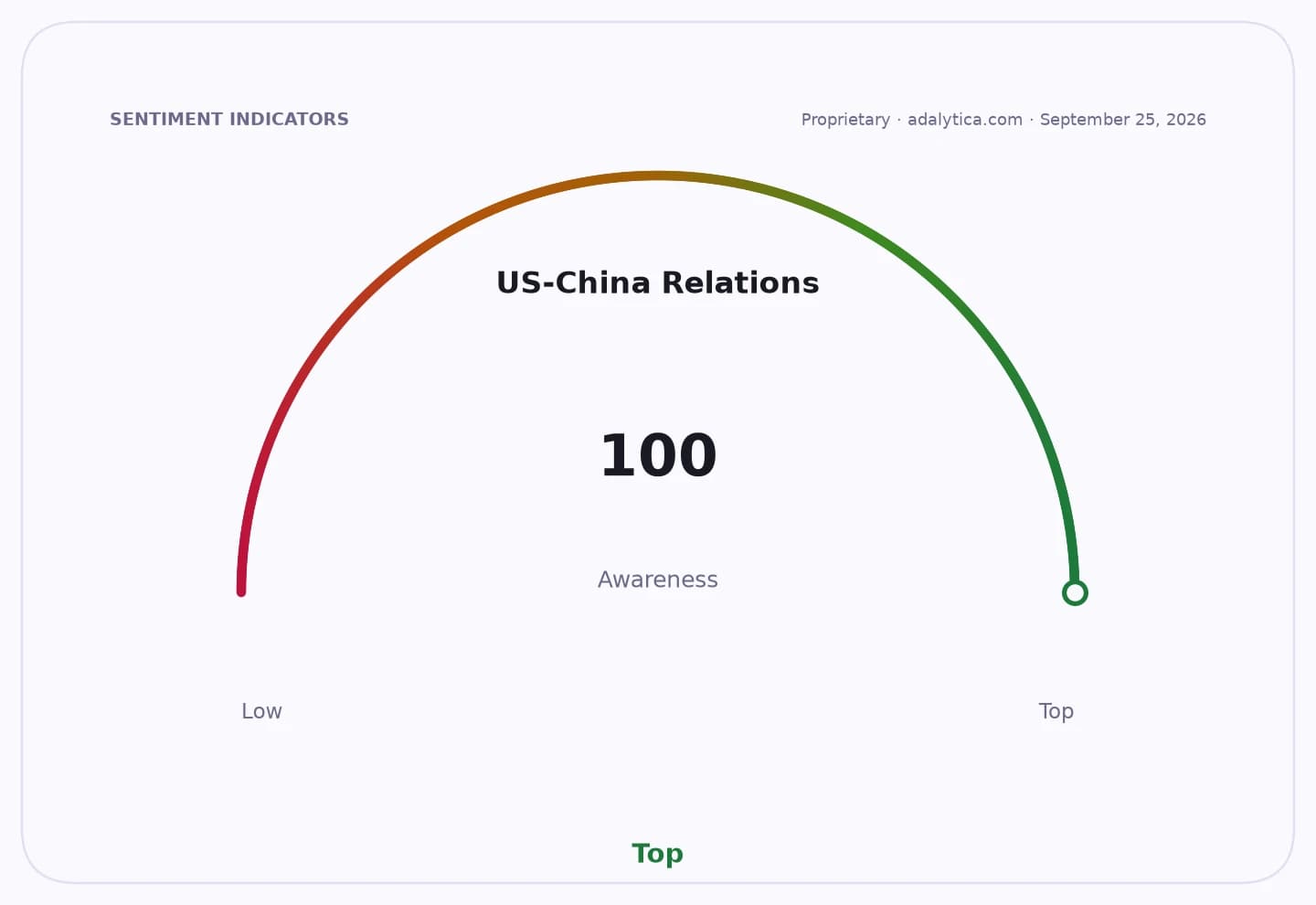
Adalytica’s Global Stability Sentiment score sits at 44, down 45 points over the past week, while its US-China Relations Sentiment reading improved to 70. That split points to a market that sees bilateral ties as somewhat less strained than the broader global backdrop, but still vulnerable to sudden shocks.
For investors, the next catalyst is whether the latest sightings remain routine or are followed by a more formal response from Taipei or Beijing. Any sign of broader military activity would likely revive pressure on China-exposed shares and lift demand for defensive assets, while a limited incident may keep the region in a low-grade but persistent risk-pricing mode.
| Entity | Gains | Losses |
|---|---|---|
| Taiwan defense establishment | ▲Higher deterrence focus | ▼Higher security pressure |
| China hardliners | ▲Leverage in signaling | ▼Diplomatic trust |
| FXI/China equities longs | ▲Short-term stabilization | ▼Upside capped by risk |
| Regional exporters/shipper insurers | ▲None | ▼Higher disruption risk |