Taiwan President Lai Ching-te used his National Day address to make the case that the island must reduce its dependence on a single industrial champion by building a broader base of high-value sectors, a shift with major implications for growth, resilience and investors.
Taiwan Pushes to Diversify Beyond TSMC
Lai’s call for a “chain of guardian mountains” was a direct nod to Taiwan Semiconductor Manufacturing Co., the company that has come to symbolize both Taiwan’s economic strength and its strategic vulnerability. The message matters because the island’s export model is increasingly tied to geopolitics: Washington, Tokyo and other capitals want more chip capacity outside Taiwan, while Taipei wants to ensure overseas expansion does not hollow out domestic supply chains.
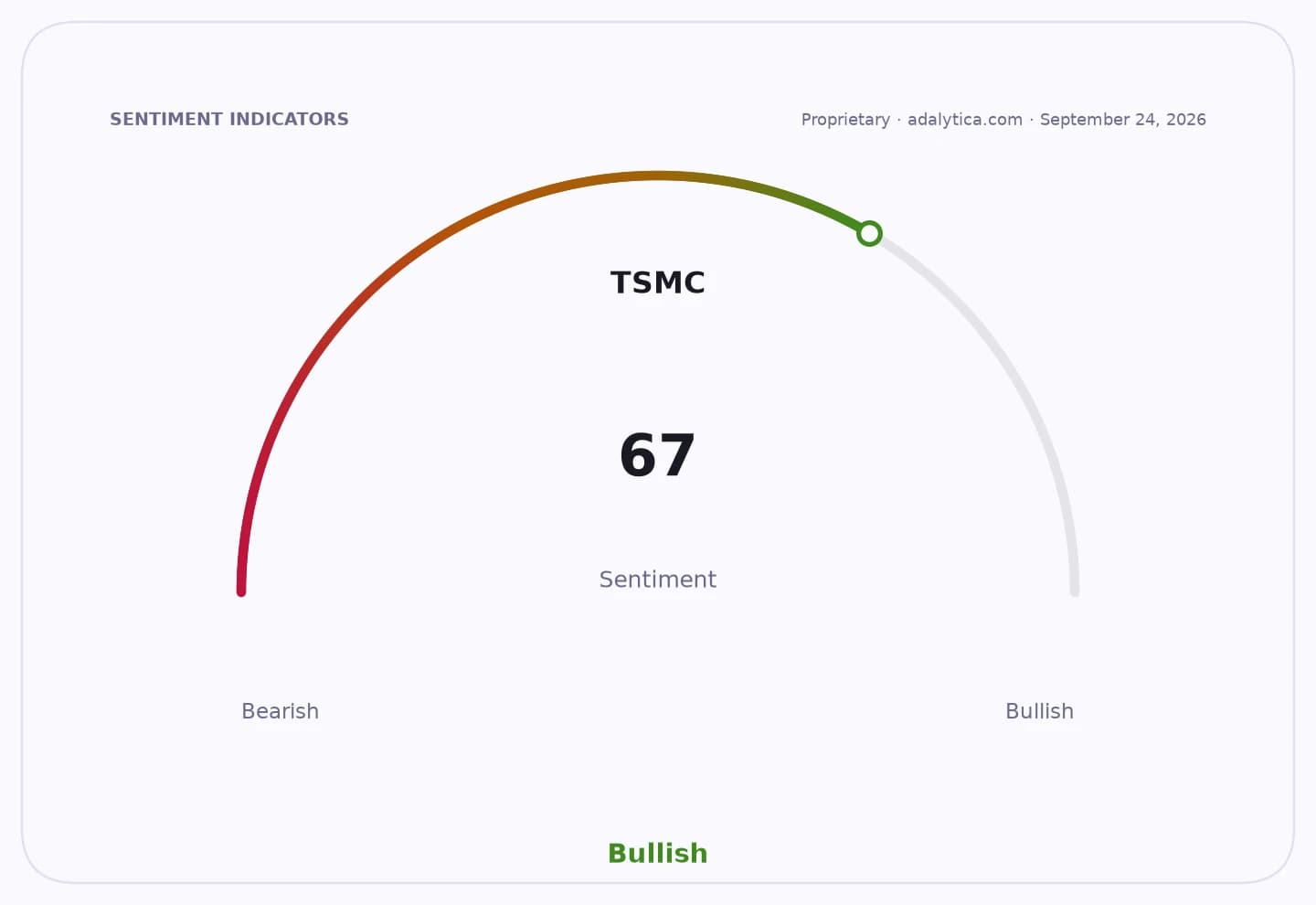
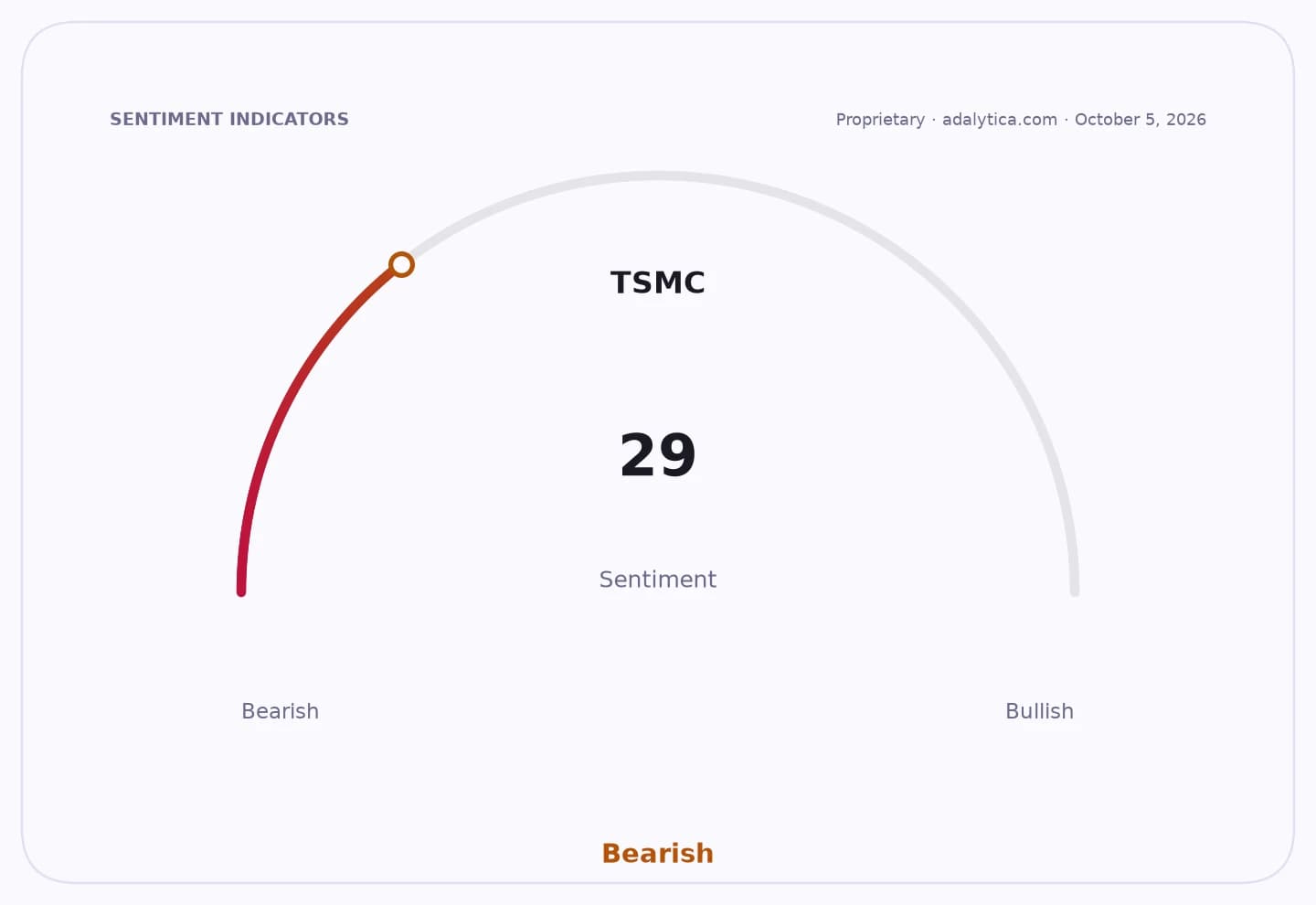
Sentiment IndicatorsⓘProprietary · adalytica.com · October 12, 2026
This is a snapshot — live sentiment, awareness and momentum for 130+ markets update continuously in the dashboard.Open AlphaPulse
That balancing act is now central to Taiwan’s economic strategy. Lai said the economy grew 14.15% in the first half of 2026 and could expand more than 11% for the year, which would be the fastest pace in 39 years. He also pointed to a projected per-capita GDP of $45,332, a Taiex level of 49,000 and Taiwan’s rise to fourth place in the IMD World Competitiveness Ranking. Those figures underscore how far the economy has climbed, but they also raise the bar for sustaining growth without becoming overly concentrated in semiconductors.
For investors, the policy message cuts both ways. On one hand, the government is signalling continued support for the chip complex and the ecosystem around it, including AI, next-generation communications, quantum computing, robotics and silicon photonics. That should remain constructive for TSMC, its suppliers and the broader Taiwan tech trade, especially with the island also promoting an Asian asset management hub and a NT$100 billion program to help smaller firms modernize, digitize and expand abroad.
On the other hand, the push to diversify reflects the risk that Taiwan’s economic fortunes are too closely linked to one company and one industry. TSMC shares were trading at NT$444.35 on Monday, down from a recent high of NT$476.29 in late June, though still well above the 50-day and 200-day moving averages. The chipmaker’s technical profile remains constructive, with the stock above its long-term trend, but the recent pullback and softer RSI readings suggest investors are watching closely for signs that valuations have run ahead of the underlying cycle.
The broader semiconductor complex has also stayed volatile. The SMH exchange-traded fund, a proxy for U.S.-listed chip stocks, remains elevated but has given back some of its late-summer strength, reflecting how much of the sector’s gain already rests on AI demand expectations. Taiwan’s policy priority, then, is not to replace TSMC but to build enough depth in adjacent industries that growth can withstand shocks from tariffs, supply-chain reconfiguration, energy constraints and competition from China.
Lai’s remarks on labor and energy point to the same objective. He said Taiwan would keep domestic workers as the primary workforce while easing recruitment of migrant and foreign talent, and he promised stable power supply through renewables, storage, grid upgrades and a pragmatic review of energy options. That mix is aimed at a very specific investor concern: whether Taiwan can keep attracting capital and retaining industrial capacity as production becomes more complex and energy-intensive.
The political economy of the speech is straightforward. Taiwan wants the security benefits of having advanced manufacturing rooted at home, while accepting that some capacity will expand overseas. The challenge is to prevent that internationalization from turning into deindustrialization. If Lai succeeds, Taiwan could broaden its growth model from chip dominance to a more diversified platform of industrial and financial strengths. If not, the island risks remaining extraordinarily competitive — but still excessively exposed to a single sector’s fortunes and to the geopolitics surrounding it.
| Entity | Gains | Losses |
|---|---|---|
| Taiwan government | ▲Broader industrial base | ▼Reliance on one sector |
| TSMC | ▲Policy support, supply-chain depth | ▼Pressure to internationalize |
| Export suppliers | ▲New domestic demand | ▼Disruption from relocation |
| Rival chip hubs | ▲Diversification tailwinds | ▼Taiwan’s concentration advantage |