Taiwan’s move to become the official presenter of Fitpar 2026 is a small headline with a bigger economic message: tourism is increasingly being used as a tool of trade diplomacy, and Paraguay is positioning itself to capture more of that spending.
Taiwan to present Fitpar 2026 in Paraguay
For investors, that matters because travel demand is not just about vacations anymore. It is about cross-border promotion, airline traffic, hotel occupancy, destination marketing and the kind of long-cycle relationships that can lift visitor flows for years. In a world where global stability remains fragile — Adalytica’s Global Stability Sentiment is in “Fear” territory — countries are leaning harder on tourism fairs and bilateral cooperation to keep demand moving.
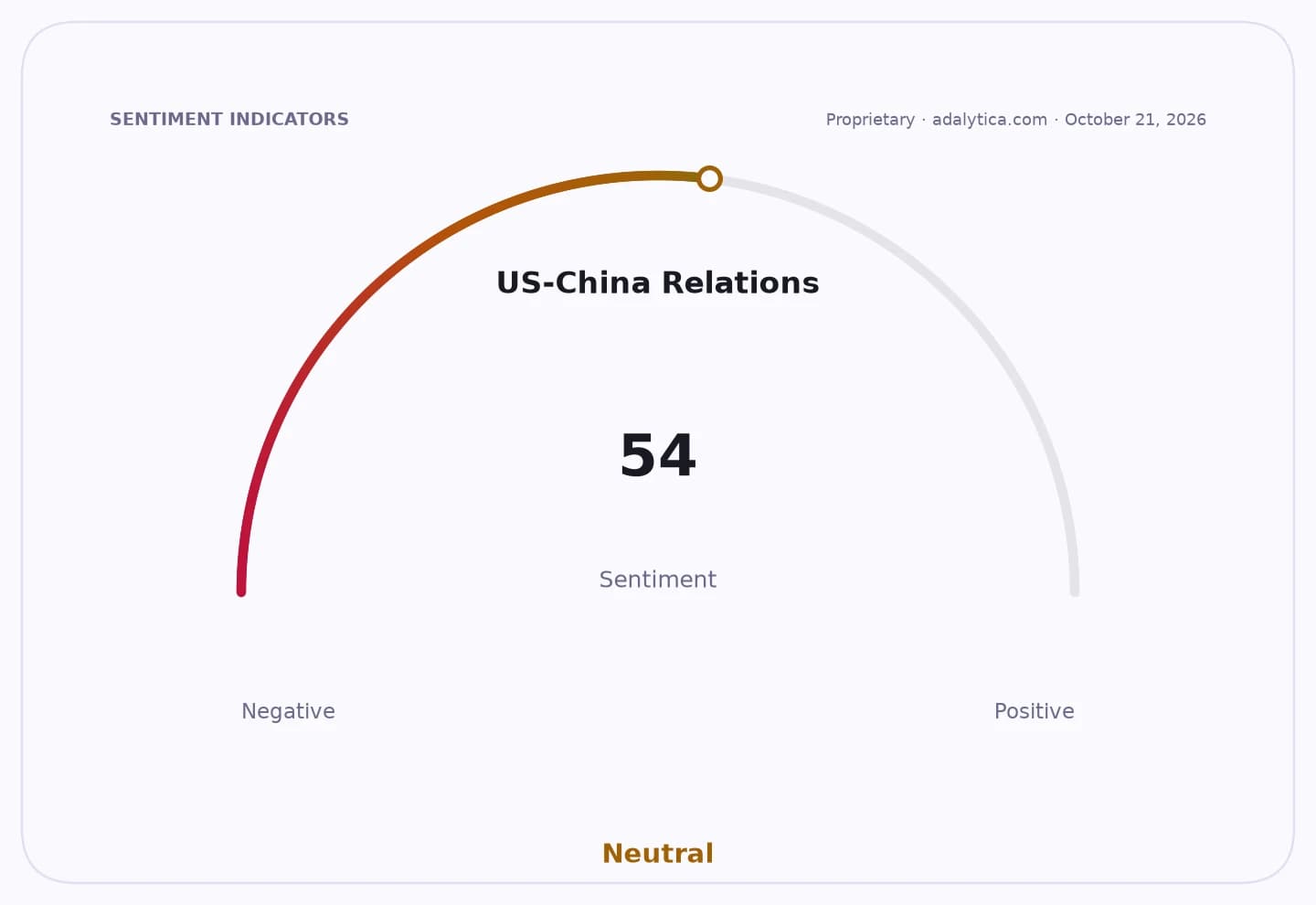
Sentiment IndicatorsⓘProprietary · adalytica.com · October 18, 2026
This is a snapshot — live sentiment, awareness and momentum for 130+ markets update continuously in the dashboard.Open AlphaPulse
Fitpar, now in its 21st edition, will run Oct. 16-18 in Asunción at the Centro de Convenciones Mariscal, with free entry after registration. Taiwan’s role upgrades from “guest of honor” last year to official presenter this year, giving it a larger platform to market itself as a destination built around sustainability, nature and culture. The island is also using the event to deepen ties with Paraguay’s tourism operators, media and consumers, a sign the relationship is meant to go beyond a one-off trade show appearance.
That matters economically because tourism is one of the cleanest ways for smaller and mid-sized economies to attract foreign currency without waiting for heavy industry or commodity cycles to turn. Taiwan’s pitch — national parks, mountain scenery, historic temples and urban tech-driven attractions — is aimed at travelers who spend more per trip and often book longer itineraries. For Paraguay, bringing in an official presenter from Asia broadens the fair’s commercial reach and gives local operators a chance to sell outbound packages, hotel nights and related services.
The timing also fits a broader regional pattern. Countries from Vietnam to Paraguay are using tourism forums and bilateral agreements to stimulate consumption, diversify visitor sources and support local businesses. That is important for investors because tourism flows tend to ripple through airlines, booking platforms, hotels, restaurants and transport providers. Companies like Booking Holdings, Expedia Group and Marriott International are still exposed to the same basic lever: when destinations successfully market themselves, booking volumes and room demand can follow.
The stock market has already shown how quickly travel names can react to shifts in demand and sentiment. But the deeper takeaway here is steadier than a trading pop: destination branding is becoming an economic strategy, not just a publicity exercise. A country that can turn a trade fair into a recurring pipeline of visitors, business contacts and media exposure is building a more durable tourism franchise.
Taiwan’s presence at Fitpar 2026 is worth watching as a signal of how tourism is being monetized as part of foreign engagement. For long-term investors, the winning names are likely to be the companies and countries that can turn these links into sustained travel demand, not just a one-week event.
| Entity | Gains | Losses |
|---|---|---|
| Taiwan | ▲Destination visibility | ▼Less market obscurity |
| Paraguay tourism operators | ▲New business leads | ▼Limited regional reach |
| Travel platforms and hotels | ▲More booking demand | ▼Missed destination traffic |
| Competing destinations | ▲Less share of attention | ▼Weaker fair exposure |