Taiwan is pressing Donald Trump not to trade away U.S. backing for the island in exchange for a quick economic deal with Beijing, as allies across Asia brace for a potentially defining summit between the U.S. president and Xi Jinping. The concern is that Washington could soften support for Taipei under Chinese pressure, a shift that would reverberate far beyond the Taiwan Strait by altering regional security calculations and investor expectations for semiconductors, trade and defense spending.
Taiwan Presses Trump Before Xi Summit

The stakes are unusually high because Taiwan sits at the center of both the geopolitical balance in Asia and the global technology supply chain. Any perception that the U.S. is prepared to make concessions on Taiwan would embolden Beijing, unsettle Japan, South Korea and the Philippines, and raise the risk premium on assets tied to cross-strait stability. It would also deepen questions over whether the U.S. can separate tariff and trade negotiations from security commitments that have underpinned the regional order for decades.
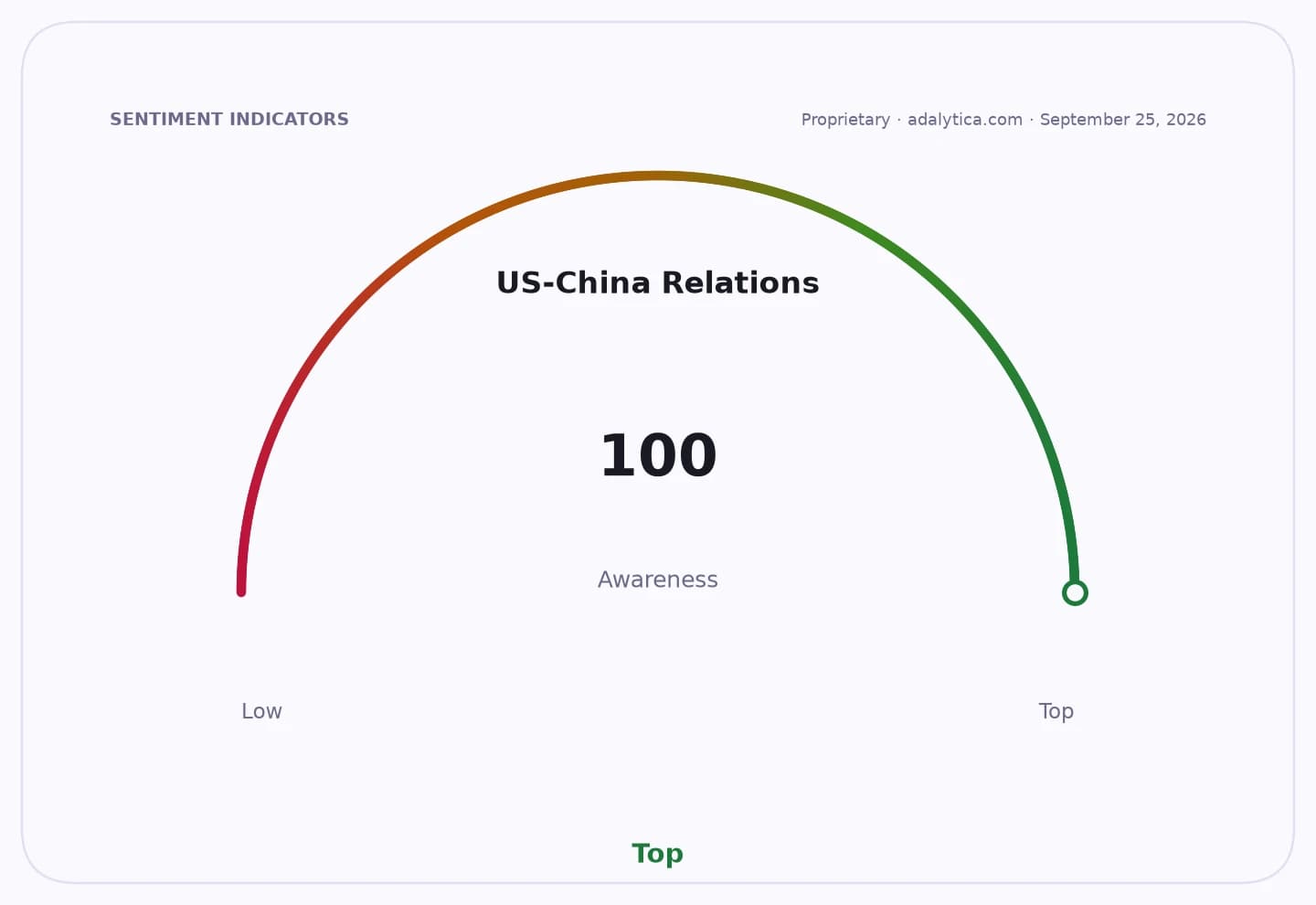
Sentiment IndicatorsⓘProprietary · adalytica.com · September 21, 2026
This is a snapshot — live sentiment, awareness and momentum for 130+ markets update continuously in the dashboard.Open AlphaPulse
Trump’s own remarks have added to the anxiety. In May, he described U.S. arms sales to Taiwan as a bargaining chip, a comment that suggested Taiwan could become part of a broader negotiating package with China. That has left Taiwanese officials and regional allies wary that a White House eager for a trade or political win could be tempted to soften its stance ahead of the Sept. 24 meeting in Washington.
For investors, the issue is not only diplomatic but financial. Taiwan Semiconductor Manufacturing Co., the world’s most important chipmaker, remains exposed to any disruption in the island’s strategic position, even as its shares have climbed to about $434.67, above both its 50-day moving average of $416.33 and 200-day average of $377.43. The stock’s recent strength reflects confidence in artificial intelligence demand, but a policy shock over Taiwan would hit the broader Taiwan equity complex and could spill into U.S.-listed China exposure as well.
Geopolitical Risk vs TSMadalytica.com
Explore this data interactively — full history, time series and cross-market comparisons.Open AlphaPulse
The iShares MSCI Taiwan ETF, tracked by investors as a direct gauge of local market sentiment, has also held near $99.01, just above its 50-day average of $94.25 and well above its 200-day average of $78.09. That suggests markets are not pricing in immediate crisis, even as the geopolitical backdrop remains fragile. By contrast, the iShares China Large-Cap ETF has slipped to $34.32 and sits below its 50-day average of $35.15 and 200-day average of $36.28, showing that China-linked equities are still burdened by caution even before any potential deal in Washington.
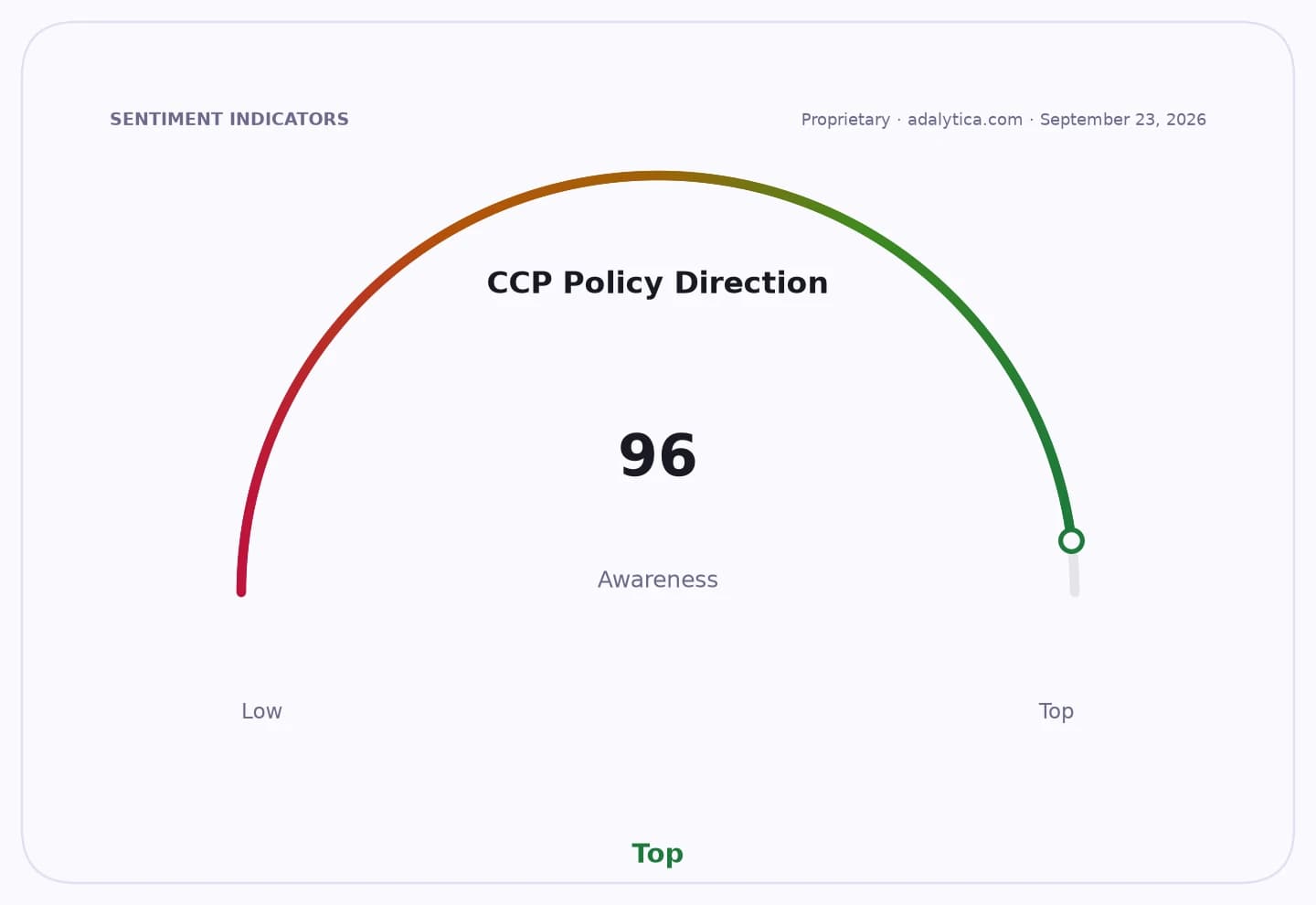
Adalytica’s Global Stability Sentiment gauge shows the broader political mood remains uneasy, with the latest reading at 59, neutral, but awareness flagged at a fear level of 26. A separate Adalytica measure of China Communist Party policy direction has improved to 67, suggesting Beijing may be entering the summit with firmer confidence in its negotiating posture rather than less.
That helps explain why Xi is expected to press hard on Taiwan at the meeting. Beijing has long treated the issue as a core sovereignty question and views Washington’s arms sales and security ties with Taipei as direct challenges. Taipei, meanwhile, is working to reinforce international support, including by expanding its regional presence, even as China denounces such moves as provocative.
The most likely near-term outcome is not a dramatic bargain but a period of elevated uncertainty. If Trump signals any willingness to narrow support for Taiwan, markets could quickly reprice the odds of a wider geopolitical confrontation. If he resists Chinese demands, the summit may produce more familiar friction on trade and technology, but it would reduce one of the biggest tail risks hanging over Asian assets and global supply chains.
| Entity | Gains | Losses |
|---|---|---|
| Taiwan | ▲Security backing; deterrence | ▼Bargaining leverage if traded away |
| China | ▲Diplomatic leverage; summit concessions | ▼U.S. firmness on Taiwan |
| U.S. allies in Asia | ▲Regional stability | ▼Higher risk from policy ambiguity |
| TSMC / Taiwan equities | ▲Stability premium; chip demand continuity | ▼Geopolitical risk repricing |