A tax reform-led surge in inflation at the start of 2026 appears likely to be a one-off shock rather than a sustained price cycle, with the latest data and market signals pointing to a temporary lift in consumer prices that should fade by year-end.
Tax-Driven Inflation Seen as Temporary
That matters because the difference between a tax-driven spike and a broad inflation breakout will determine whether central banks keep rates restrictive, how far bond yields can stay elevated and whether equity valuations can expand. Investors are less concerned about a single month of higher CPI than about second-round effects — wage demands, service inflation and longer-term expectations — that would force policy to stay tight.
Sentiment IndicatorsⓘProprietary · adalytica.com · July 22, 2026
This is a snapshot — live sentiment, awareness and momentum for 130+ markets update continuously in the dashboard.Open AlphaPulse
The clearest evidence is that headline inflation has already shown the kind of volatility consistent with tax effects rather than entrenched demand pressure. The consumer price index jumped to 332.407 in April 2026, then eased to 333.979 in May and 332.568 in June, while the core measure rose to 336.121 in May before slipping to 336.065 in June. The forecast for July shows both measures inching higher again, but only modestly, suggesting the near-term move is more of a fiscal pass-through than a runaway trend.
That distinction is crucial for policy. A tax reform can lift measured inflation quickly by increasing administered prices, indirect taxes or business costs that are passed to consumers. But if household demand is weakening and inflation expectations remain anchored, the effect often washes out as the comparison base resets and firms absorb some of the burden in margins. That is the narrative investors are trying to price: a higher inflation print in early 2026, followed by normalization later in the year.
Markets are already signaling that traders see inflation risk, but not panic. The 10-year Treasury yield has climbed to about 4.58%, reflecting the market’s insistence on a higher-for-longer rate backdrop. At the same time, the SPDR S&P 500 ETF Trust has recovered to 748.28, above its 50-day moving average of 743.81 and well above its 200-day average of 694.27, suggesting equities are still willing to look through the inflation bump if growth holds up. By contrast, long-duration Treasuries remain under pressure, with the iShares 20+ Year Treasury Bond ETF at 83.66, below both its 50-day and 200-day averages, a sign investors are not yet ready to bet on a clean disinflation trade.
The dollar’s recent strength also fits that picture. The currency proxy has rebounded to 90.15, far above its 200-day average of 66.5, indicating markets continue to demand a premium for holding dollar assets in a world where inflation remains sticky and policy rates may stay elevated longer than previously expected. In other words, investors are positioning for volatility around inflation, not a structurally higher inflation regime.
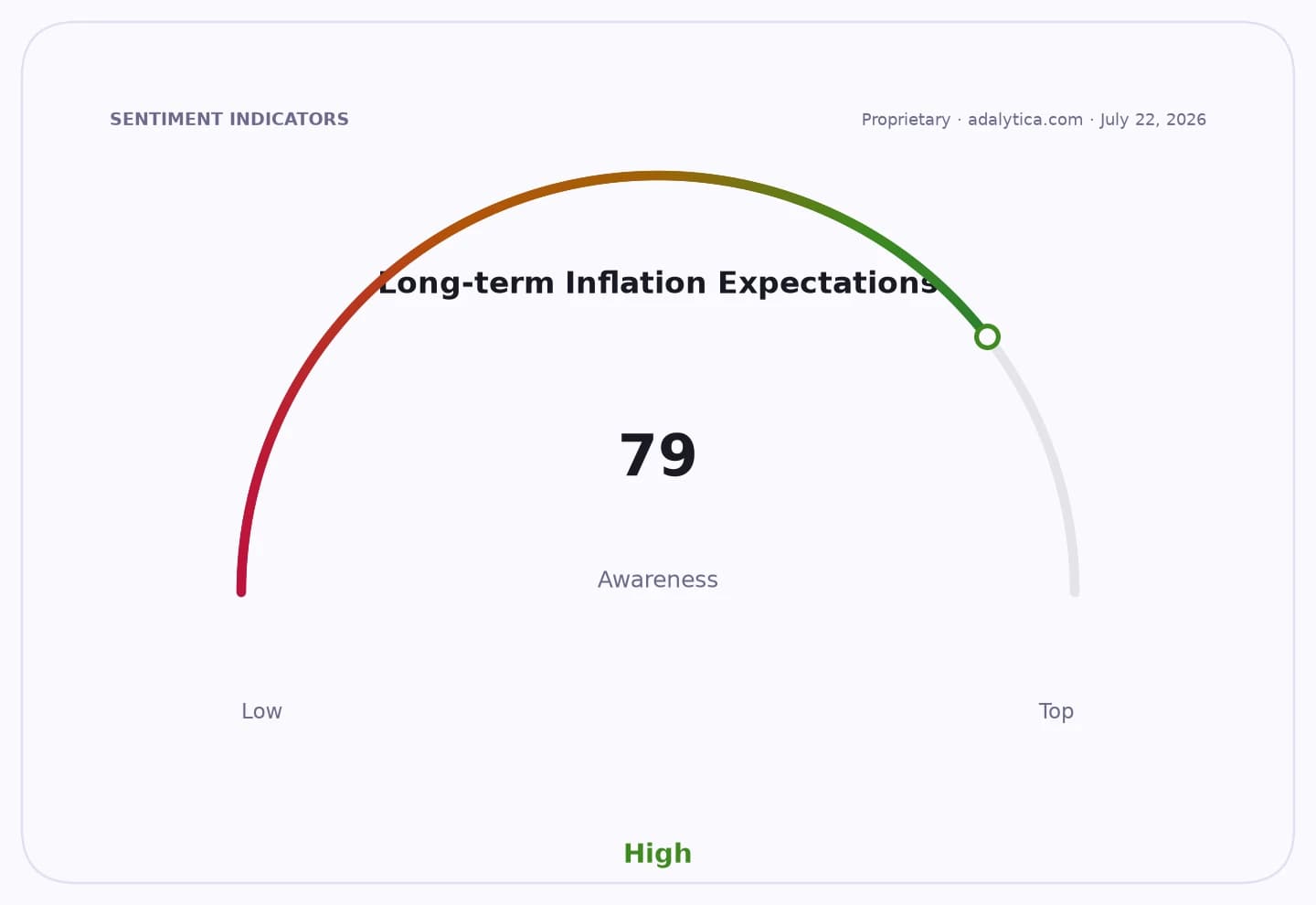
Adalytica’s long-term inflation expectations gauge has improved sharply over the past week, but the broader message is still cautious: confidence in the Fed’s 2% target remains fragile, even as the latest reading on long-term inflation expectations sentiment moved to 82 from 79 a day earlier. That leaves room for a tactical repricing in rates without forcing a full-blown shift in the inflation narrative. The SPY trade-signal snapshot is similarly neutral, suggesting the market is waiting for more evidence before deciding whether the tax effect bleeds into growth or fades into the background.
For investors, the key issue is not whether inflation rises in early 2026 — the seed headline already says it will — but whether central bankers look through it. If the shock is absorbed by year-end, as the outlook suggests, then the most likely market path is a brief bear-steepening in the yield curve, a short-lived hit to duration assets and a relatively benign outcome for cyclicals and equities. If, however, companies use the tax change to widen pricing and workers respond with higher wage demands, inflation expectations could re-anchor higher and force a more hawkish policy response.
That leaves the next few CPI prints as the main catalyst. A contained pass-through would support the case for eventual rate relief and help Treasuries recover. A broader and more persistent rise would favor the dollar, keep long bonds weak and cap equity multiples, especially in rate-sensitive sectors. For now, the market is treating the tax reform shock as real but temporary — a fiscal bump, not a new inflation regime.
| Entity | Gains | Losses |
|---|---|---|
| Government | ▲Higher tax receipts | ▼Short-term inflation backlash |
| Consumers | ▲Lower inflation later in 2026 | ▼Higher prices in early 2026 |
| Bond investors | ▲If inflation fades | ▼If yields stay elevated |
| Equities | ▲If shock is absorbed | ▼If Fed stays hawkish |