Team8 is betting that the next wave of enterprise AI value will be built less around models and more around the plumbing needed to run them in production.
Team8 Launches Infra Village for AI Infrastructure
The Israeli venture firm said on Nov. 23 it was launching Infra Village, a community and company-building initiative aimed at AI and software infrastructure startups, and staged the announcement at the New York Stock Exchange. The move matters because it targets one of the market’s most persistent bottlenecks: turning AI pilots into systems that can reliably trace failures, assign costs and survive real traffic without collapsing under operational complexity.
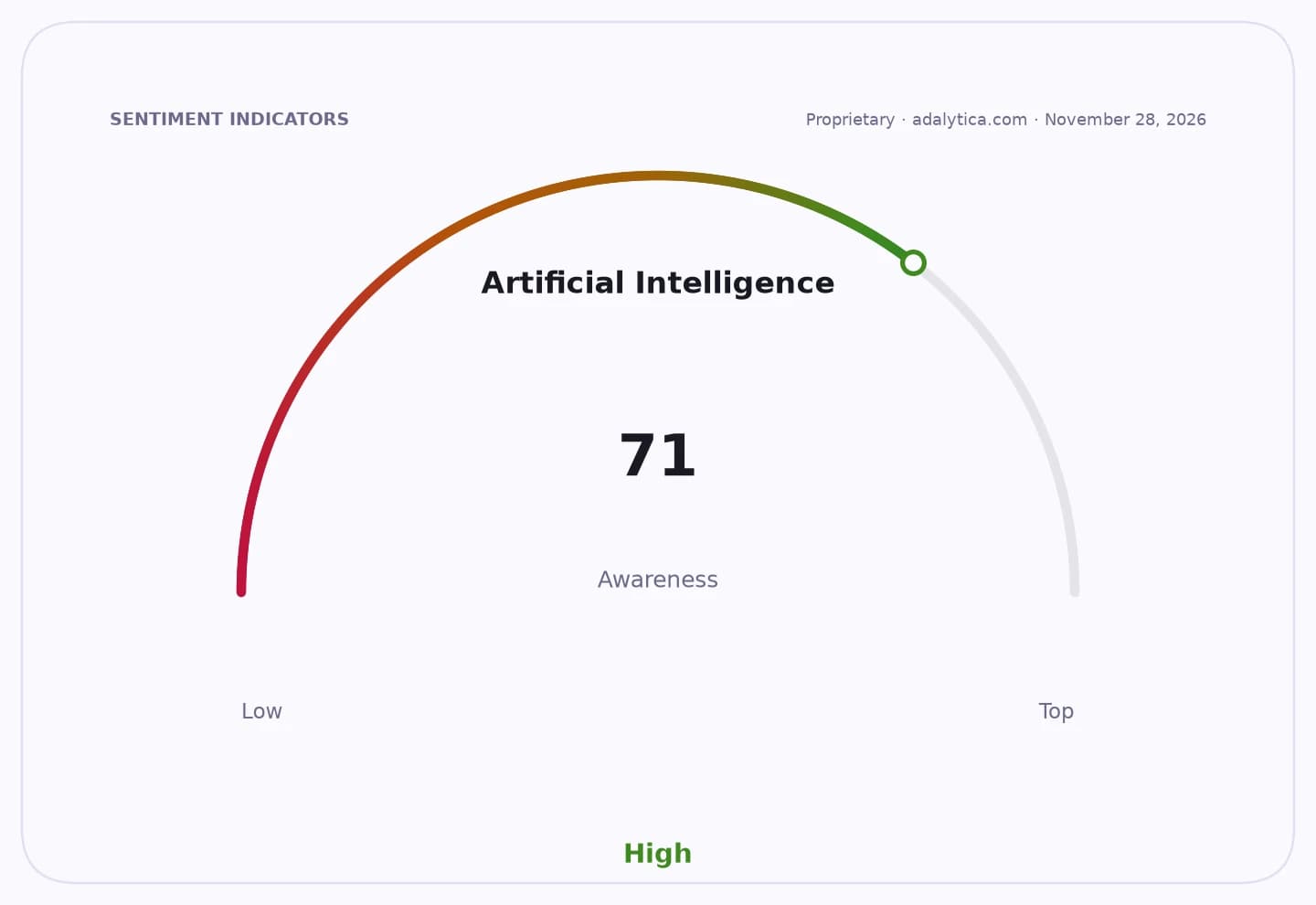
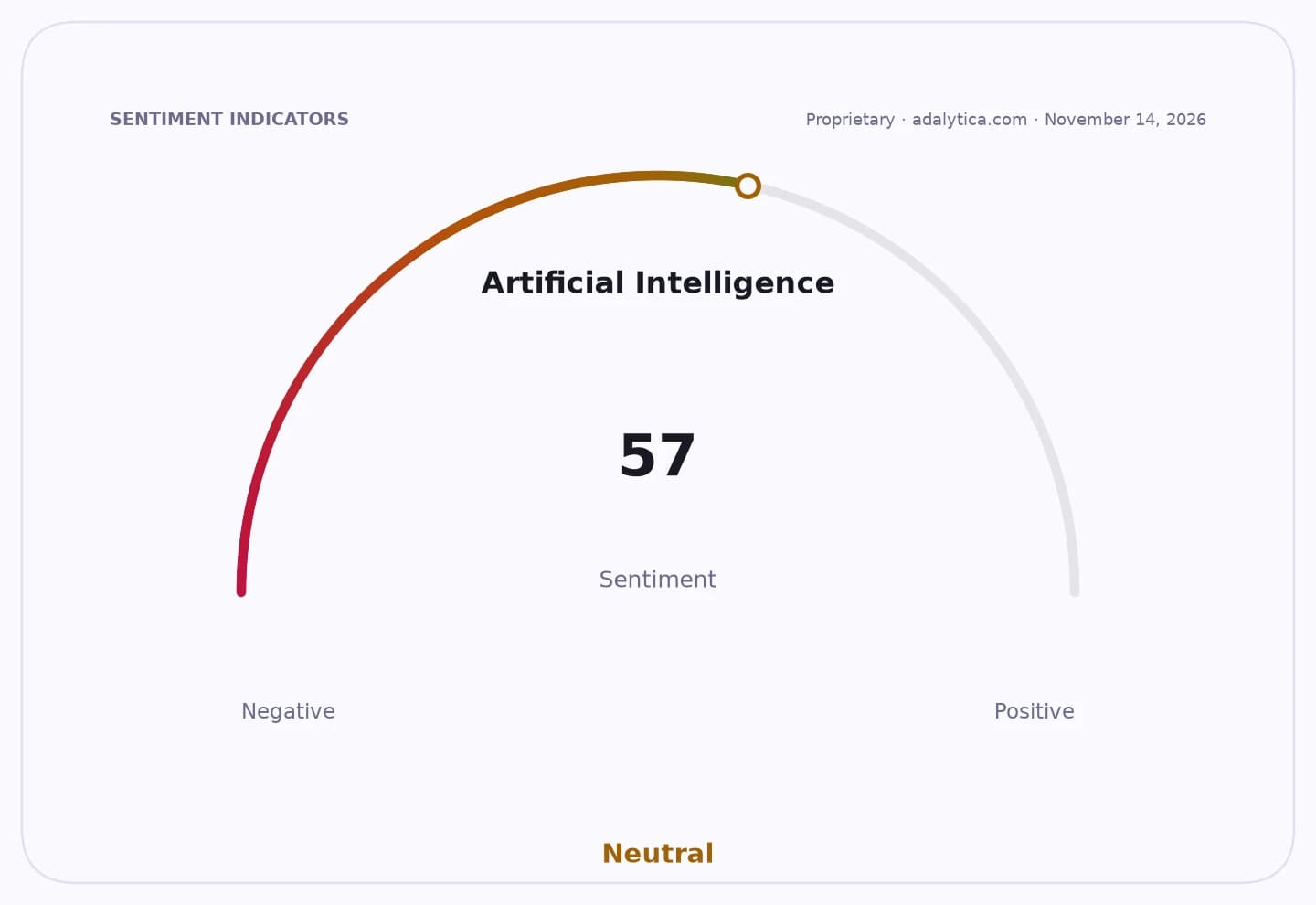
Sentiment Indicators
Artificial Intelligence
Team8 did not disclose a new fund, a dedicated investment pool or initial portfolio companies, which makes the announcement more strategic than financial for now. But the premise is commercially important. Enterprise AI buyers increasingly need tooling that can identify which model or workflow produced an error, who owns the incident and what the request actually cost. That is the difference between a demo and a business process.
The firm is trying to compress that feedback loop by putting CIOs, CTOs and infrastructure executives in the same room as founders. For startups, that could be valuable signal extraction: an executive describing why a pilot failed, where approvals slowed deployment or how a cheaper model degraded performance gives founders a far more investable problem than a vague thesis about AI adoption. For operators, it offers a forum to compare notes on whether the same failure modes are showing up across companies or just in one environment.
Nvidia Corp
That distinction matters economically because enterprise AI spending is shifting from experimentation to infrastructure-heavy rollout. In production, companies need observability, governance, cost attribution and workflow control, not just access to a foundation model. Tools such as Team8-backed Port, which helps teams map ownership and approved workflows, and Finout, which tracks AI and cloud spending, illustrate the kind of software budgets are likely to support as deployments scale. The question for investors is whether these capabilities stay as fragmented point solutions or consolidate into larger platforms.
The launch also fits Team8’s broader playbook. It has used a similar model in cybersecurity with its CISO Village, and now appears to be applying that network effect to AI infrastructure. That could give the firm earlier access to recurring pain points and better founder sourcing at a moment when infrastructure is becoming a larger share of the AI stack.
For investors, the implication is that the most durable AI startups may be those that sit closest to production workloads, not the most visible model layer. The bull case is that enterprise spending on monitoring, cost control and deployment tooling expands as AI reaches mission-critical systems. The bear case is that many of those functions get absorbed into broader cloud, developer or observability suites before standalone ventures can build scale. Infra Village will only prove its value if it repeatedly surfaces problems common enough to support new companies — and if those companies can win customers beyond the first few operator conversations.
| Entity | Gains | Losses |
|---|---|---|
| Team8 | ▲Earlier deal flow | ▼No disclosed capital commitment |
| AI infrastructure startups | ▲Direct operator access | ▼Harder competition for attention |
| Enterprise buyers | ▲Better-fit tooling | ▼More vendor fragmentation |
| Broad AI model companies | ▲More production support | ▼Less spotlight than infrastructure |