Telecom stocks are being pulled in opposite directions by the same force: artificial intelligence is increasing demand for network capacity while also forcing carriers to spend more to keep pace.
Telecom stocks face AI demand and capex tradeoff
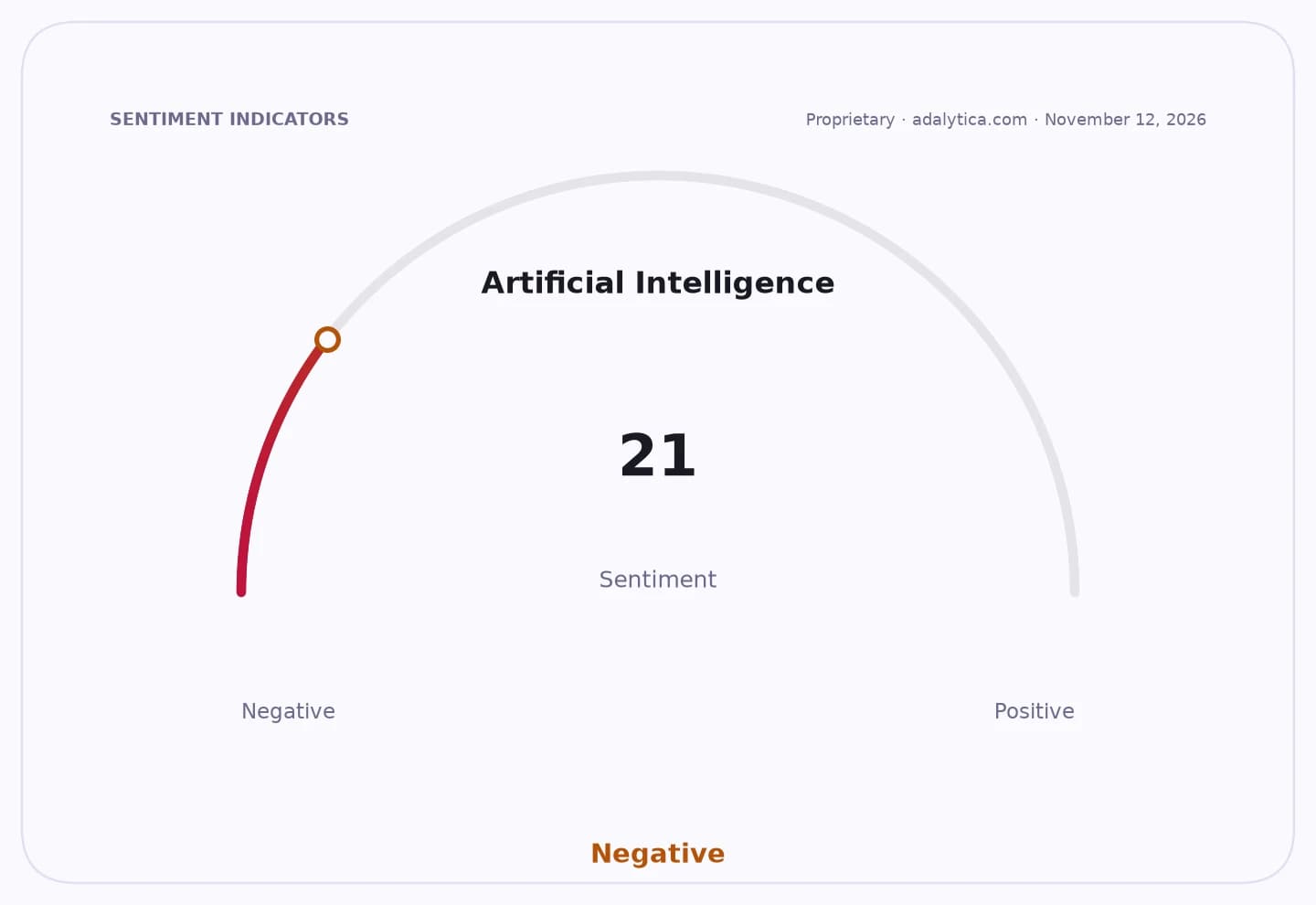
Artificial Intelligence
That tension is now visible in the share prices of the biggest US operators. Verizon and T-Mobile have each rallied sharply at points this year even as trading has remained volatile, while AT&T has lagged after a weaker stretch. The move reflects a market that is still trying to determine whether AI becomes a new profit engine for telecoms or another capital-intensive upgrade cycle that compresses returns.
Sentiment Indicators
The economic significance is straightforward. AI models, cloud workloads and edge applications all require more backhaul, lower latency and denser fiber and wireless infrastructure. That should support traffic growth, wholesale demand and enterprise connectivity over time. But it also raises the bill for spectrum, fiber, transport and network modernization at a time when carriers are already navigating mature consumer wireless markets and pressure to protect free cash flow.
Recent filings suggest the first-order effect is not yet a clean revenue surge, but a re-rating of investment priorities. T-Mobile has explicitly flagged network restructuring costs, while Verizon’s filings point to ongoing spending across global networks and technology. At the same time, related suppliers such as Arista Networks and Cisco have told investors that generative and agentic AI are accelerating demand for advanced networking equipment, even as customer spending patterns remain volatile. For telecoms, that means AI is likely to show up first in the capex line before it becomes fully visible in revenue.
That sequencing matters for investors. Carriers that can monetize AI traffic through fiber, enterprise services and advanced connectivity will have the best chance of converting the theme into margin support. Those that need to spend heavily before demand is proven risk lower returns on invested capital and more pressure on valuation. The sector’s recent price action suggests investors are rewarding companies that appear better positioned to capture the traffic upgrade, but punishing any hint that AI will mainly deepen the capital burden.
The broader backdrop is also becoming more global. China and Indonesia have stepped up cooperation in AI, gaming and digital industries, underscoring how quickly digital infrastructure demand is spreading beyond the US market. That widens the opportunity set for equipment vendors and carriers with regional exposure, but it also raises the competitive bar as countries and operators race to build the networks that AI will depend on.
For now, AI is best understood as a demand catalyst with a delayed earnings payoff. The winners will be the telecoms that can turn heavier data use into higher-value services without losing discipline on capital spending. The losers will be operators forced to finance the buildout without enough pricing power to earn an adequate return.
| Entity | Gains | Losses |
|---|---|---|
| Telecoms with fiber and enterprise exposure | ▲Higher AI-driven traffic demand | ▼Heavier capex if monetization lags |
| Network equipment suppliers | ▲More orders for advanced infrastructure | ▼Volatility if carrier spending slows |
| Verizon / T-Mobile | ▲Better positioning for traffic growth | ▼Short-term pressure from investment needs |
| AT&T / slower monetizers | ▲Potential demand tailwind | ▼Return on capital risk |