Teradyne is telling investors the AI buildout is still feeding through semiconductor manufacturing, and that matters because the test-equipment cycle is one of the cleanest early reads on whether chipmakers are still spending or starting to blink.
Teradyne Q3 Revenue Guides to $1.2B-$1.3B
The company projected third-quarter revenue of $1.2 billion to $1.3 billion, a range that suggests customers are still funding production capacity for advanced chips even after a volatile run in the stock. For investors, that is important because Teradyne sits on the picks-and-shovels side of AI: when chip makers and foundries increase output, test systems, automation and validation demand usually follows.
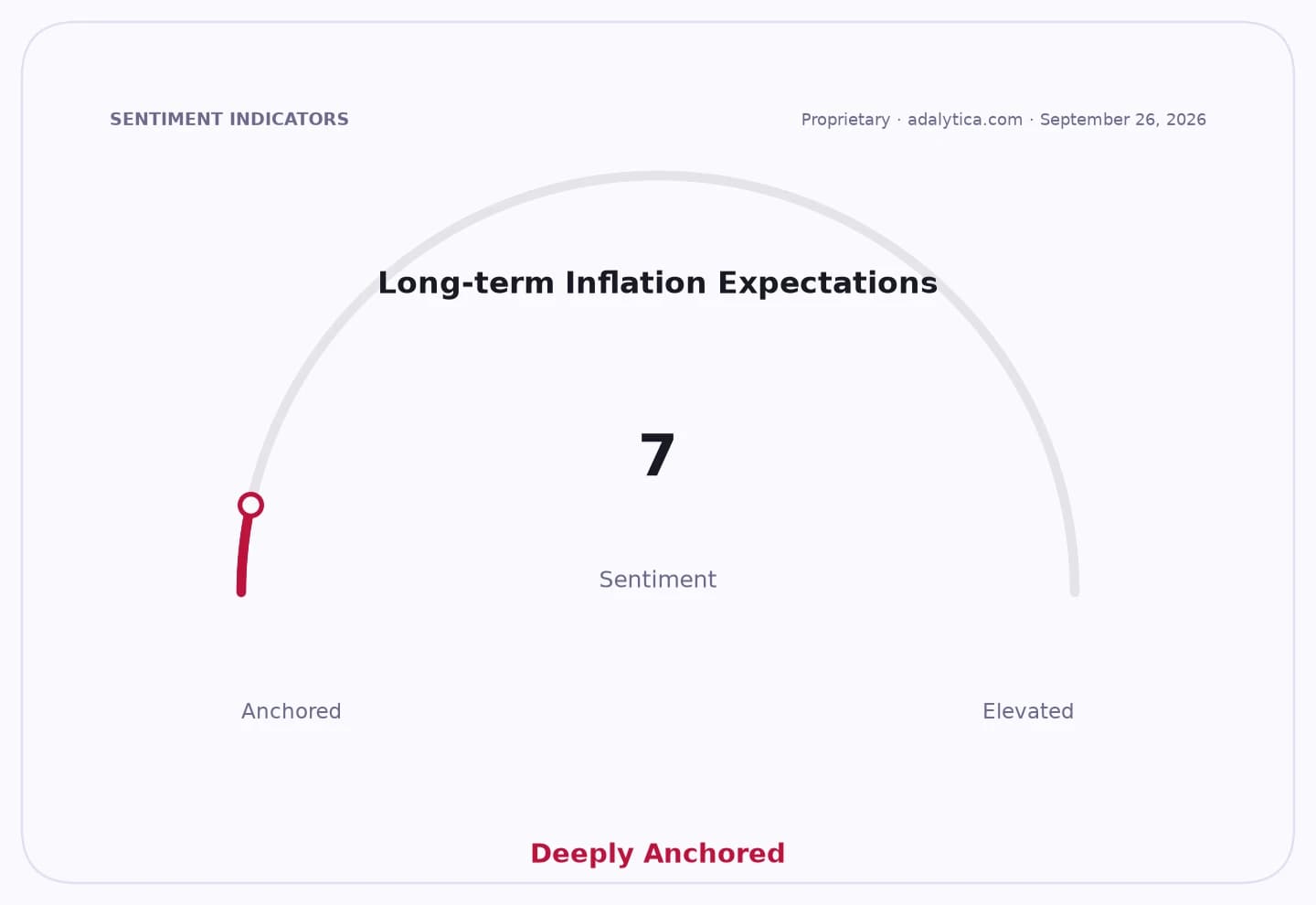
Sentiment IndicatorsⓘProprietary · adalytica.com · July 29, 2026
This is a snapshot — live sentiment, awareness and momentum for 130+ markets update continuously in the dashboard.Open AlphaPulse
That makes Teradyne’s outlook a useful signal for the broader semiconductor capex story. AI remains the dominant growth engine across the chip supply chain, and suppliers from equipment makers to memory and foundry names have increasingly linked results to data-center and AI-related demand. Recent strength in chip-equipment peers has reinforced the view that this is not just a one-quarter burst, but part of a longer spending cycle tied to next-generation compute.
The stock has reflected that optimism, but also the volatility that comes with it. Teradyne shares have swung sharply in recent weeks, with conventional technical indicators showing a jump from stretched conditions in late June to a weaker setup by late July, including a retreat below the 50-day moving average and a softer RSI reading. That kind of action tells you the market still wants proof that AI orders are durable, not just narrative-driven.
The bigger economic point is that AI investment is keeping industrial demand firmer than many expected even as rates stay relatively restrictive. The Fed funds rate is around 3.63%, so capital is no longer cheap, yet companies are still committing to the infrastructure needed to support model training and deployment. That favors the suppliers with the most direct exposure to AI-related throughput, and it explains why equipment names can still command investor attention even when the broader macro backdrop is mixed.
Teradyne’s update also fits a wider pattern: AI is no longer just a software theme, but a capex cycle that reaches into manufacturing, inspection, packaging, memory and testing. If that cycle holds, the market may be underestimating the duration of the earnings tailwind for semiconductor equipment makers with leverage to advanced-node production.
For now, the message is clear: the AI trade is still alive, and Teradyne looks like one of the cleaner ways to play it without paying the full premium for the marquee chip names. The next catalyst is whether peers echo the same demand tone, which would strengthen the case that the AI infrastructure buildout still has room to run.
| Entity | Gains | Losses |
|---|---|---|
| Teradyne | ▲AI-driven test demand | ▼Skeptical shorts |
| Chipmakers | ▲More production capacity | ▼Delayed capex discipline |
| Semiconductor equipment peers | ▲Stronger order backdrop | ▼Investors expecting slowdown |
| Broad market | ▲AI capex support | ▼Cyclical bears |