Tesla’s Optimus robot may be years from commercial scale, but the supply chain around it is already getting paid, with chipmaker Taiwan Semiconductor Manufacturing, memory supplier Micron Technology and battery maker Panasonic positioned to benefit long before Tesla books meaningful robot revenue.
TSMC, Micron, Panasonic to benefit from Tesla Optimus
That matters because Optimus is no longer just a Musk moonshot. It is becoming a capital-intensive buildout that pulls in the same AI and advanced manufacturing suppliers feeding the broader automation boom, even as Tesla still has to prove it can turn a humanoid robot into a profitable product.
Musk has said Optimus could become Tesla’s most important product, and the company is working toward commercial production. But the robot will need advanced processors, large amounts of memory and lightweight batteries, all of which are expensive inputs that must be sourced before any finished unit reaches customers.
TSMC is the most immediate winner in that chain. Tesla has already flagged it as a chipmaking partner, and TSMC’s latest quarterly revenue rose 41% year over year to $46.72 billion, with advanced chips made on seven-nanometer or smaller processes accounting for 79% of wafer revenue. Those are the kinds of chips AI and robotics systems rely on, and they keep TSMC in the middle of the boom while Tesla’s own chip ambitions remain a longer-term threat.
Micron stands to benefit from the memory side of the equation. Musk thanked the company on Tesla’s July earnings call for supplying a substantial memory allocation despite tight industry conditions, and Micron has said humanoid robots could require memory loads similar to autonomous vehicles — more than 200 gigabytes and multiple terabytes of storage. For investors, that ties robot demand directly to the AI memory cycle, where supply shortages can support pricing and margins.
Panasonic is the least certain but still relevant. Tesla’s long-running battery supplier already has the manufacturing know-how for high-performance cells that a walking, sensor-heavy robot would need, though no Optimus-specific deal has been confirmed. If Tesla moves beyond prototypes, battery content could become another incremental revenue stream for Panasonic, even if it starts small.
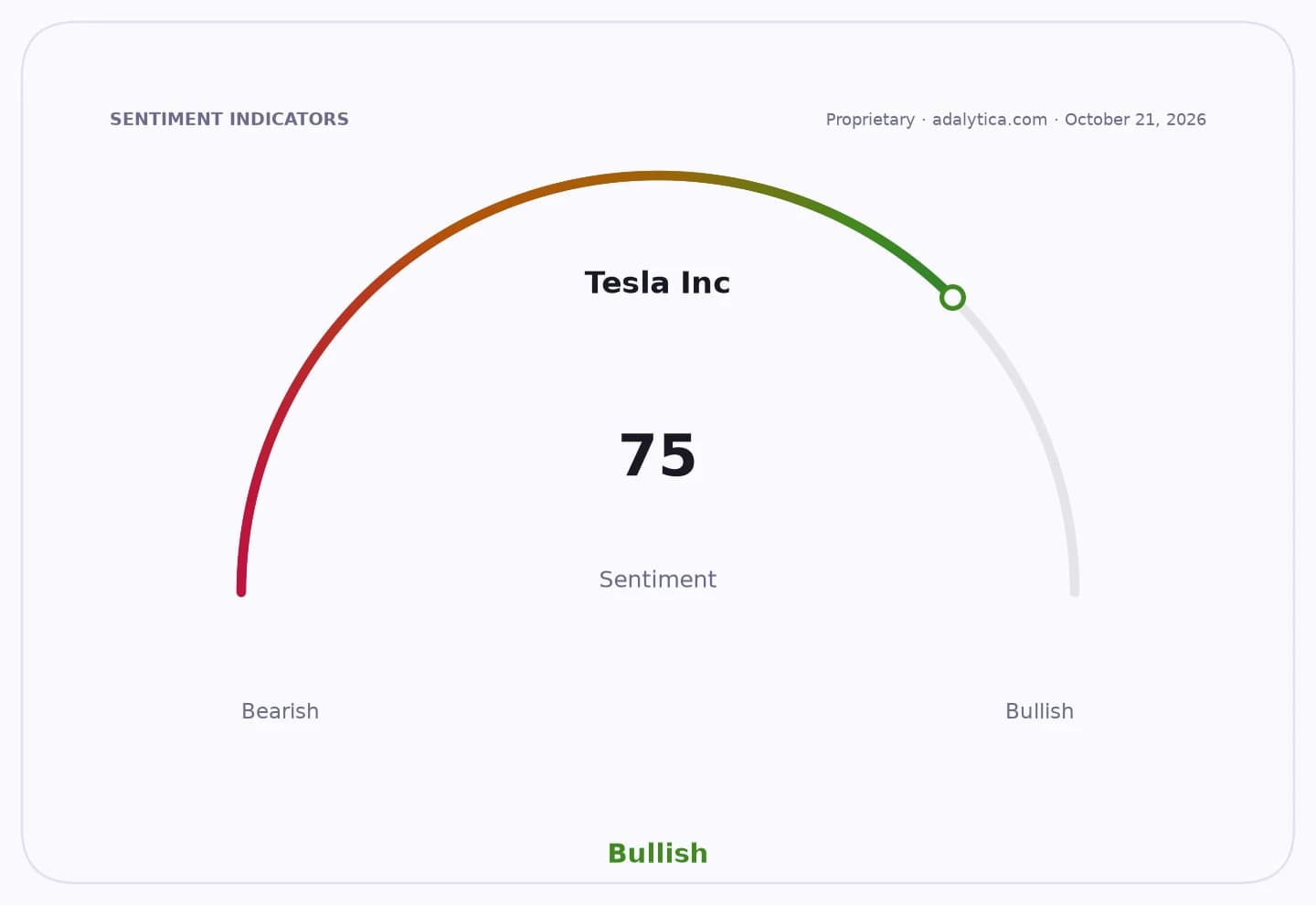
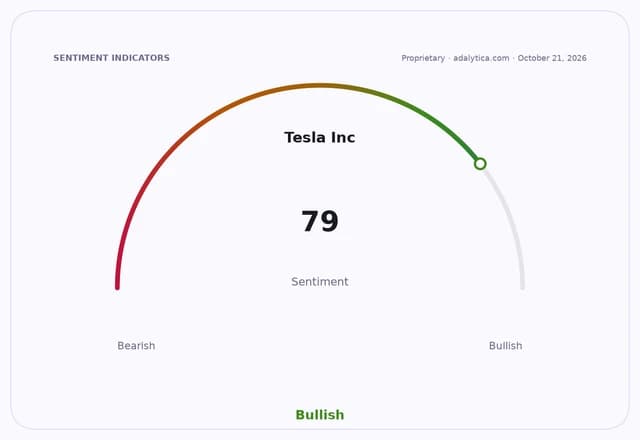
Tesla shares have been volatile as investors weigh near-term EV pressure against the longer-dated Optimus story, with Adalytica’s Tesla earnings sentiment at 79, or “Greed,” and awareness at 100, “Extreme Greed.” The stock closed at $386.47 on Oct. 21, just above its 200-day moving average of $386.94, while its 50-day average sat at $362.18, suggesting the market is still pricing in optimism around the robot narrative.
For now, Optimus remains a development project, not a revenue engine. The immediate trade is in the picks-and-shovels suppliers — and the next catalysts are Tesla progress updates on production, chip sourcing and whether the robot can move from demonstration to a commercially viable product.
| Entity | Gains | Losses |
|---|---|---|
| TSMC | ▲AI and robotics chip demand | ▼Tesla’s future in-house chip plans |
| Micron Technology | ▲Memory demand for humanoids | ▼Tight supply if customer mix shifts |
| Panasonic | ▲Potential battery revenue | ▼Delay in Optimus commercialization |
| Tesla | ▲Long-term product optionality | ▼Near-term capex and execution risk |