TSMC posted a record quarterly profit and raised its 2026 revenue outlook, underscoring how the global AI buildout is still overwhelming chip supply and keeping the Taiwan contract manufacturer at the center of the tech supply chain.
TSMC raises 2026 revenue outlook after record profit
Taiwan Semiconductor Manufacturing Co. said net profit for the July-to-September quarter rose 69% from a year earlier to T$763.1 billion, or $23.59 billion, topping analyst estimates and marking its sixth straight record quarterly profit. Revenue growth tied to artificial intelligence chips remains “extremely robust,” the company said, even as Chief Executive C.C. Wei warned that consumer and price-sensitive markets are being squeezed by higher component costs and macroeconomic uncertainty.
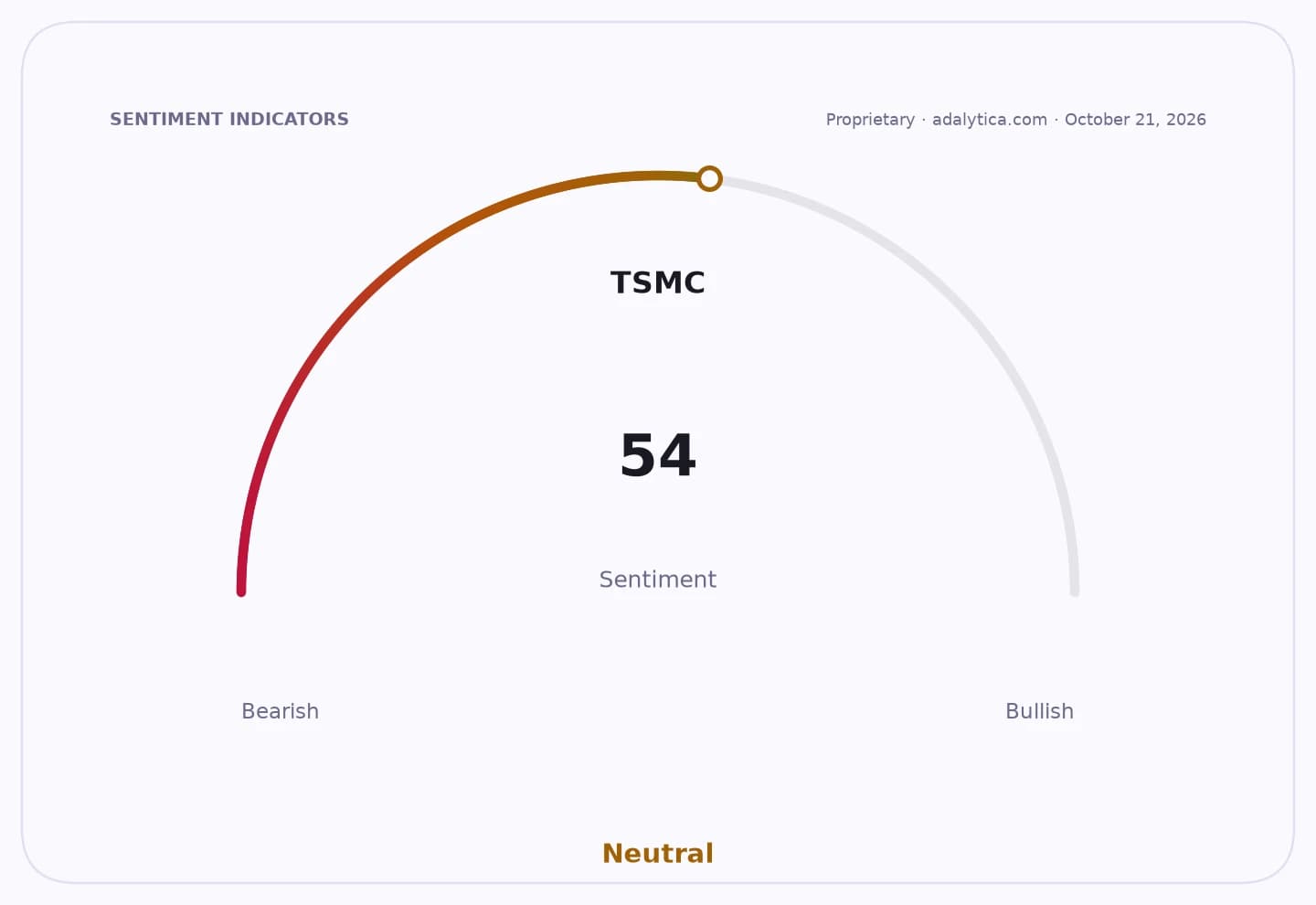
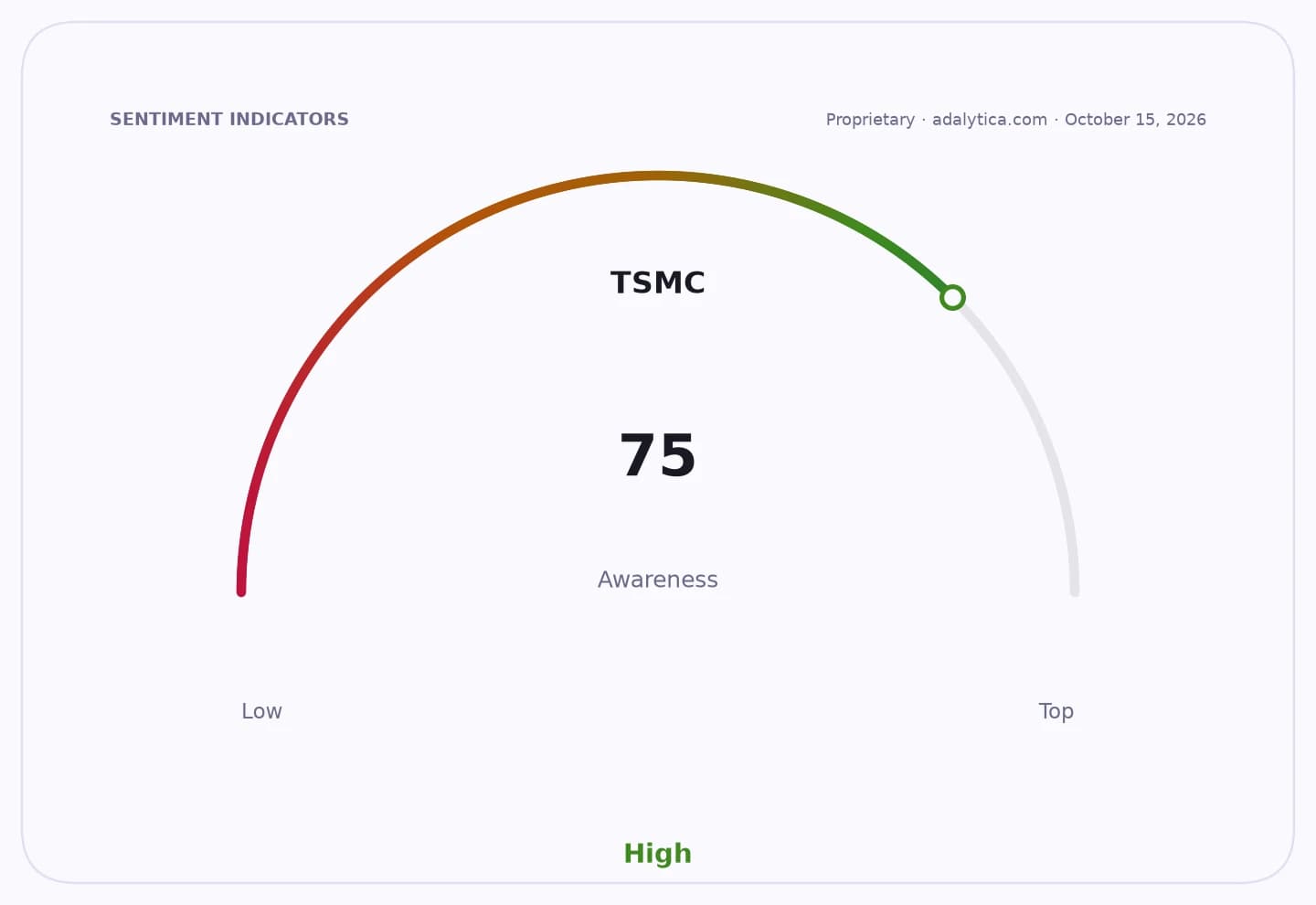
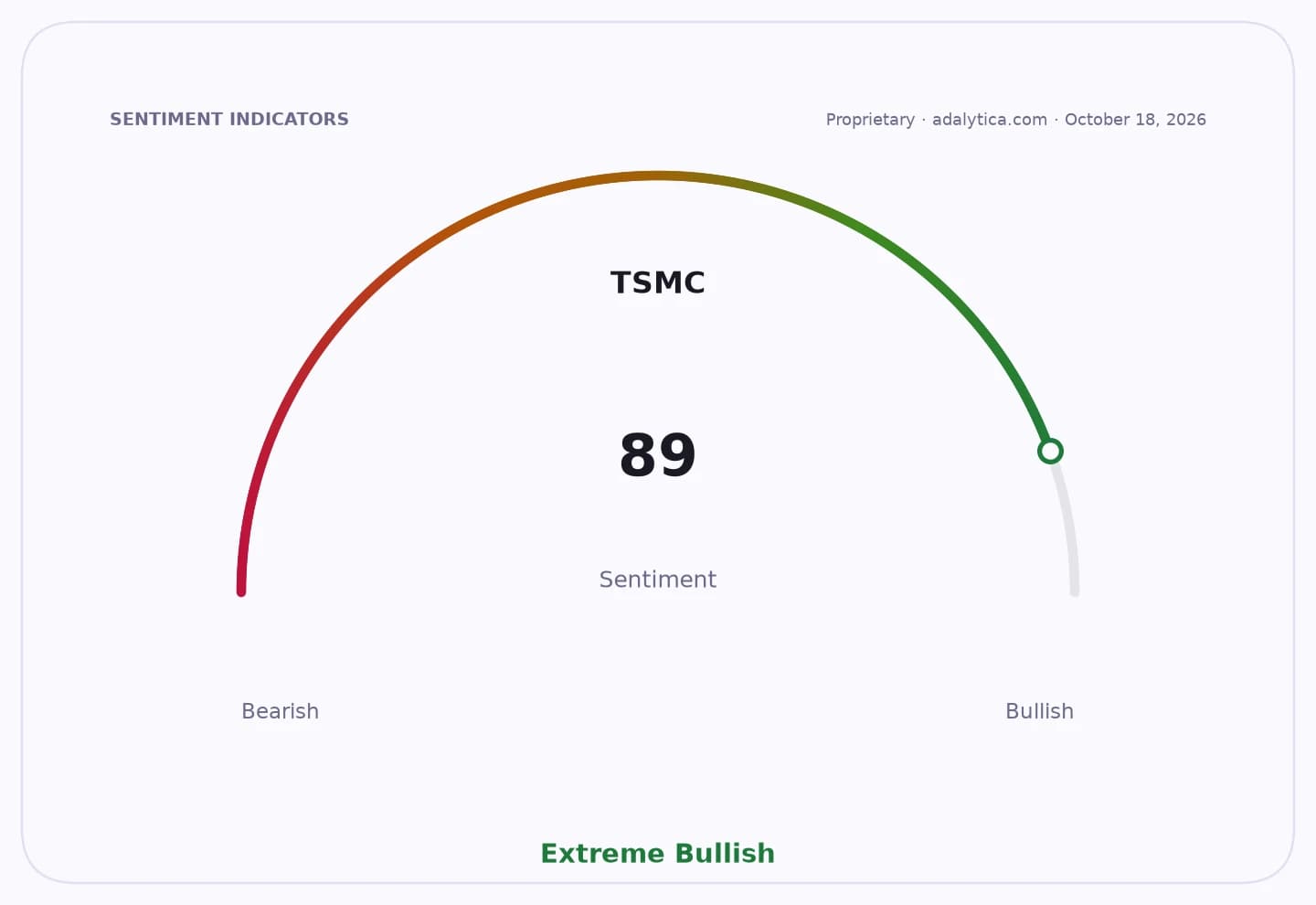
Sentiment IndicatorsⓘProprietary · adalytica.com · October 21, 2026
This is a snapshot — live sentiment, awareness and momentum for 130+ markets update continuously in the dashboard.Open AlphaPulse
The results matter well beyond Taiwan. TSMC is the key foundry for Nvidia, Apple and other chipmakers that depend on its leading-edge manufacturing and advanced packaging capacity. Its latest numbers show AI spending is still flowing through the semiconductor supply chain, even as more cautious demand elsewhere begins to emerge.
TSMC lifted its forecast for full-year 2026 revenue growth to about 44%, from more than 40% previously, and said demand continues to exceed supply. For the fourth quarter, it guided revenue to $52.3 billion to $54.3 billion, which would be as much as 61% above a year earlier. It also left 2026 capital spending unchanged at $60 billion to $64 billion, signaling that the company is still racing to expand capacity.
The company said future demand will be supported by agentic AI central processing units and networking chips, while analysts continue to point to tight supply in TSMC’s advanced CoWoS packaging line, a critical bottleneck for AI accelerators. That keeps pricing power and utilization high for TSMC, but it also means the company must keep spending heavily to defend its lead.
Investors are watching whether that AI boom broadens enough to offset softer pockets in consumer electronics. TSMC’s share price has remained close to its 50-day moving average, while its 50-day moving average sits above its 200-day average, a technically constructive setup even after recent volatility. Nvidia shares, by contrast, have been more erratic, reflecting the market’s mixed read on how long AI spending can stay this strong.
TSMC is also pressing ahead with its U.S. buildout, saying its second Arizona fab has finished construction and is set for mass production in the third quarter of 2027, ahead of schedule. The company is evaluating a possible Texas investment after major U.S. customers asked for more local manufacturing, while also discussing Tesla CEO Elon Musk’s planned Terafab project.
For investors, the key question now is whether record AI demand can keep justifying TSMC’s aggressive capital plans into 2027. The company’s own caution suggests the answer is not guaranteed, even as the current quarter shows the AI chip cycle is still running hot.
| Entity | Gains | Losses |
|---|---|---|
| TSMC | ▲Record profit, higher outlook | ▼Margin risk from heavy capex |
| Nvidia and AI chip buyers | ▲More supply capacity | ▼Tighter access to foundry output |
| Consumer electronics makers | ▲None | ▼Higher component costs |
| U.S. customers and governments | ▲More local chip investment | ▼Longer wait for new fabs |