Tesla unveiled a redesigned Roadster with SpaceX thrusters and a promised 2028 production start, reviving a long-delayed halo product that matters less for near-term sales than for what it says about Elon Musk’s effort to keep Tesla positioned as a technology platform rather than just an automaker.
Tesla Roadster Reveal and 2028 Production Plan
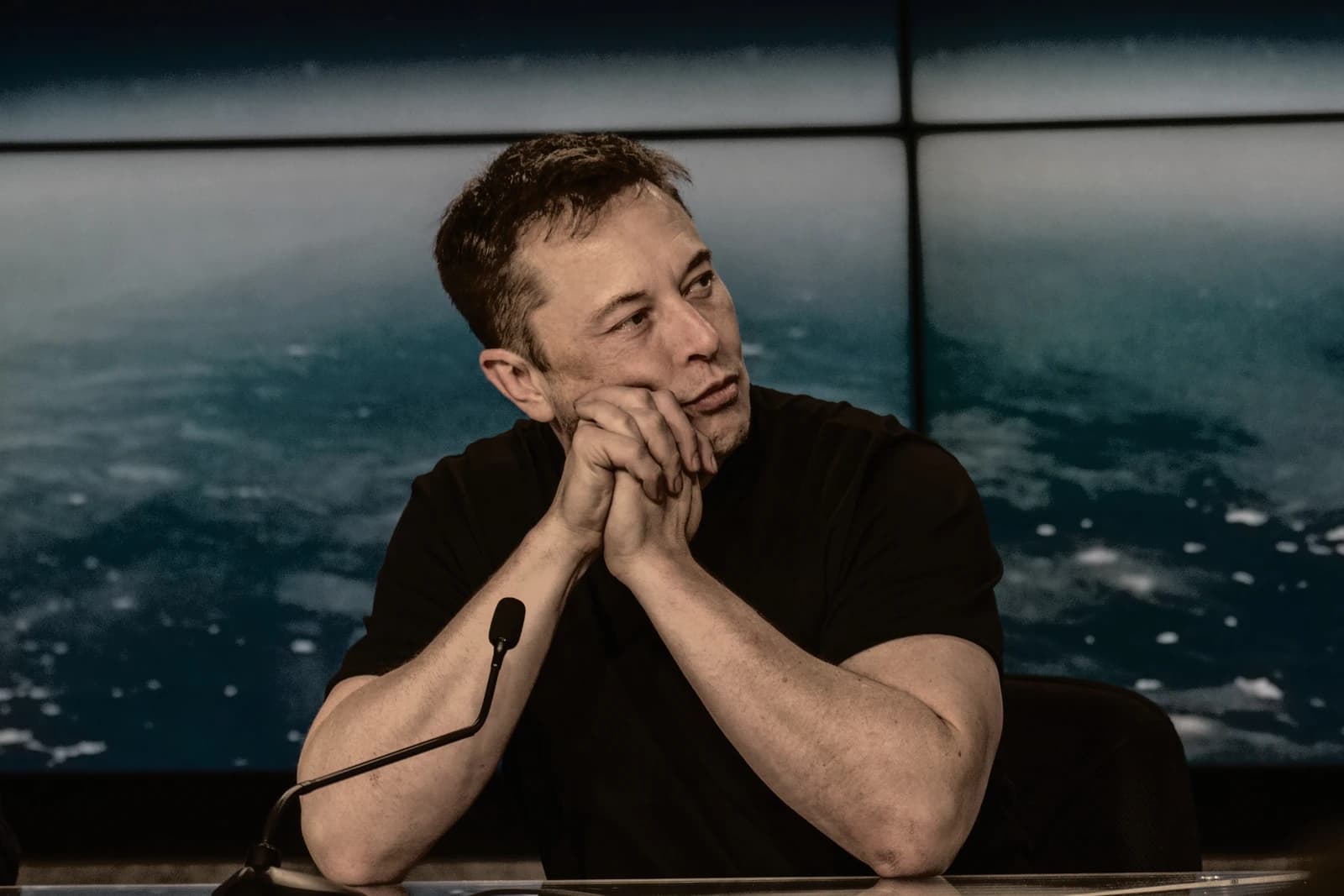
The company’s pitch was deliberately extravagant: a two-seat sports car that can go from zero to 60 mph in less than a second, top 230 mph, and — in a demonstration at SpaceX’s McGregor, Texas site — drive upside down on a ramp and maneuver with suction and thruster systems. The legality and practical use of those features on public roads were not immediately clear, but the presentation reinforced Tesla’s preference for headline-grabbing engineering theater as a marketing tool.
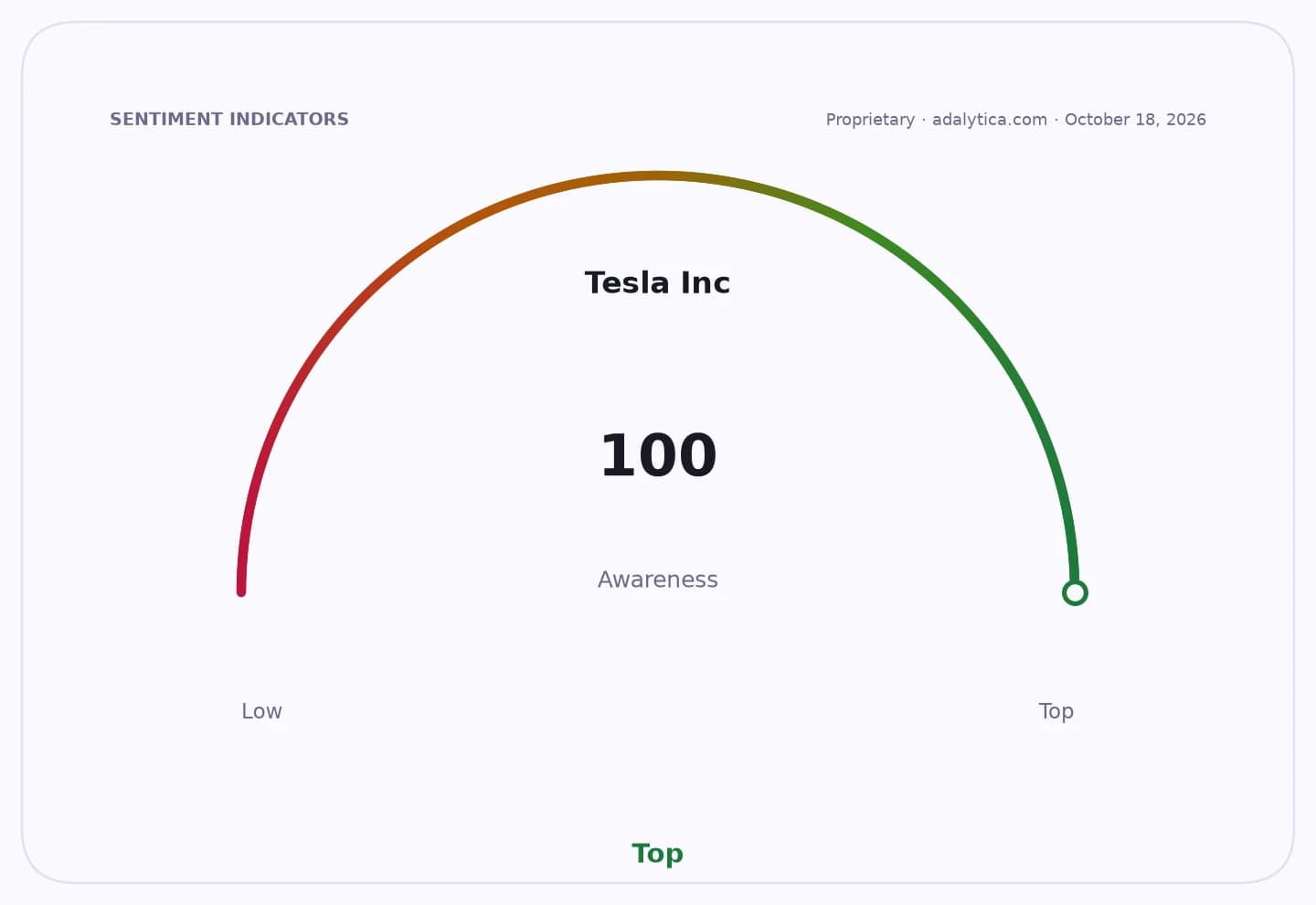
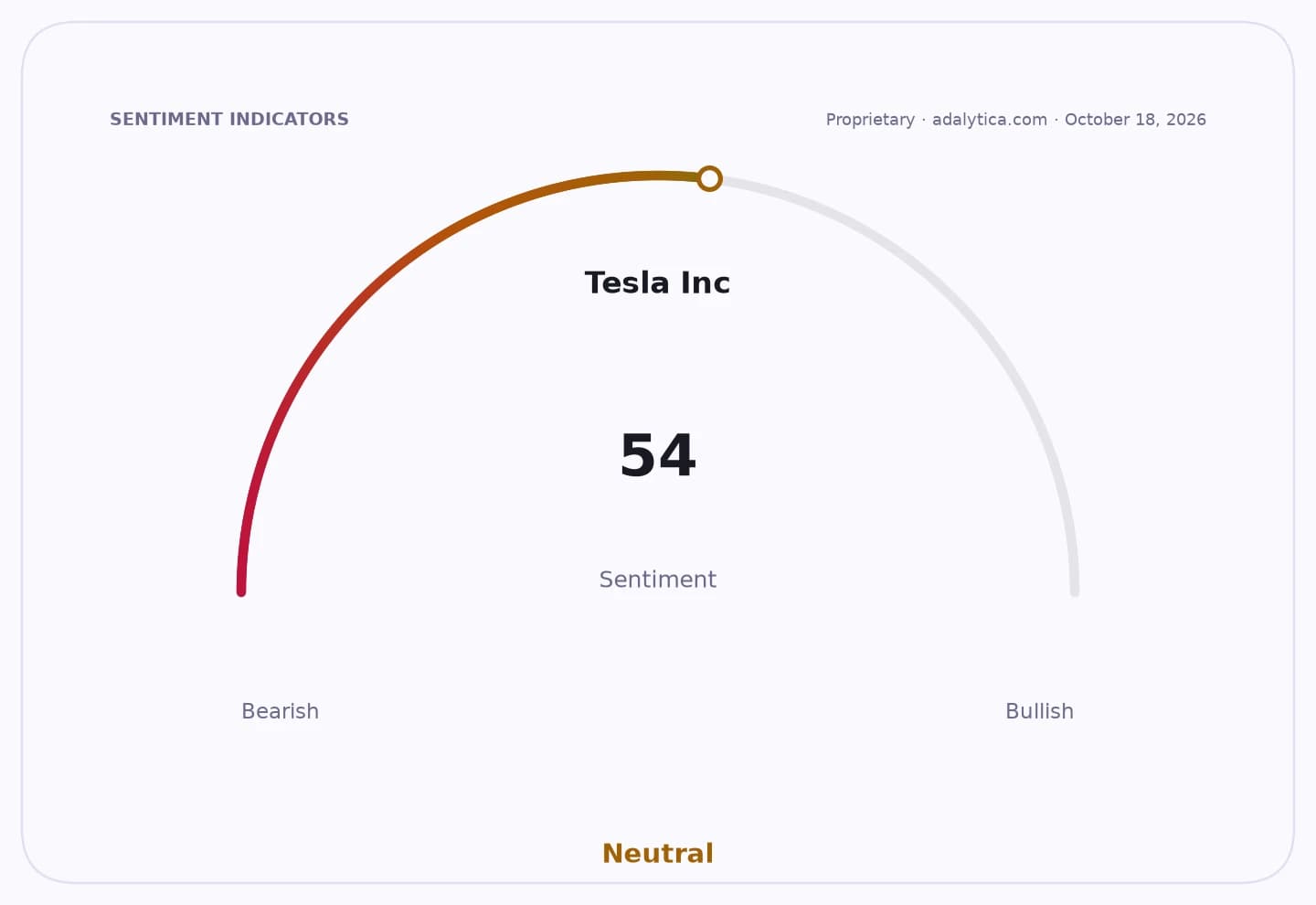
Sentiment IndicatorsⓘProprietary · adalytica.com · October 18, 2026
This is a snapshot — live sentiment, awareness and momentum for 130+ markets update continuously in the dashboard.Open AlphaPulse
Economically, the Roadster is unlikely to move Tesla’s numbers. Musk has described it as a “small potato situation” that would not materially affect finances, and Morningstar analyst Seth Goldstein has estimated sales of about 2,000 units a year, tiny next to Tesla’s 1.6 million vehicle deliveries last year. That makes the car more of a brand exercise than a volume product, but halo vehicles still matter in the auto industry because they can lift pricing power, reinforce innovation credentials and support the broader lineup.
For investors, the bigger signal is strategic. Tesla is increasingly shifting capital, attention and narrative toward artificial intelligence, self-driving systems and robotics, even as it keeps one foot in the sports-car segment. The company has stopped selling Model S and Model X vehicles to make room for Optimus humanoid robot production and has launched the Cybercab, a two-seater robotaxi without steering wheel, pedals or mirrors. The Roadster reveal therefore reads less like a return to Tesla’s old EV roots than a reminder that the company is trying to build a portfolio of products that all point toward autonomy, robotics and software.
That shift helps explain the market’s split view on Tesla. Bulls will see the Roadster as proof that Tesla still has engineering cachet and a path to premium branding, even after years of delays. Bears will focus on execution risk: the car was first shown in 2017 with deliveries promised for 2020, and the new timetable again pushes meaningful production years into the future. Delays do not just dent credibility; they can also matter for capital allocation, as Tesla balances flashy prototypes against investments in manufacturing, AI chips and robotics.
The stock has already been volatile around the company’s changing identity. Tesla shares were trading at $354.72 on the latest available close, below the 50-day moving average and well under the 200-day average, while standard momentum readings such as RSI have cooled from overheated levels earlier in the year. That suggests the market is still trying to determine whether Tesla’s next phase will be driven by cars, robots or some combination of both.
The Roadster may help Tesla preserve its image as the industry’s most unconventional automaker, but investors will be watching more closely for evidence that the company can translate showmanship into scalable products. Until then, the car is likely to remain what Musk says it is financially: a small potato with a large symbolic value.
| Entity | Gains | Losses |
|---|---|---|
| Tesla | ▲Brand halo, technology narrative | ▼Near-term execution credibility |
| Elon Musk / SpaceX | ▲Cross-company showpiece, media attention | ▼Regulatory scrutiny |
| Bulls | ▲Proof of innovation premium | ▼Near-term revenue hopes |
| Bears / shorts | ▲Delay risk, valuation skepticism | ▼Momentum from headline excitement |