Tesla’s latest flying-car showcase is grabbing attention, but for investors the bigger issue is whether Elon Musk can turn another headline-making prototype into a real product by 2028.
Tesla Roadster flying-car demo draws investor attention
That matters because Tesla has long traded on the promise of breakthrough technology, not just on car sales. A Roadster that can use special thrusters to lift off the ground, if it ever reaches customers, would extend Tesla’s brand far beyond electric vehicles and into the much larger story of next-generation mobility. But it also raises the same question investors keep asking: how much of Musk’s vision is theater, and how much is commercially scalable engineering?
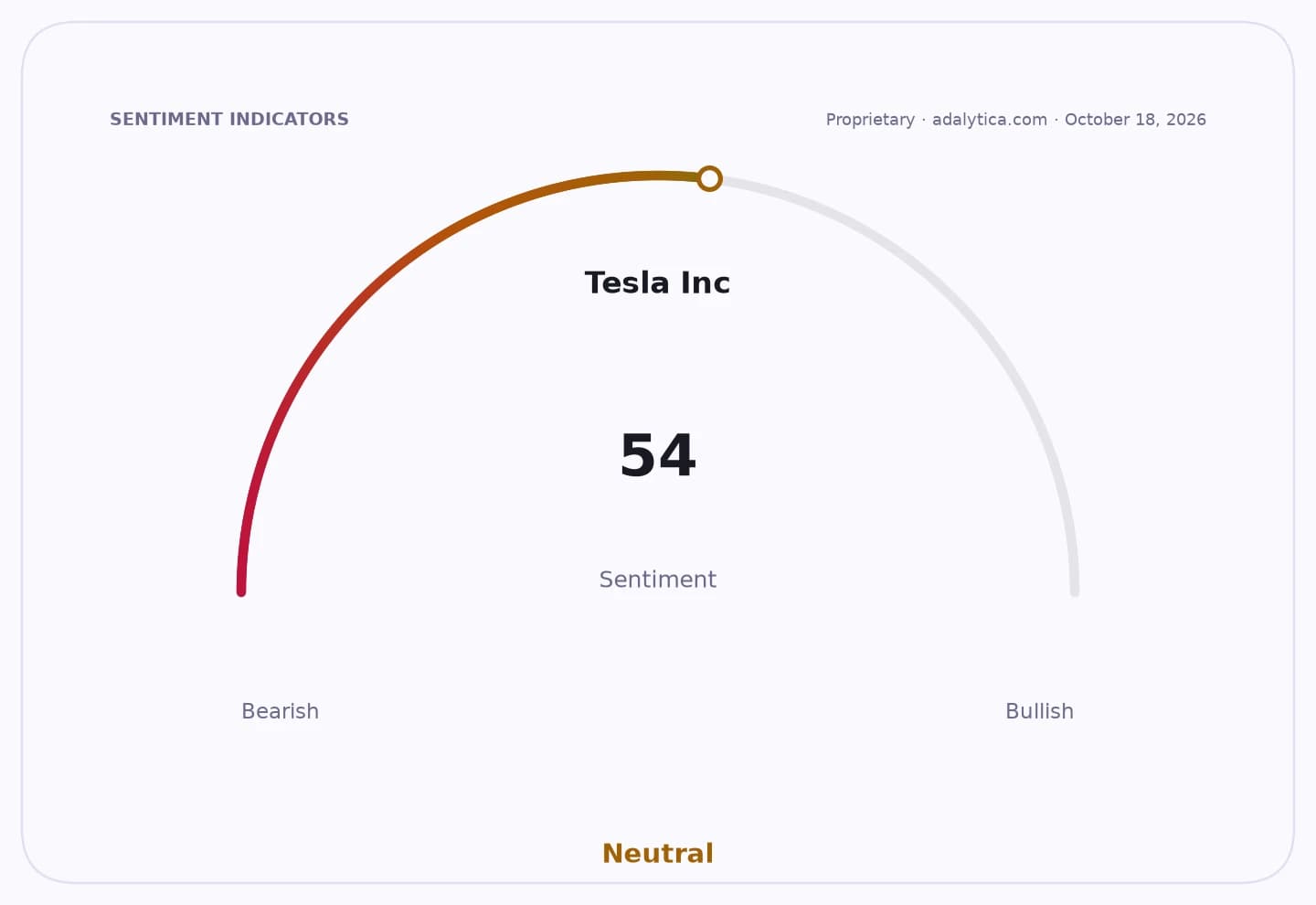
Sentiment IndicatorsⓘProprietary · adalytica.com · October 18, 2026
This is a snapshot — live sentiment, awareness and momentum for 130+ markets update continuously in the dashboard.Open AlphaPulse
Musk said Tesla is targeting production of the next-generation Roadster in 2028, though he did not give a price or release date. The company has shown a video of the car performing what its engineering chief called a “kick flip” stunt, with underbody thrusters and compressed air systems apparently helping it jump and rotate before landing. Tesla also says the car can hit 60 miles an hour in less than a second, though those capabilities are still in testing and not yet in a customer-ready vehicle.
For long-term investors, the details matter less than the pattern. Tesla has built one of the market’s most powerful growth narratives by convincing buyers and shareholders that it can keep expanding into new categories, from EVs to energy storage to autonomy. That is why the stock remains so closely tied to Musk’s ability to keep generating excitement. But it is also why execution risk stays high. Flying-car demos are eye-catching; manufacturing them profitably at scale is another matter entirely.
Tesla Inc — 30-day sentimentadalytica.com
Explore this data interactively — full history, time series and cross-market comparisons.Open AlphaPulse
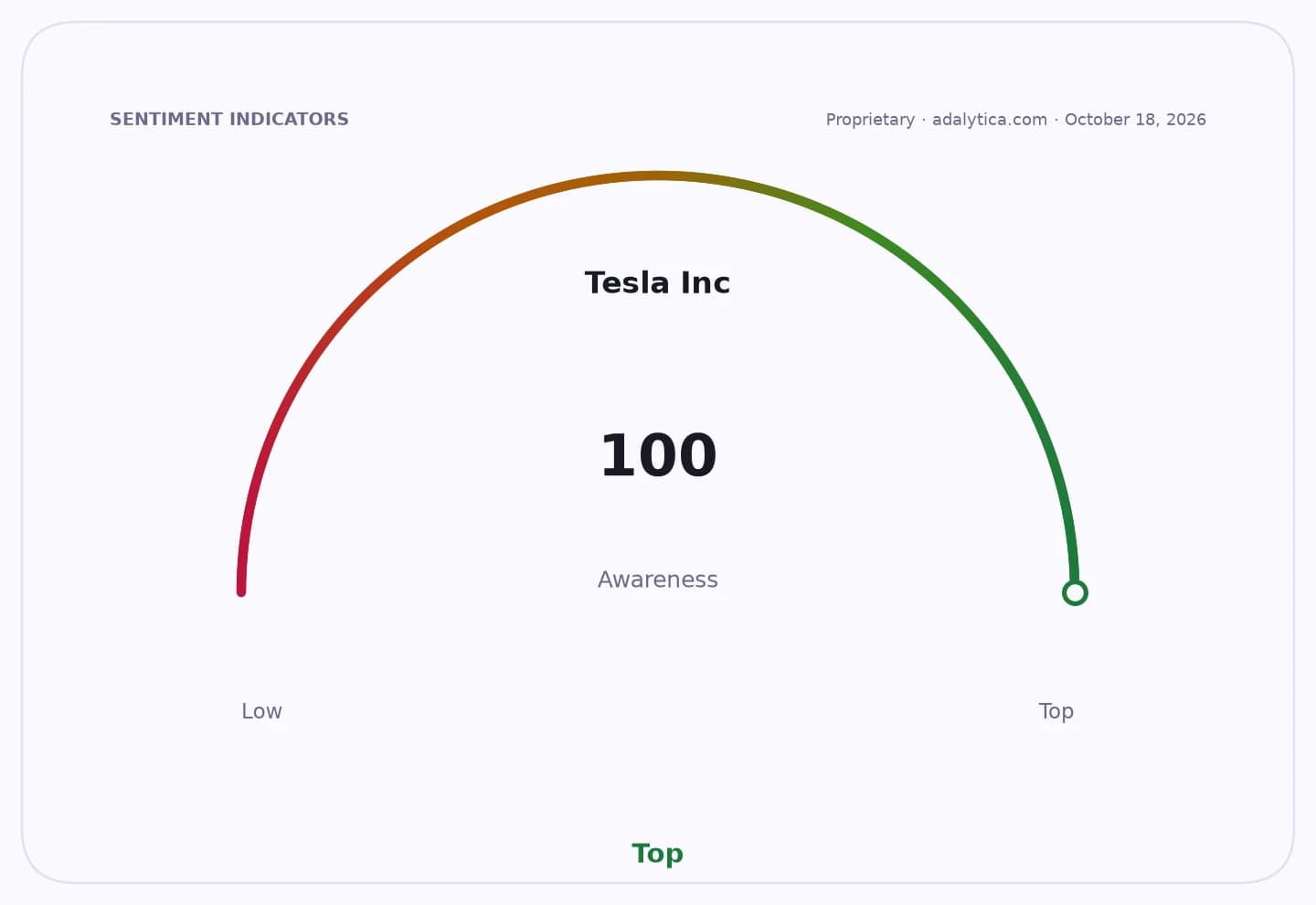
The market has already priced in a large amount of optimism around Tesla’s future, and the stock’s recent technical backdrop suggests investors are still debating how much of that vision deserves a premium. Tesla shares have been volatile around the mid-$300s, with the stock recently below both its 200-day moving average and not far from its 50-day average. Adalytica’s Tesla sentiment snapshot shows neutral sentiment but extreme awareness, which is exactly what you’d expect when a company dominates the conversation even as investors remain cautious about the near-term fundamentals.
There is also a broader competitive angle here. Tesla is not the only company chasing futuristic transportation concepts, and the real winners in this space may be the firms that can solve certification, safety, batteries, materials and flight controls before they solve the marketing. Boeing and Lockheed Martin, which already operate in highly regulated aerospace markets, trade on very different fundamentals, but they underscore how hard it is to move from concept to certified vehicle. That’s the hill Tesla would have to climb if this Roadster is more than a viral video.
For investors, the takeaway is simple: this is still a story about optionality. If Tesla ever commercializes even part of this technology, it could reinforce the company’s reputation as a category creator. If it does not, the episode will be remembered as another Musk spectacle. Either way, patient investors should focus less on the stunt and more on whether Tesla can keep converting ambition into cash flow, manufacturing discipline and durable competitive advantage over the next three to five years.
| Entity | Gains | Losses |
|---|---|---|
| Tesla bulls | ▲More hype and brand optionality | ▼Near-term proof burden |
| Tesla skeptics | ▲More reason to question execution | ▼Less room to ignore innovation |
| Rival automakers | ▲Clarification of Tesla’s ambitions | ▼Pressure on their tech narrative |
| Buyers of future flying cars | ▲Potential new mobility option | ▼Higher risk of delays and cost overruns |