Tesla has finally shown a Roadster that can leap, roll and even make short controlled hops, a spectacle that underscores Elon Musk’s tendency to turn product launches into engineering theater while keeping investors focused on a car that still will not reach customers until 2028.
Tesla Roadster demo shows flying stunt features
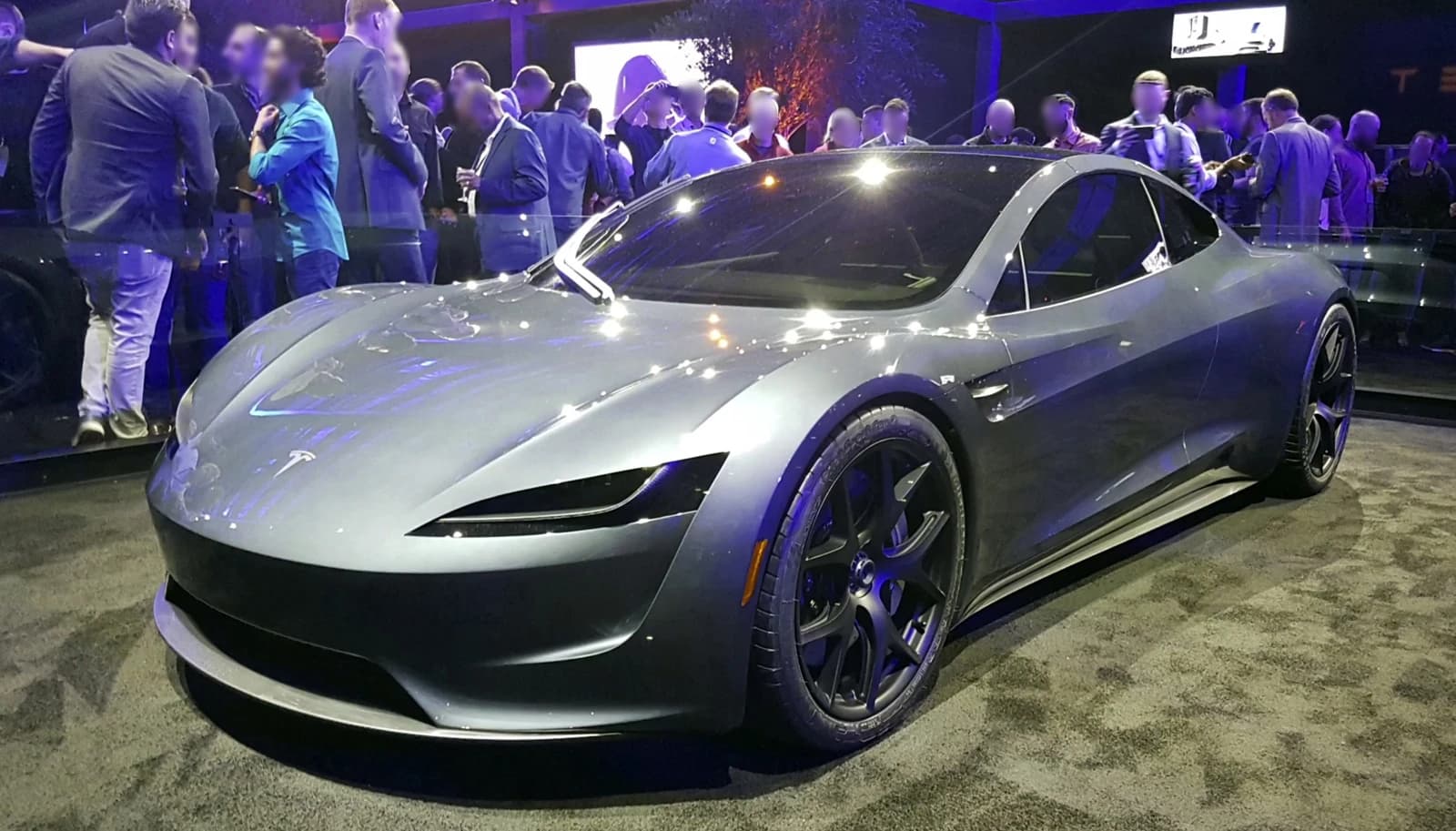
The demonstration matters because Tesla has spent years missing deadlines on the second-generation Roadster, and the latest reveal gives the company a way to reframe that delay around aspiration rather than execution. For investors, the question is less whether the car can fly in a controlled demo than whether Tesla can convert the stunt into a commercially viable flagship that helps justify its premium valuation and supports the brand at a time when EV demand has become more competitive.
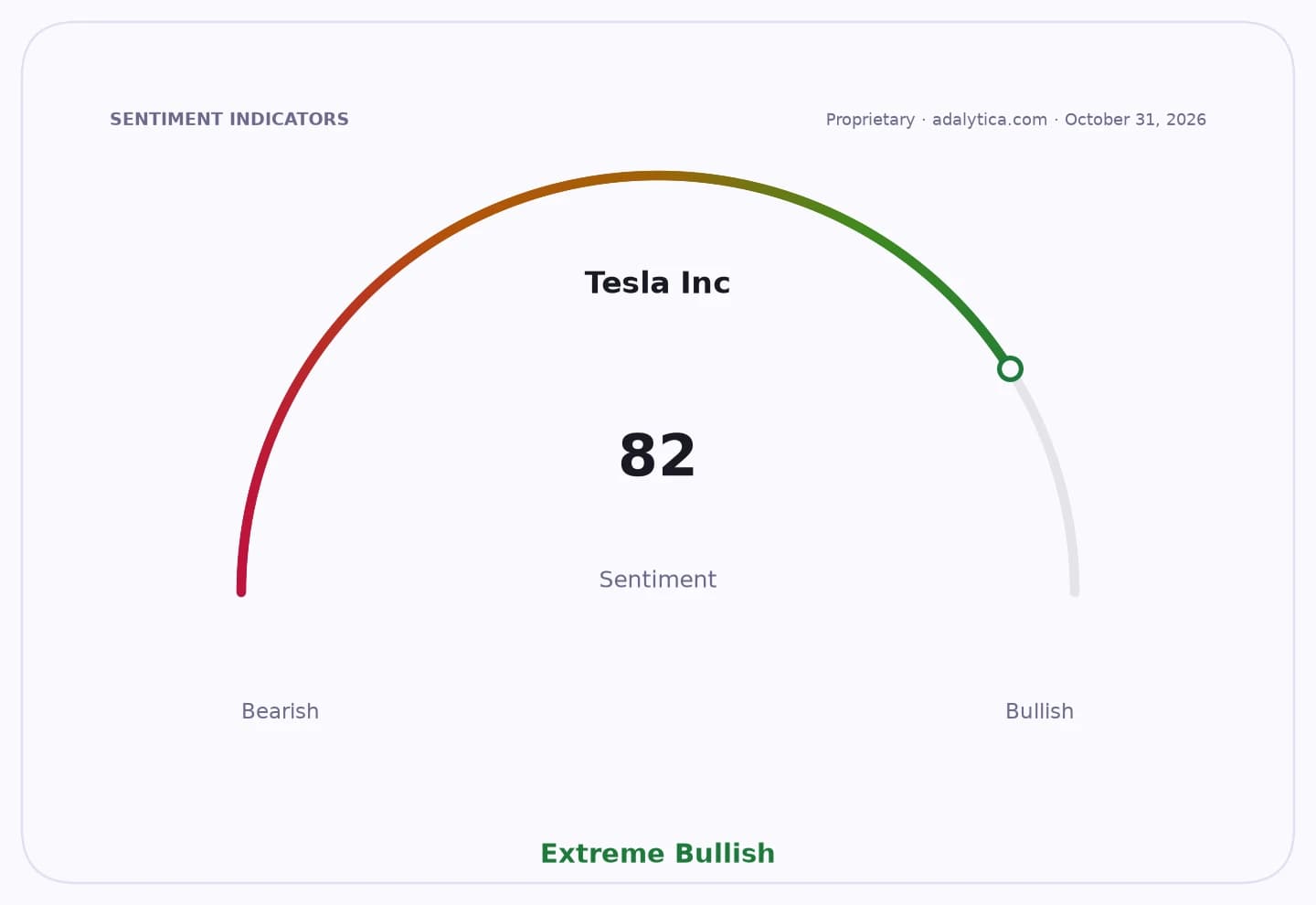
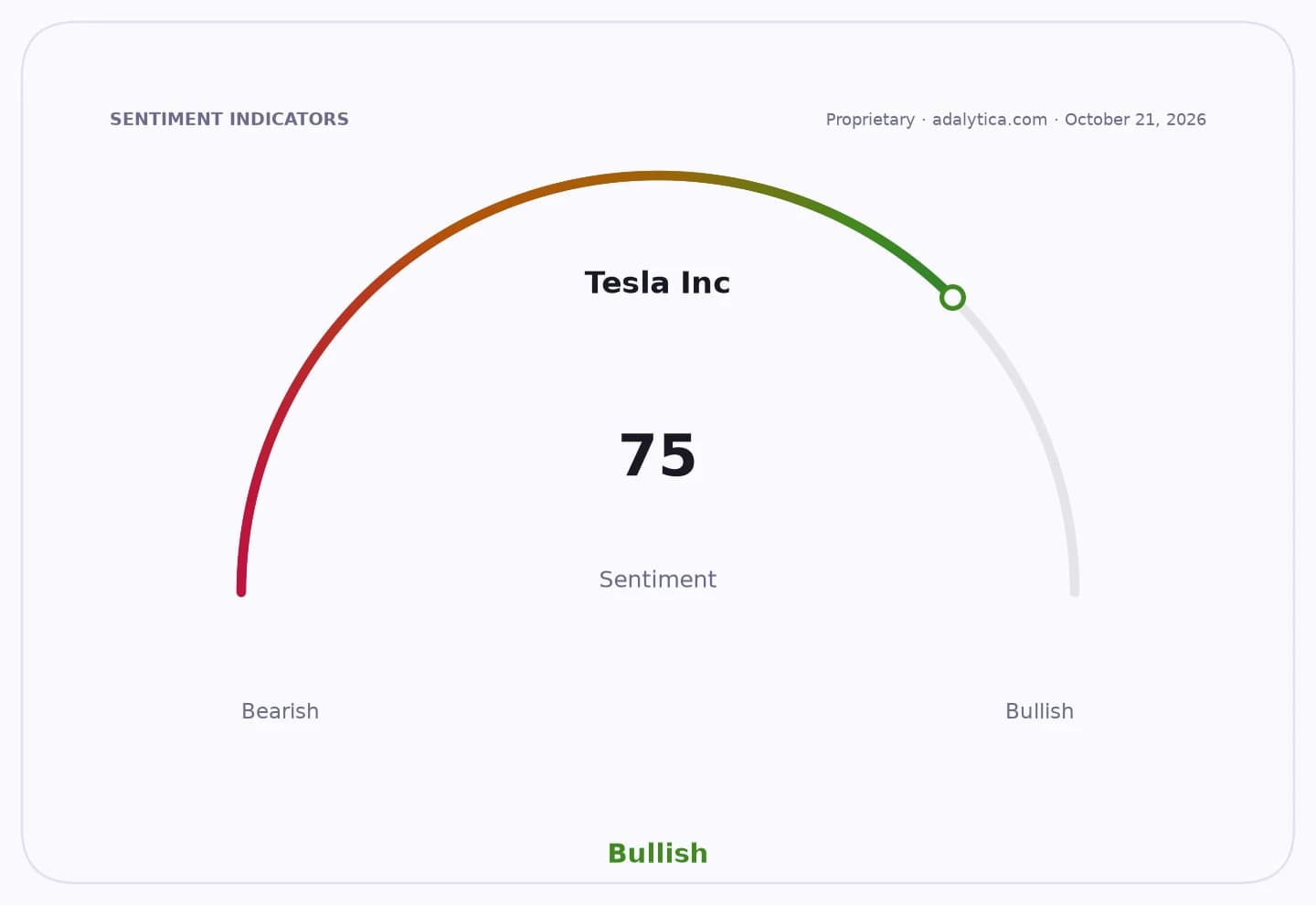
Sentiment Indicators
Musk unveiled the vehicle at SpaceX’s Texas site on Oct. 15, using live video to reassure viewers the stunts were real and not a computer-generated trick. The new Roadster uses 10 rocket-like thrusters developed with SpaceX technology and runs on compressed gas, allowing it to accelerate hard and perform brief airborne maneuvers. In one demonstration, the car drove up a vertical ramp, flipped in the air and landed cleanly; in another, it jumped over several Tesla vehicles while spinning on its axis.
Tesla said the car will be offered in three versions. The base Performance model is expected to go from 0 to 96 km/h in under 1.6 seconds, while a Sport version with additional rear thrusters is said to reach 100 km/h in 0.9 seconds. The most extreme Rocket variant, with thrusters distributed across the body to stabilize short flights, is claimed to hit 100 km/h in 0.59 seconds and a top speed of 370 km/h. Musk also cited a 0.81-second acceleration figure without clarifying which trim it referred to.
That kind of performance would put the Roadster far beyond conventional supercars and preserve Tesla’s image as a technology leader rather than just another EV maker. It also plays directly to Musk’s broader narrative of fusing automotive, aerospace and software engineering. But the commercial case remains uncertain: the company has offered no near-term production timeline beyond a target of 2028, and the car’s most dramatic features are unlikely to be relevant to mass-market buyers or regulators.
For the stock, the unveiling may offer a short-term sentiment boost by reminding traders that Tesla still has headline-grabbing product optionality beyond volume EVs and autonomous driving. Yet it also highlights the same tension that has long followed the company: spectacular prototypes can support the bull case, but sustained valuation will depend on shipping vehicles at scale, improving margins and proving that future concepts can become recurring revenue rather than recurring promises. The flying Roadster may excite fans; investors will want to know whether it can move beyond showmanship and into a business.
| Entity | Gains | Losses |
|---|---|---|
| Tesla | ▲Brand momentum | ▼Execution scrutiny |
| Elon Musk | ▲Hype leverage | ▼Credibility risk |
| TSLA bulls | ▲Optionality narrative | ▼Near-term fundamentals |
| Traditional automakers | ▲Benchmark pressure | ▼Differentiation gap |