Thai stocks are set to open weaker and continue consolidating on Friday as elevated U.S. bond yields and a firmer dollar keep pressure on risk assets and push foreign money out of emerging markets.
Thai Stocks Set to Open Weaker on High Yields

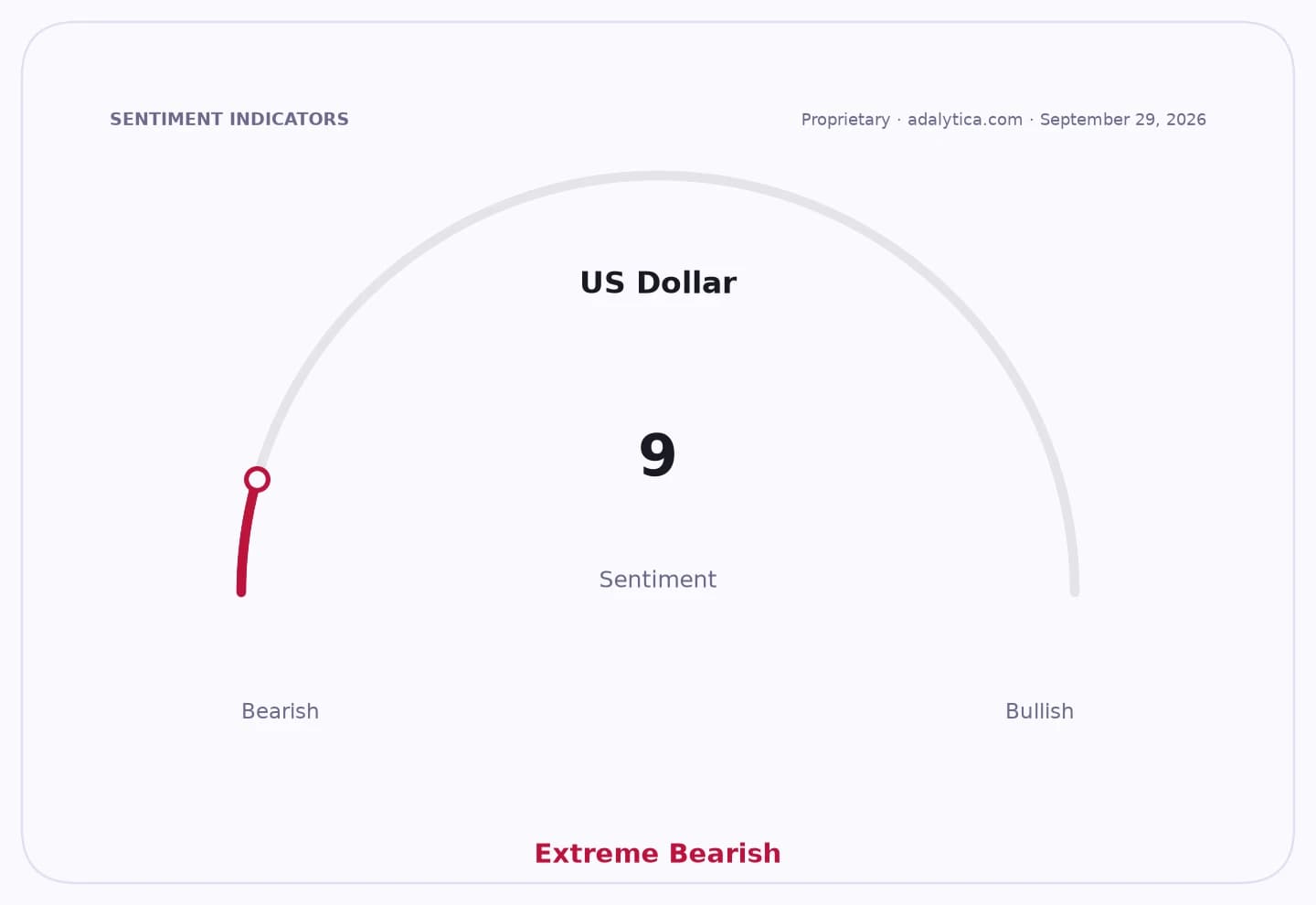
The key market driver is not domestic news but the global rates backdrop: the U.S. 10-year Treasury yield stood at 5.227% in the latest forecast reading after closing at 5.22%, while Adalytica’s US Dollar Trade Signals showed neutral sentiment but a sharp one-day and seven-day pickup in momentum. That combination tends to tighten financial conditions across Asia, raise the opportunity cost of holding equities and encourage foreign investors to pare exposure in higher-beta markets such as Thailand.
Sentiment IndicatorsⓘProprietary · adalytica.com · October 10, 2026
This is a snapshot — live sentiment, awareness and momentum for 130+ markets update continuously in the dashboard.Open AlphaPulse

That was already visible in the local tape. The SET fell 0.88% to 1,570.61 on Thursday on turnover of 63.6 billion baht, while foreign investors were net sellers of 6.38 billion baht. Dealers also turned net short on SET50 futures, a sign traders are positioning for further downside or at least a lack of near-term catalyst.
Technically, the index remains vulnerable around the 1,565 level cited by market analysts as immediate support, with 1,550-1,555 next if that floor gives way. The market’s recent inability to build on gains suggests investors are treating rallies as opportunities to reduce risk rather than to add exposure.

The pressure is broader than Thailand. U.S. equities were mixed overnight, with the Nasdaq falling 1.25% and the S&P 500 off 0.47%, reflecting caution around the earnings outlook and the durability of AI-led spending. Asian markets were also soft in early trade, reinforcing the view that global investors are unwinding risk ahead of a heavy earnings calendar.
For Thailand, the macro message matters because the market remains highly sensitive to foreign flows. A persistent rate premium in the U.S. can keep the dollar supported, weigh on regional currencies and limit the appeal of Thai equities even when valuations look inexpensive. The baht opened at 33.57/58 per dollar, and while that is still relatively firm, any renewed dollar leg higher would likely deepen outflows and keep pressure on import-sensitive sectors.
Investors will also be watching the local earnings season, with Thai banks due to report third-quarter results next week. That should provide the first major domestic test of whether earnings can offset the drag from external headwinds. In the near term, though, the market is more likely to trade on macro flows than on company fundamentals.
Oil strength is another variable. WTI jumped 3.64% to $91.49 a barrel, which may support energy names but can also feed concerns about inflation and global growth, especially if crude remains elevated. For a market already dealing with high yields and a strong dollar, that mix leaves little room for a sustained bounce.
The near-term setup therefore favors caution: foreign selling, tighter global financial conditions and lackluster overseas sentiment argue for a flat-to-lower SET, while a break below 1,565 would likely invite another test of the 1,550 area. A more durable rebound would probably need either a pullback in U.S. yields or evidence that Thailand’s earnings season can attract domestic buying strong enough to offset continued overseas outflows.
| Entity | Gains | Losses |
|---|---|---|
| U.S. dollar / high yields | ▲Support returns, attract capital | ▼Emerging-market equities |
| Thai exporters | ▲Stronger dollar can aid revenues | ▼Local-currency borrowers |
| Thai banks / index buyers | ▲Earnings season can create stock-specific support | ▼Broad SET momentum |
| Foreign sellers / short SET50 futures | ▲Benefit from downside positioning | ▼Long-only Thai equity holders |