Thailand’s feed corn market is firming after the Commerce Ministry stepped in to support farmers and tighten oversight of buyers, a move that could steady rural incomes while keeping feed costs from rising too far for livestock producers.
Thailand Corn Prices Firm as Ministry Supports Farmers
The ministry said feed mills in Bangkok and nearby provinces were paying 10.00 to 10.60 baht per kilogram for corn with 14.5% moisture as of Oct. 21, up from 9.80 to 10.00 baht the previous month. That modest improvement matters because corn sits at the center of Thailand’s poultry and livestock supply chain: higher farmgate prices help growers at harvest time, but they also feed into costs for mills, meat producers and, ultimately, food inflation.
Deputy Prime Minister and Commerce Minister Suphajee Suthumpun said the price recovery reflected coordination between farmers, purchasing operators, agriculture institutions, state agencies and private buyers. The ministry has also asked importers to delay corn shipments during peak domestic harvests to give local output priority, underscoring how closely Bangkok is trying to manage the market.
The policy response goes beyond jawboning. Officials inspected more than 300 feed mills and collectors in 21 provinces in August and September, and took legal action against 15 operators for using inaccurate moisture-measuring devices. That matters because moisture readings directly affect the price farmers receive, and enforcement can reduce disputes over grading and strengthen confidence in domestic buying channels.
For the 2025/26 crop year, the ministry has set reference purchase prices at 7.05 baht a kilogram for corn with 30% moisture and 9.80 baht for corn with 14.5% moisture, with adjustments for transport and location. It is also preparing four market-stabilization projects worth 120.30 million baht for the 2026/27 crop year, covering 400,000 tons through collection loans, value-added processing, expanded distribution and productivity measures.
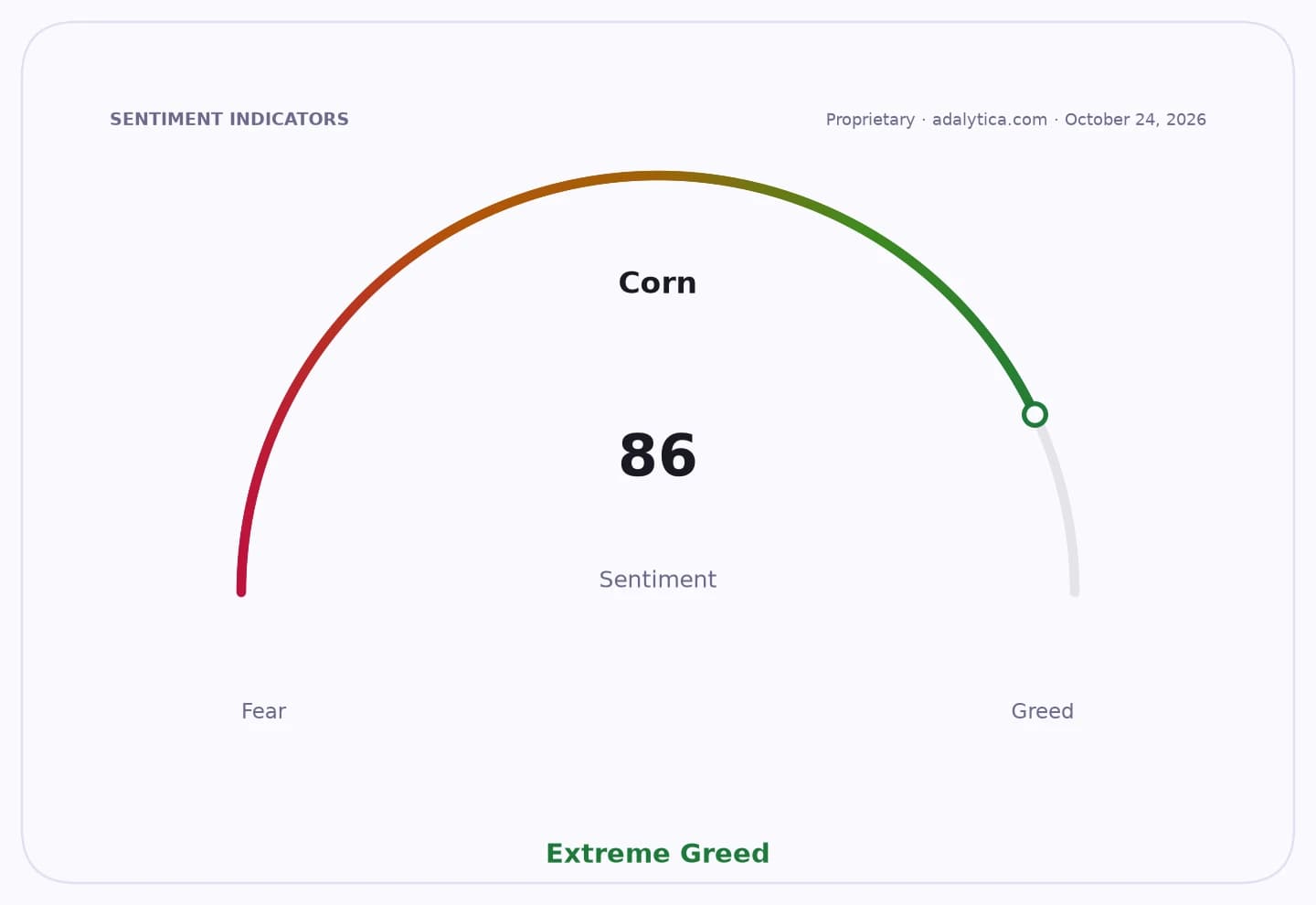
The intervention comes as global grain markets remain volatile, with corn prices under pressure from a strong US harvest and weaker sentiment in agricultural commodities more broadly. Adalytica’s technical readings on the corn contract showed the market had already been in a sharp downtrend into late October, with the price well below both the 50-day and 200-day moving averages and RSI readings indicating deeply oversold conditions. That backdrop helps explain why Thai authorities are trying to prevent domestic prices from slipping too far behind production costs.
For investors, the story cuts two ways. A stronger Thai corn market supports local growers and can reduce default risk in the rural economy, but it may also lift input costs for feed manufacturers and meat producers if the firming persists. Traders in agricultural commodities should watch whether government support keeps domestic Thai prices above import parity, or whether abundant global supply eventually overwhelms the local market.
The bigger narrative is that Thailand is using targeted market management to stabilize a politically sensitive crop without allowing costs to spiral for downstream industry. If the ministry’s measures work, farmers get a better price floor; if they fail, the market could revert to global weakness and renewed pressure on Thai producers.
| Entity | Gains | Losses |
|---|---|---|
| Thai corn farmers | ▲Higher selling prices | ▼Less need to dump crop cheaply |
| Feed mills and livestock producers | ▲More orderly supply chain | ▼Higher input costs |
| Commerce Ministry | ▲Political credit for support | ▼Exposure if prices weaken again |
| Corn importers | ▲Predictable policy guidance | ▼Delayed shipment access |