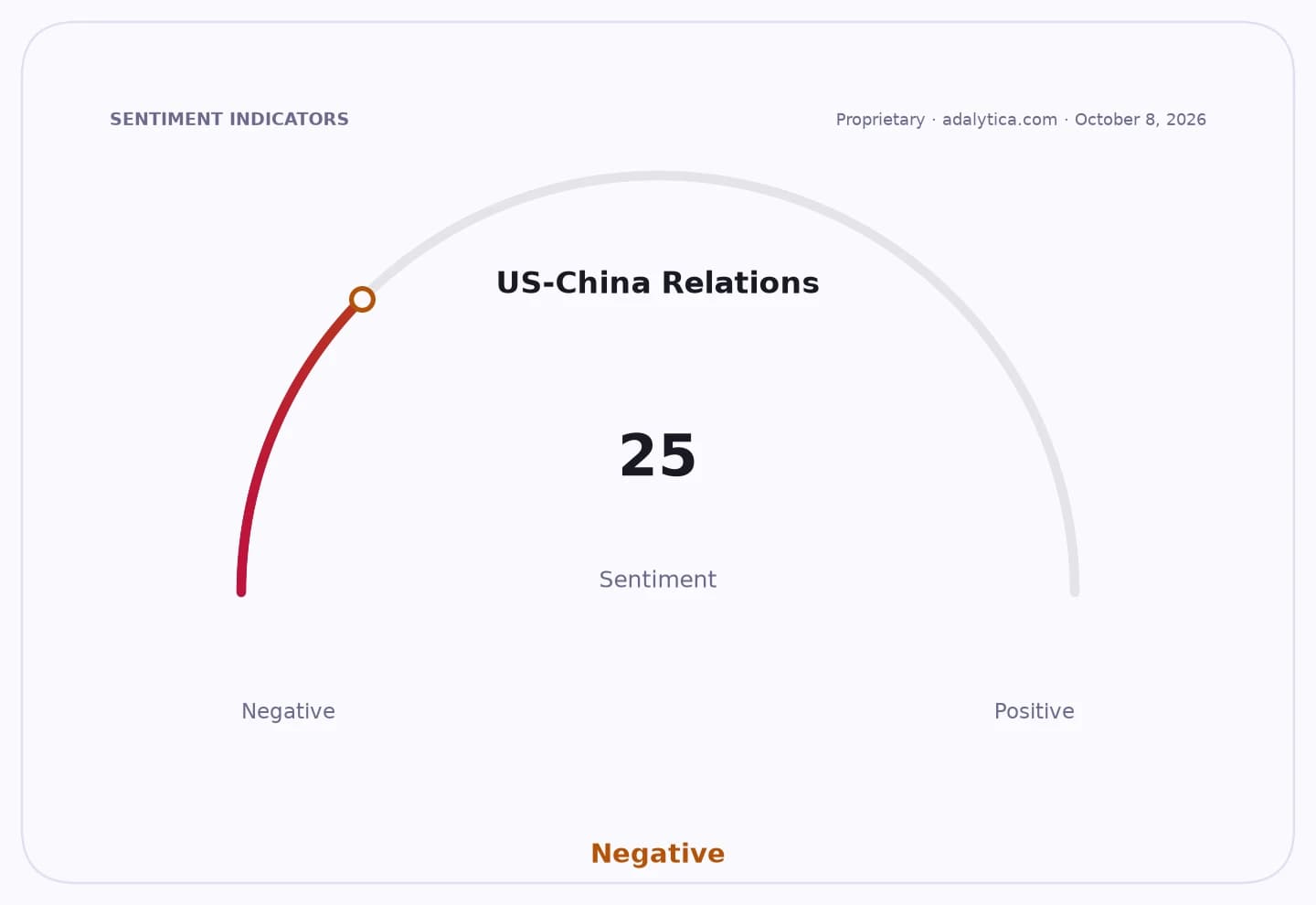
Thailand’s decision to begin extradition proceedings against Chinese investigative reporter Bai Zhaodong puts Bangkok on a collision course with press-freedom groups and refugee law, and raises fresh questions about how far Southeast Asia will go to accommodate Beijing.
Thailand Extradition Case Raises Political Risk Concerns
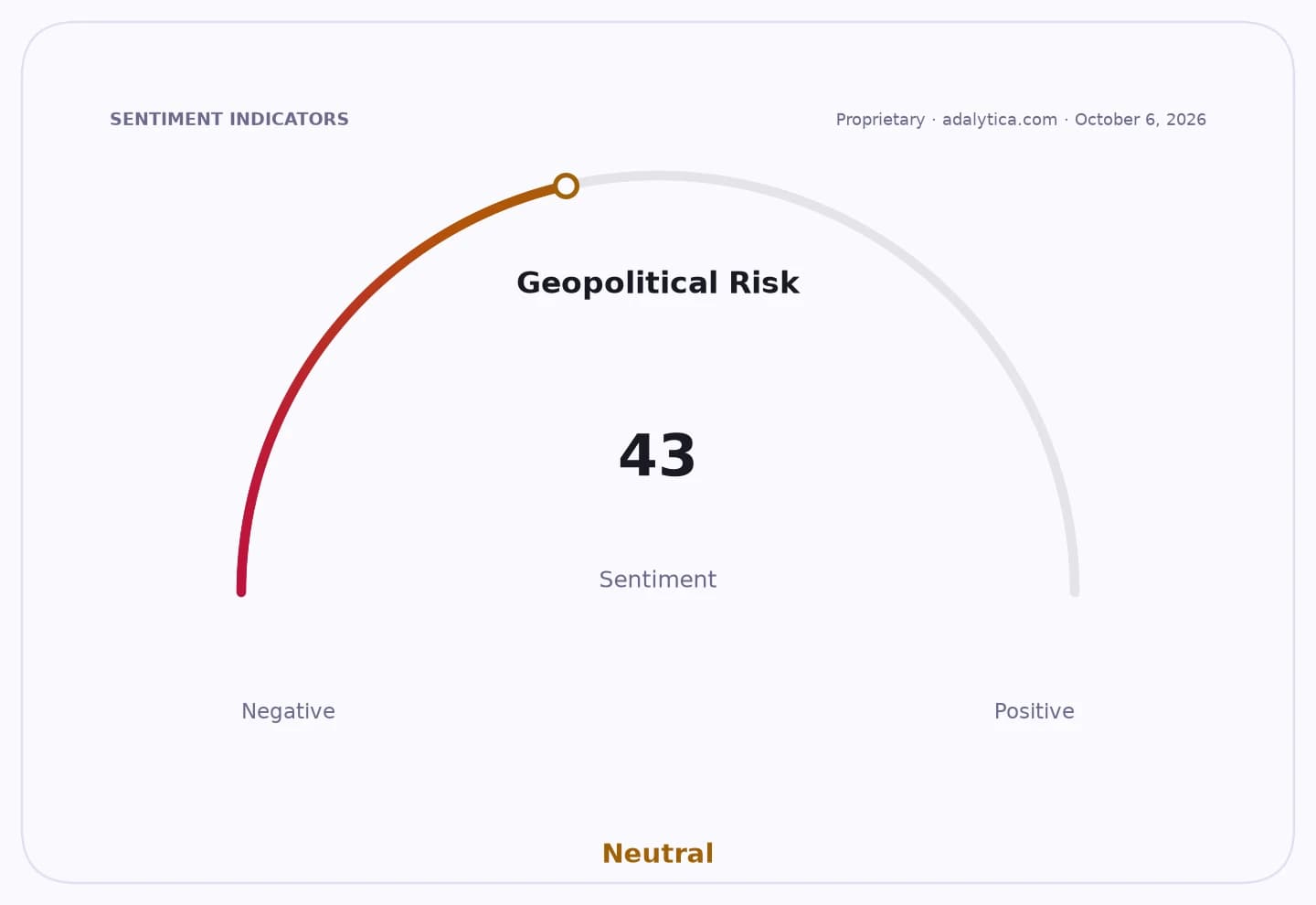
For investors, the immediate market move is not the point. The real issue is the signal this sends about Thailand’s political risk premium, its legal reliability on cross-border cases and the broader climate for foreign businesses operating in a region where rule-of-law concerns can quickly become economic concerns.
Sentiment IndicatorsⓘProprietary · adalytica.com · October 10, 2026
This is a snapshot — live sentiment, awareness and momentum for 130+ markets update continuously in the dashboard.Open AlphaPulse
Bai, 56, is a longtime corruption investigator who fled China in 2023 after what Reporters Without Borders said was mounting state persecution. He is recognized by the United Nations as a refugee and has been held in Thailand since January. Thai authorities arrested him Thursday and brought him to criminal court in Bangkok, where his lawyer said he will fight extradition. The next hearing is set for Jan. 25.
Beijing says Bai is suspected of extortion and bribery and has formally requested his return. That puts Thailand’s justice system at the center of a politically charged case that is already drawing accusations that Bangkok is helping China extend its repression beyond its borders. RSF called the surprise hearing “scandalous,” especially because it came just before a separate court ruling expected on Bai’s detention.
The economic significance lies in what this says about the operating environment, not just for dissidents but for companies, governments and financiers that depend on predictable institutions. Thailand is trying to balance relations with China, a crucial trade and investment partner, against international legal obligations and reputational costs. When governments appear willing to subordinate due process to diplomatic pressure, investors have to price in a wider range of policy outcomes.
That matters particularly for long-term capital. Multinationals, tourism operators and regional supply-chain players all benefit when Thailand is seen as a stable legal venue rather than a country where political sensitivities can override procedure. The case also underscores the fragility of protections for asylum seekers in a region where Thailand is not a party to the UN Refugee Convention and has previously deported 40 Uyghurs to China despite international objections.
The longer-term risk is that cases like this harden perceptions of Thailand as a jurisdiction where geopolitical considerations can override legal norms. That may not show up in day-to-day trading, but it does affect how investors think about country risk, financing costs and the durability of partnerships tied to China.
For investors, the lesson is familiar: in emerging markets, governance is not an abstract issue. It can shape everything from regulatory credibility to capital flows. Thailand’s handling of Bai’s case is now worth watching as a test of how much independence its courts and authorities are willing to assert when Beijing is involved.
| Entity | Gains | Losses |
|---|---|---|
| Thai authorities | ▲Diplomatic ties with Beijing | ▼Rule-of-law credibility |
| China | ▲Leverage over a dissident case | ▼International criticism |
| Press-freedom groups | ▲Spotlight on repression | ▼Little practical relief |
| Foreign investors in Thailand | ▲None immediate | ▼Higher political-risk perception |