Thailand’s Treasury finished fiscal 2026 with net revenue above target, giving the government a better-than-expected fiscal backdrop even as it continues to lean on tighter enforcement rather than higher tax rates to shore up collections.
Thailand Treasury Revenue Tops Fiscal 2026 Target
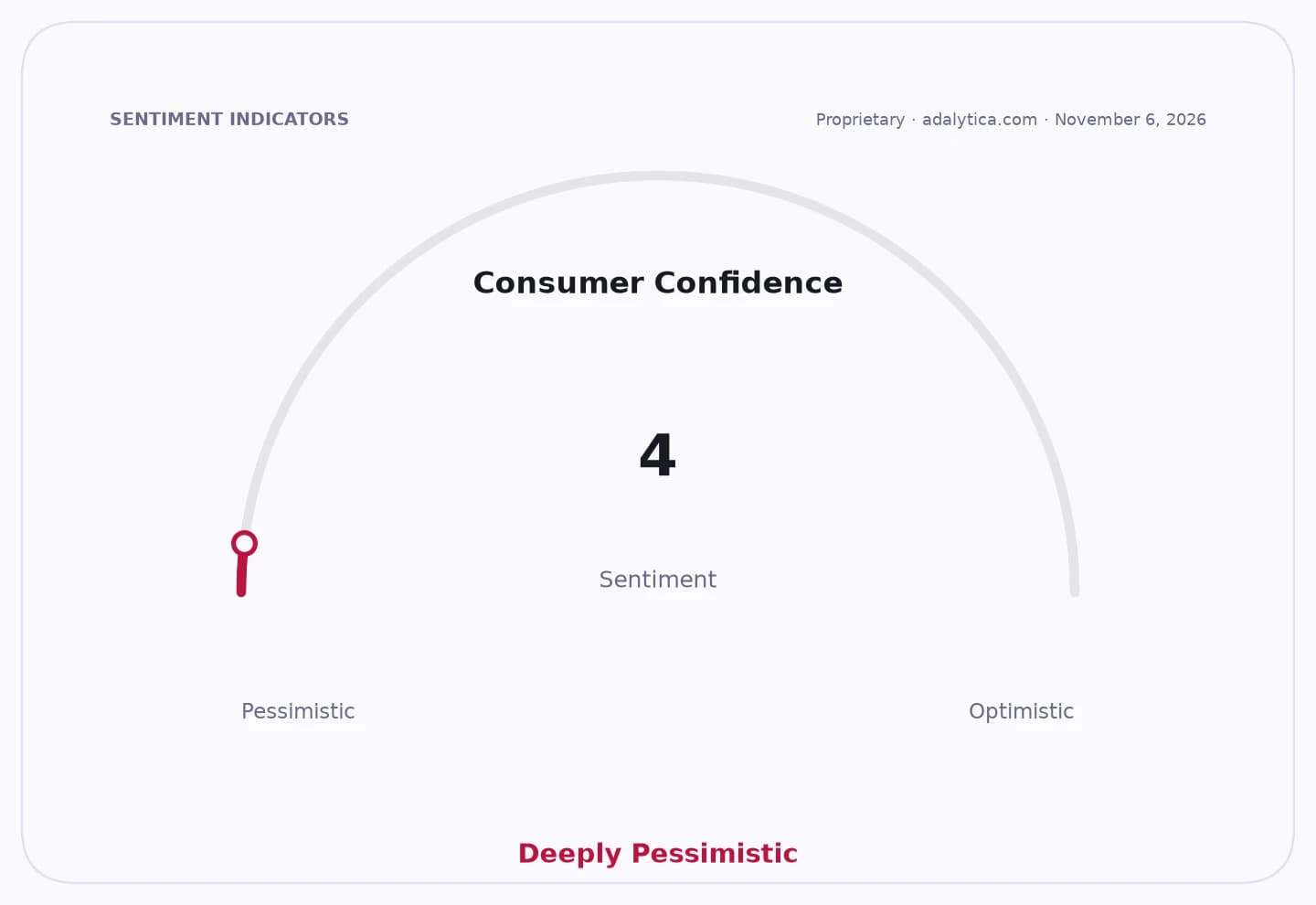
Consumer Spending
The finance ministry said net revenue for the year through September reached 2.948 trillion baht, exceeding its 2.921 trillion baht goal by 27.5 billion baht, or 0.9%, and rising 4.3% from a year earlier. The outperformance was driven mainly by value-added tax, corporate income tax and transfers from state enterprises, suggesting domestic demand and corporate profitability held up better than feared.
Sentiment Indicators
That matters because tax receipts are one of the clearest real-time gauges of Thailand’s economic momentum and fiscal capacity. When VAT collections rise on both domestic consumption and imports, it usually points to a healthier spending base and trade flow. Stronger corporate income tax, meanwhile, implies better earnings across large firms, while higher state-enterprise remittances reflect firmer returns in sectors such as energy and utilities.
The ministry also said total collections by the Revenue Department, Excise Department and Customs Department came in at 3.204 trillion baht, or 1.8% above target. The Revenue Department was the main contributor, bringing in 2.522 trillion baht, 3.1% above estimate and 8% higher than a year earlier. Customs missed target, underscoring the unevenness in the recovery and the still-soft external backdrop, but the shortfall was more than offset elsewhere.
For investors, the message is two-sided. The better revenue performance reduces immediate pressure on the government’s financing needs and supports confidence in fiscal management, a positive for Thai sovereign credit and domestic financial assets. It also suggests that banks, consumer companies and energy-linked businesses may be operating in a firmer macro environment than the more cautious political debate over tax policy implies. On the other hand, the authorities still face a narrow policy window in 2027, with compliance problems and more than 100,000 overdue income-tax returns keeping the outlook uncertain.
The fiscal cash position highlights the scale of the challenge ahead. Government cash receipts totaled 2.950 trillion baht, while budget spending reached 3.922 trillion baht, leaving the state to borrow 894.5 billion baht to cover the deficit. Cash on hand at the end of September stood at 575.7 billion baht, a buffer that eases near-term funding stress but does not eliminate the need for stronger revenue administration.
The political subtext is that Bangkok can claim success without raising headline tax rates, at least for now. But with growth still patchy and debt ratios under scrutiny, the Treasury’s outperformance in 2026 looks more like a reprieve than a resolution. The key question for markets is whether stronger compliance and firmer domestic demand can carry that momentum into 2027, or whether the government will again be forced to confront a structural revenue gap.
| Entity | Gains | Losses |
|---|---|---|
| Thai Treasury | ▲Above-target revenue | ▼Fiscal pressure eases |
| Government bondholders | ▲Better funding visibility | ▼Less urgency for reform |
| Domestic consumers and firms | ▲Stable tax rates | ▼Higher compliance scrutiny |
| Customs-dependent importers | ▲— | ▼Revenue misses highlight softer trade |