A standard Thanksgiving dinner is set to cost about 11% more this year, turning a familiar holiday meal into another reminder that grocery inflation is still biting American households.
Thanksgiving dinner costs rise 11% this year
Consumer Spending
That increase, according to a new analysis from Groundwork Collaborative and The Century Foundation using NielsenIQ price data, is nearly three times the overall rate of inflation and comes even as some of the biggest staples rise only modestly. Spiral ham is up about 3% and cranberry sauce about 2%, but green beans are nearly 37% more expensive and a 15-pound frozen turkey is up 26%.
Sentiment Indicators
CPI
Economically, the report points to inflation that has not fully worked its way out of the food chain. Producers are still dealing with elevated diesel and fertilizer costs after the Iran war, while tariffs on foreign aluminum are lifting the cost of canned goods and other imported products. At the same time, sellers are keeping prices elevated because of global volatility and an uncertain trade backdrop, leaving consumers with fewer opportunities to catch relief at the shelf.
That matters for investors because grocery inflation does not just hit wallets — it changes spending patterns. Households facing higher food bills usually trade down, buy in smaller quantities and cut back on discretionary purchases, which pressures retailers with weaker pricing power and rewards chains that can win on value. The stock moves in big-box and grocery names tell that story: Walmart and Costco have both been near or above their 200-day moving averages in recent sessions, with technical momentum still firm, while Kroger has also held up as consumers search for cheaper baskets. The market is pricing in a clear split between value leaders and everyone else.
Turkey is the clearest pressure point. Bird flu is shrinking supply just as holiday demand peaks, with the USDA saying more than 2.7 million birds were affected in the past 30 days and October cases up 324% from the prior month. Turkeys take longer to bring to market than broiler chickens, so outbreaks linger in the pipeline and keep prices sticky. Add in reduced USDA staffing after Trump-era cuts, and the supply response becomes slower and less predictable.
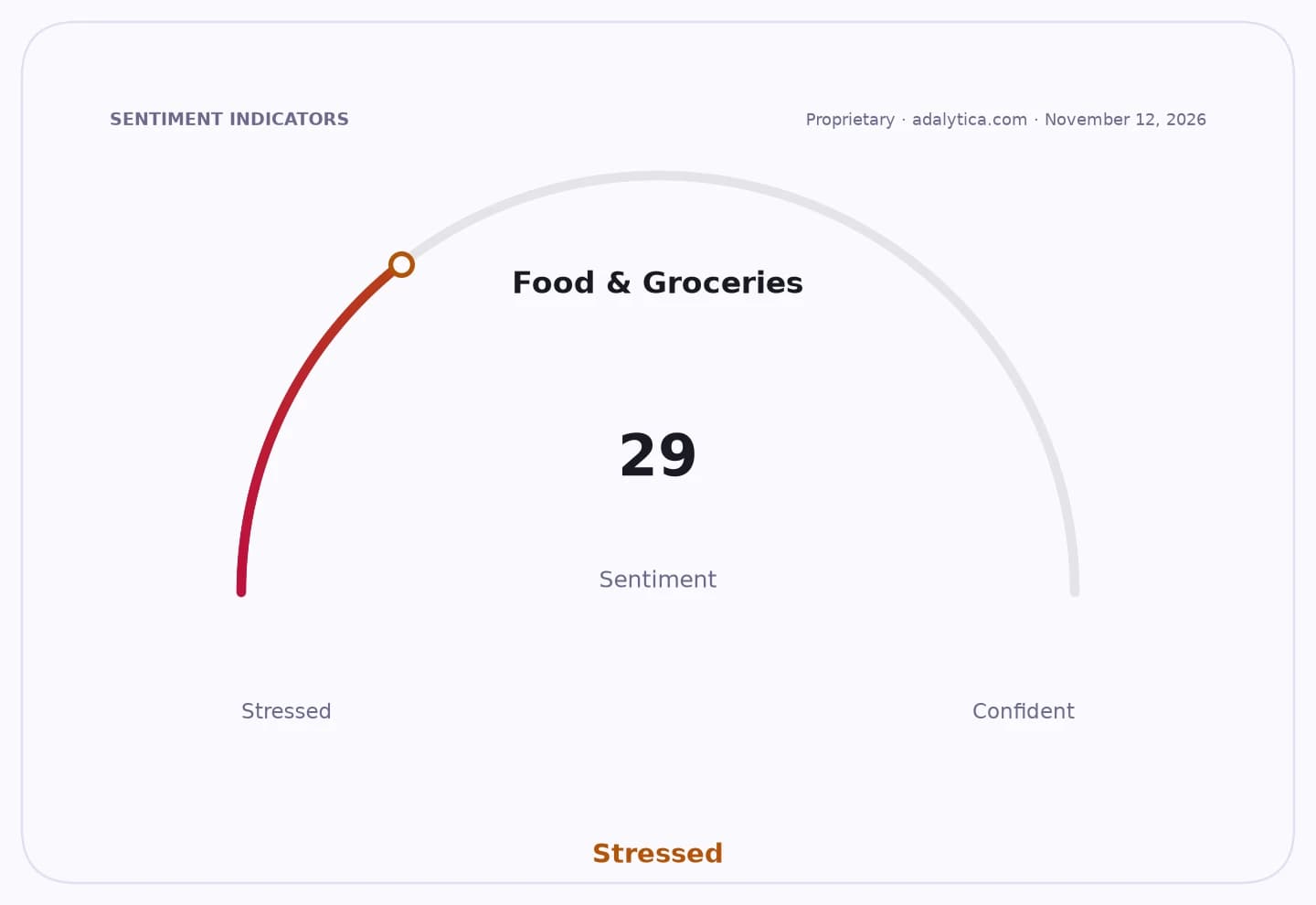
The broader message is that food inflation is now being reinforced by policy, disease and geopolitics at the same time — a combination that keeps the holiday table expensive even if headline inflation looks calmer elsewhere. Adalytica’s Consumer Spending Sentiment gauge is sitting in “Extreme Fear,” underscoring how quickly elevated grocery prices can squeeze demand at exactly the point when households are already stretched.
For investors, the opportunity is not to chase the pain, but to own the businesses that benefit when consumers become value-conscious. Walmart, Costco and Kroger remain the most obvious beneficiaries of a defensive food-spending cycle, while suppliers exposed to turkey shortages, freight costs and tariff-sensitive packaging face a less forgiving setup. The next catalyst is simple: if holiday food inflation stays elevated into year-end, the market will keep rewarding the chains that can capture budget-stressed shoppers.
| Entity | Gains | Losses |
|---|---|---|
| Walmart (WMT) | ▲Value-seeking shoppers | ▼Premium grocers |
| Costco (COST) | ▲Bulk basket trade-down | ▼Households facing sticker shock |
| Kroger (KR) | ▲Defensive grocery demand | ▼Food manufacturers with weak pricing power |
| Turkey producers | ▲Higher retail prices | ▼Consumers and holiday budgets |