Tickeron is pitching a new generation of AI trading robots to retail investors by highlighting backtested gains as high as 97.47% across semiconductor and technology names, a marketing push that underscores how automated trading tools are being positioned as a lower-cost way to chase volatility in high-beta stocks.
Tickeron Launches AI Trading Robots for Retail Investors

The most commercially important part of the launch is not the headline return itself, but the company’s effort to turn complex, fast-moving markets into a subscription product aimed at individual traders. Tickeron says its Semi & Technology AI Trading Agent posted a historical return of 97.47% on MRVL and TECL using a 60-minute configuration, while a separate Semi & Materials/Mining strategy on NVDA and USAR showed 94.34%, and a dedicated bot on BTDR delivered 172.92%. The company is also discounting access, charging $45 a month for AI Trading Robots and $125 a month for unlimited access, suggesting it is trying to convert enthusiasm around AI into recurring retail revenue.
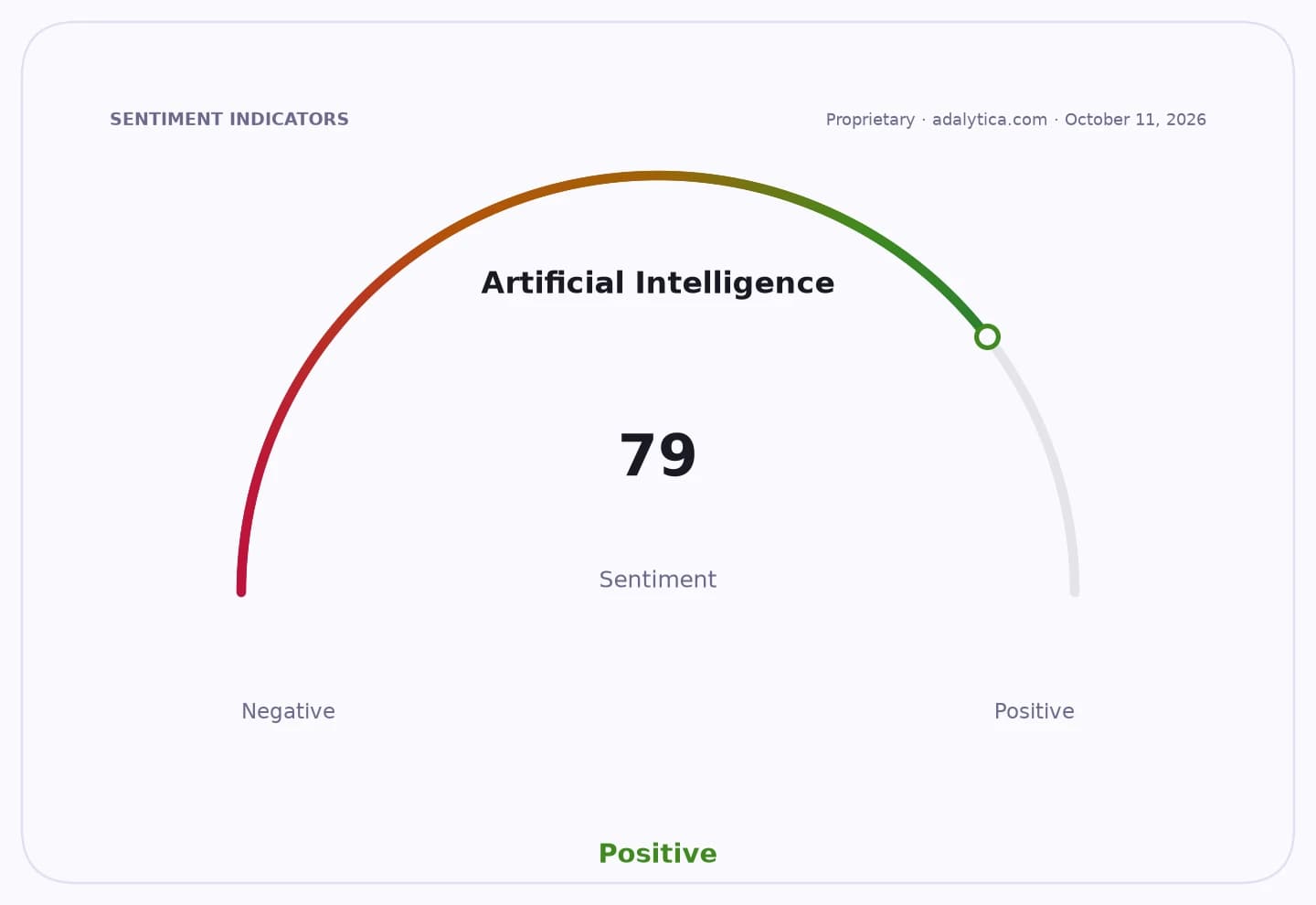
Sentiment IndicatorsⓘProprietary · adalytica.com · October 24, 2026
This is a snapshot — live sentiment, awareness and momentum for 130+ markets update continuously in the dashboard.Open AlphaPulse
Economically, the pitch sits at the intersection of two powerful trends: retail participation in momentum sectors and the growing demand for automation in market research. Semiconductors and leveraged tech products remain some of the most volatile instruments in the market, which makes them natural targets for algorithmic strategies but also raises the risk of whipsaw losses when trends reverse. Tickeron says the robots use systematic analysis and expanded financial learning models, and it has recently added more computing capacity and an “Ask AI” feature designed to compress hours of research into a single click. That reflects a broader shift in financial services, where AI tools are increasingly sold not as institutional infrastructure but as consumer products.
For investors, the key issue is whether the robots can do more than market a strong historical track record. The listed names underline the risk-reward profile: NVIDIA, Marvell, and TECL are all linked to the same crowded AI and semiconductor trade, while BTDR adds exposure to crypto and power-intensive computing themes. Recent price action in NVIDIA and Marvell shows how quickly momentum can swing; both have seen sharp rallies and abrupt drawdowns over the past few months, with standard technical measures such as the 50-day moving average and RSI readings flashing oversold or overextended conditions at various points. That kind of volatility can help short-term trading systems generate outsized backtests, but it also makes forward performance far less certain once slippage, transaction costs and regime changes are included.

The broader narrative is that AI is moving from the companies building chips to the platforms packaging trading access to those chips and related themes. Tickeron is not selling a forecast; it is selling a workflow. That may appeal to retail traders looking for disciplined entries and exits in crowded momentum names, especially as the Adalytica AI sentiment gauge around the sector has shown sharp swings between fear and greed in recent days. But the same conditions that make these robots attractive — fast moves, high dispersion and intense attention — also make them vulnerable to abrupt reversals.
Investors should treat the launch as a sign of where market demand is headed, not as proof of durable edge. If Tickeron can retain users beyond the initial promotional phase, it would validate the commercial appetite for AI-driven trading tools. If not, the offering may prove to be another example of retail enthusiasm being monetized in a volatile corner of the market.
| Entity | Gains | Losses |
|---|---|---|
| Tickeron | ▲Subscription revenue | ▼Credibility if results fade |
| Retail traders | ▲Low-cost automation | ▼Backtest risk and trading costs |
| NVDA, MRVL, TECL, BTDR bulls | ▲More momentum participation | ▼Sharper reversals |
| Active discretionary traders | ▲Faster signal access | ▼Edge erosion from crowded trades |