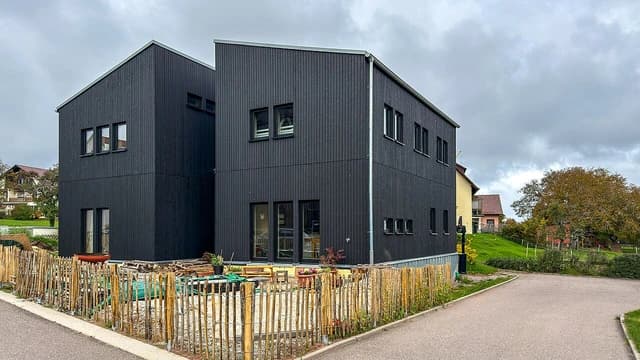
Timber modular construction is moving from niche engineering discussion toward a practical cost-and-risk question for U.S. homebuilders, with new work on seismic response and explainable AI aimed at making off-site wood housing easier to design, approve and insure.
Timber Modular Housing Seismic AI Study
That matters because modular housing has long promised faster delivery and lower labor intensity, but its economics often break down when builders confront local code complexity, financing friction and uncertainty over how the structures behave in earthquakes. A parametric study paired with explainable AI seeks to reduce that uncertainty by showing which design variables actually drive seismic performance, potentially helping developers standardize timber modules for wider use in disaster-prone markets.
The timing is notable for an industry still grappling with affordability pressure, labor shortages and uneven housing demand. If modular timber systems can be modeled more transparently, they could shorten engineering timelines, improve code compliance and lower perceived risk for lenders and municipalities. That would be especially relevant in the western U.S. and other seismically active regions where conventional construction costs are high and resilience is becoming a larger part of the housing value proposition.
For investors, the story cuts across several parts of the housing stack. Homebuilders with scale and off-site manufacturing capability could gain if modular production becomes more repeatable and easier to certify. Materials suppliers tied to engineered wood and prefabricated components may also benefit if timber modular gains share. The downside would fall on builders and suppliers reliant on traditional stick-built methods if modular systems take more work out of the field and compress cycle times.
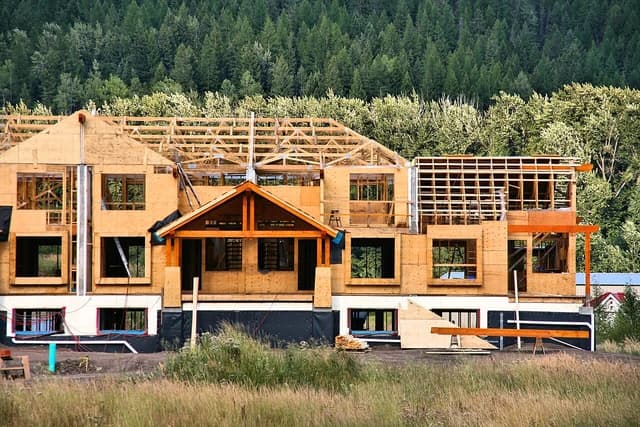
The research angle also speaks to a broader shift in construction technology: the use of explainable AI rather than black-box optimization. In practice, that can matter as much as the structural findings themselves. Building officials, insurers and project financiers are more likely to accept modular timber systems when the performance logic is clear, not just statistically strong. That could make the difference between an academic paper and a bankable product.
For publicly traded U.S. homebuilders such as Toll Brothers, Lennar and NVR, the near-term impact is limited, but the medium-term implication is more strategic. Any platform that improves certainty around cost, schedule and resilience could support margins in a capital-intensive industry where small overruns can erode returns. The market has already shown how sensitive homebuilder shares are to shifts in rates, margins and backlog visibility; a credible path to faster, more standardized delivery would be additive.
The main risk is execution. Timber modular construction still has to prove it can scale beyond demonstration projects, meet local code requirements across jurisdictions and remain cost-competitive when transport, factory capacity and warranty costs are included. But if parametric seismic analysis and explainable AI can reduce those frictions, the case for modular wood housing becomes less speculative and more industrial.
| Entity | Gains | Losses |
|---|---|---|
| Timber modular developers | ▲Easier certification | ▼Design uncertainty |
| Homebuilders | ▲Faster project delivery | ▼Traditional build inefficiency |
| Engineered wood suppliers | ▲More modular demand | ▼Steel/concrete share |
| Lenders and insurers | ▲Clearer risk models | ▼Opaque project risk |