China’s plan to build a vast new embassy near the Tower of London has been rejected by local councillors, sharpening a diplomatic fight that now sits squarely at the intersection of security, urban planning and Britain’s relationship with Beijing.
Tower Hamlets Rejects China Embassy Plan
Geopolitical Risk
The unanimous decision by Tower Hamlets councillors does not end the project, but it raises the political and regulatory hurdle for Beijing’s proposed diplomatic compound in one of London’s most sensitive and crowded districts. The committee cited concerns over resident and tourist safety, heritage impacts, police resources and congestion, underscoring how a real estate proposal has become a proxy battle over China’s growing presence in Britain.
Sentiment Indicators
For investors, the issue matters less because of the building itself than because of what it says about the trajectory of UK-China ties. Beijing has been seeking a larger diplomatic footprint abroad at a time when Western capitals are more alert to security risks tied to surveillance, protest management and strategic influence. The rejection suggests that even in a city accustomed to high-value foreign property, political resistance to Chinese state-linked expansion remains strong.
The embassy site, directly facing the Tower of London, has become symbolic as well as practical. Supporters of the plan would argue that a major diplomatic mission in London should not be treated differently from other foreign embassies and that the planning process should remain separate from broader geopolitical tensions. Opponents say scale and location matter, especially in a densely populated historic area where police and transport systems are already stretched.
The broader backdrop is a relationship that remains commercially important but politically fraught. Britain has been trying to balance investment access and trade with tighter scrutiny of Chinese activity in sensitive sectors. The embassy row fits that pattern: even when the economic stakes are indirect, decisions around China increasingly reflect national security calculations.
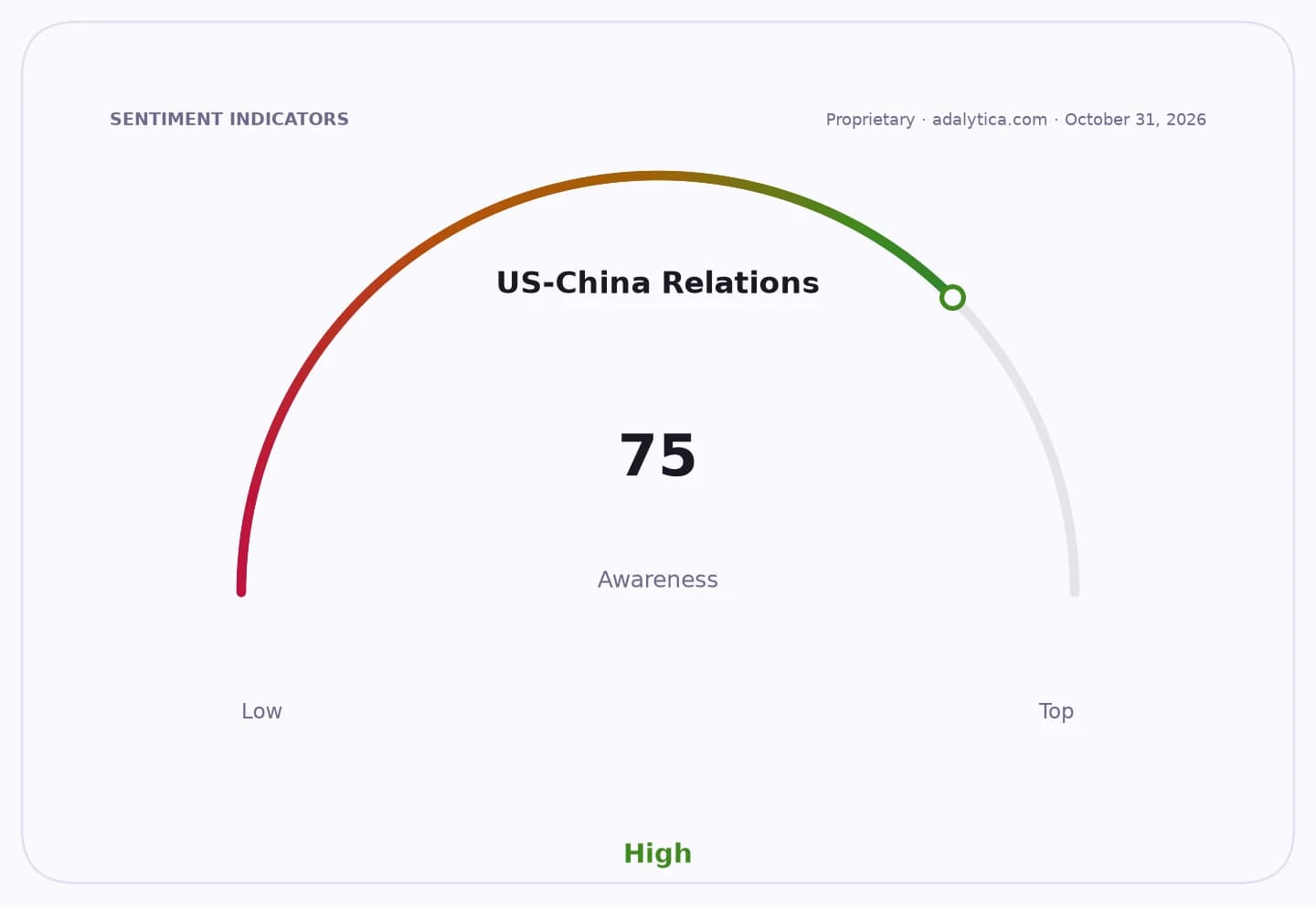
Markets are unlikely to move directly on the planning vote, but the episode adds to a wider risk premium around UK-China engagement. Any further escalation could spill into investor sentiment toward China-linked assets and multinational companies exposed to Britain-China regulatory shifts. Adalytica’s US-China relations sentiment gauge remains elevated at 82, but its global stability reading is just 21, a sign that geopolitical confidence is still fragile even as diplomacy attempts to improve.
The final decision now moves to London’s mayor, and potentially beyond. If the refusal is upheld, it would reinforce the message that Britain is willing to constrain Chinese state expansion when security and public order concerns are judged to outweigh diplomatic convenience.
| Entity | Gains | Losses |
|---|---|---|
| Tower Hamlets residents | ▲Safety concerns elevated | ▼Loss of development upside |
| UK security authorities | ▲Stronger scrutiny powers | ▼Higher diplomatic pressure |
| China’s embassy project | ▲Political attention | ▼Planning setback |
| UK-China relations | ▲None | ▼More friction, lower trust |