Taiwan’s warning to China over the APEC invitation process underscores a recurring diplomatic flashpoint that could reverberate beyond protocol, because any downgrade in Taiwan’s status at a major regional forum risks hardening cross-strait tensions just as investors are watching for signs of policy stability in Asia.
Taiwan warns China over APEC invitation process
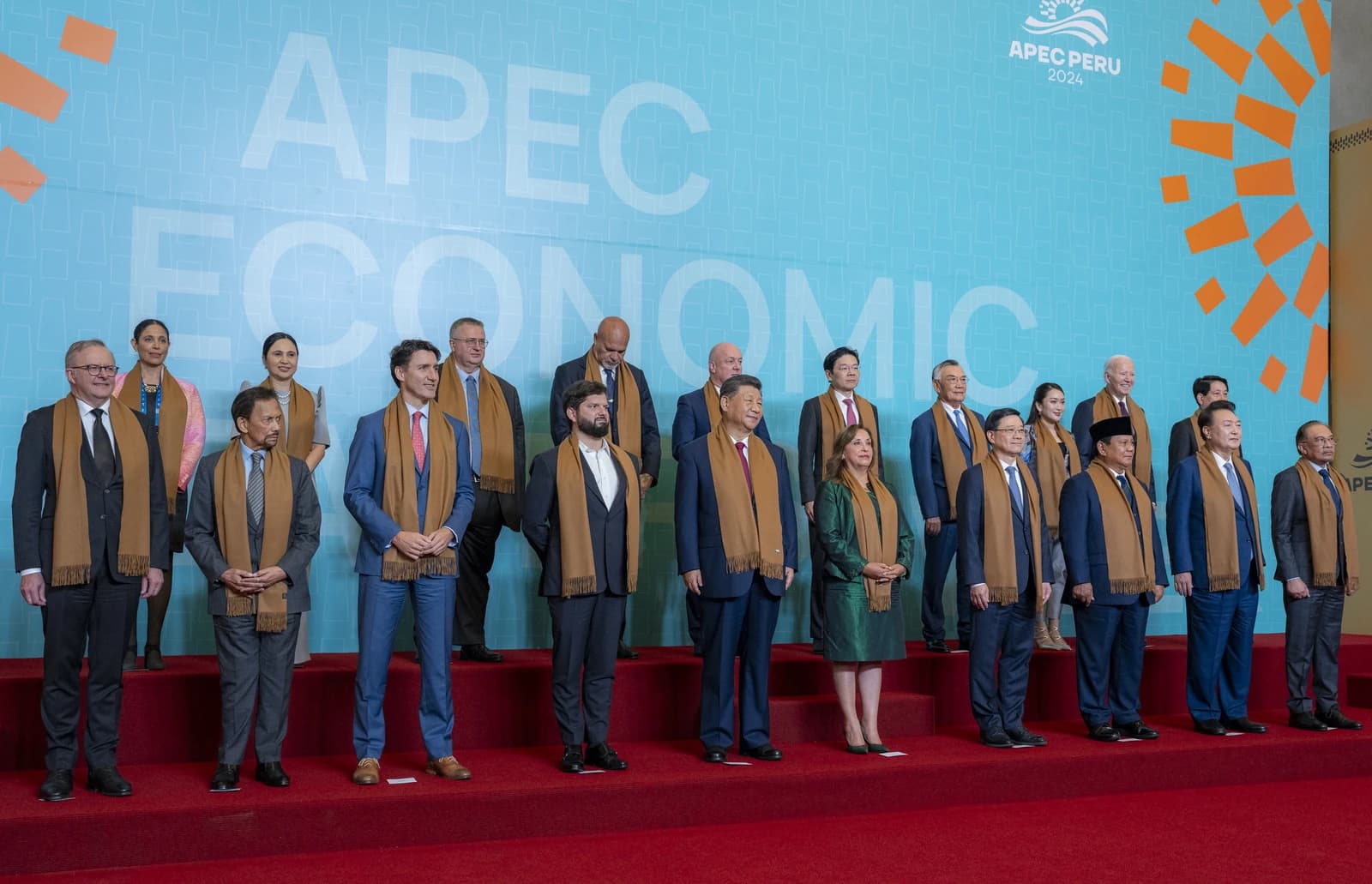
Foreign Minister Lin Chia-lung said Taiwan would protest any deviation from “established practice” after reports that Beijing, as host of the 2026 APEC summit in Shenzhen, sent Taiwan a letter rather than a formal invitation and omitted its APEC designation, “Chinese Taipei.” Lin said Taiwan would defend its right to attend the Nov. 18-19 meeting, even as he accused China of treating the island differently from other member economies.
Sentiment Indicators
CCP Policy Direction
The dispute matters because APEC is one of the few multilateral venues where Taiwan participates alongside China on an equal footing, and the procedural handling of invitations often becomes a proxy battle over sovereignty. In practice, the wording and delivery of the invitation are not ceremonial details; they are part of the diplomatic architecture that allows Taiwan to remain in the room without forcing a political concession. A break with precedent would raise the risk of a boycott, a protest or a wider blow-up that could spill into other cross-strait channels.
For markets, the immediate impact is more about risk premium than direct earnings, but that still matters. China-Taiwan tensions are one of the region’s most sensitive geopolitical variables, and any escalation can weigh on sentiment toward Greater China assets, including Hong Kong-listed Chinese equities and broader Asia funds. The iShares MSCI China ETF, FXI, closed at $33.37 on Nov. 2, still below its 50-day moving average of $34.14 and 200-day average of $35.49, a technical backdrop that suggests investors have not fully embraced a durable recovery. The iShares MSCI Hong Kong ETF, EWH, was more stable at $22.56, roughly in line with its 50- and 200-day averages, while the iShares MSCI AC Asia ex Japan ETF, AAXJ, traded at $107.52, well below its 50-day average of $114.53.
The fact that Beijing is hosting the summit gives it leverage over the optics, but it also raises the stakes for the host’s credibility. China has previously used APEC diplomacy to signal political preferences, including in 2001, when Taiwan boycotted the forum after Beijing rejected its envoy choice, and in 2014, when an official invitation was personally delivered in Taipei during a warmer phase in ties. Those precedents show why Washington, Taipei and regional capitals watch APEC protocol closely: what begins as a wording dispute can quickly become a test of China’s willingness to observe multilateral norms when politics intervenes.
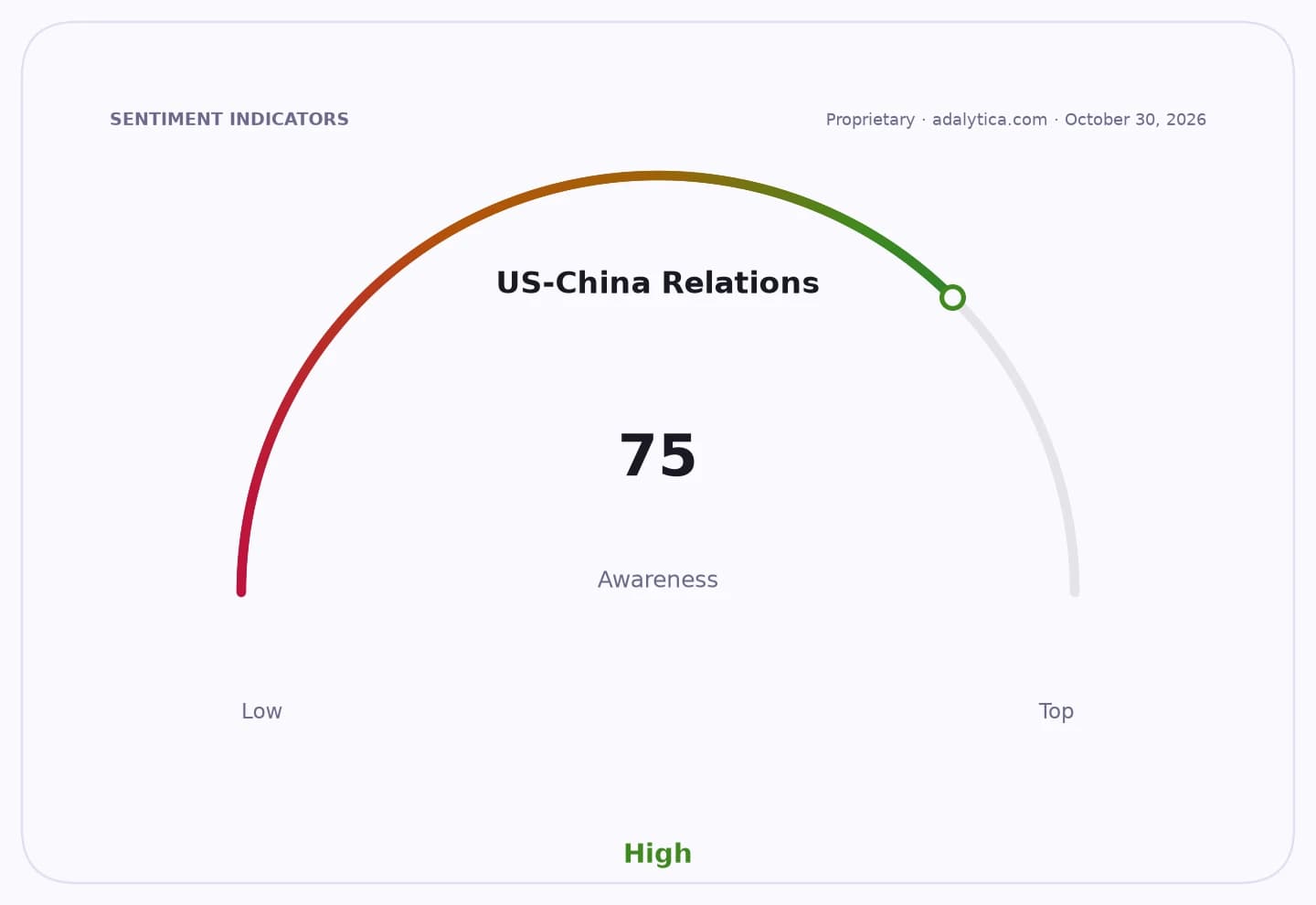
The backdrop is not wholly negative for risk assets. Regional sentiment toward China policy direction remains elevated in the proprietary Adalytica.com gauge, while broader global stability readings also point to relatively complacent positioning. That can make markets vulnerable to sharper moves if a protocol dispute becomes a headline political confrontation. For investors, the key question is whether this becomes a contained diplomatic irritant or the first sign that Beijing will use the APEC platform to extract symbolic concessions from Taiwan.
If the invitation is ultimately normalized, the episode may fade as another APEC skirmish. If not, it could sharpen cross-strait risk perceptions heading into a year of heightened regional diplomacy, with consequences for Taiwan-sensitive sectors, China sentiment and the broader risk appetite for Asia.
| Entity | Gains | Losses |
|---|---|---|
| China | ▲Protocol leverage | ▼Multilateral credibility |
| Taiwan | ▲Visibility at APEC | ▼Diplomatic comfort |
| Regional investors | ▲Clarity if dispute resolves | ▼Higher geopolitcal risk |
| APEC forum | ▲Relevance as venue | ▼Perception of politicization |