China used a Nairobi commemoration to restate its claim over Taiwan, underscoring how Beijing is widening the diplomatic and historical campaign around reunification even as a typhoon batters the island and threatens parts of China’s coast.
China restates Taiwan claim in Nairobi event
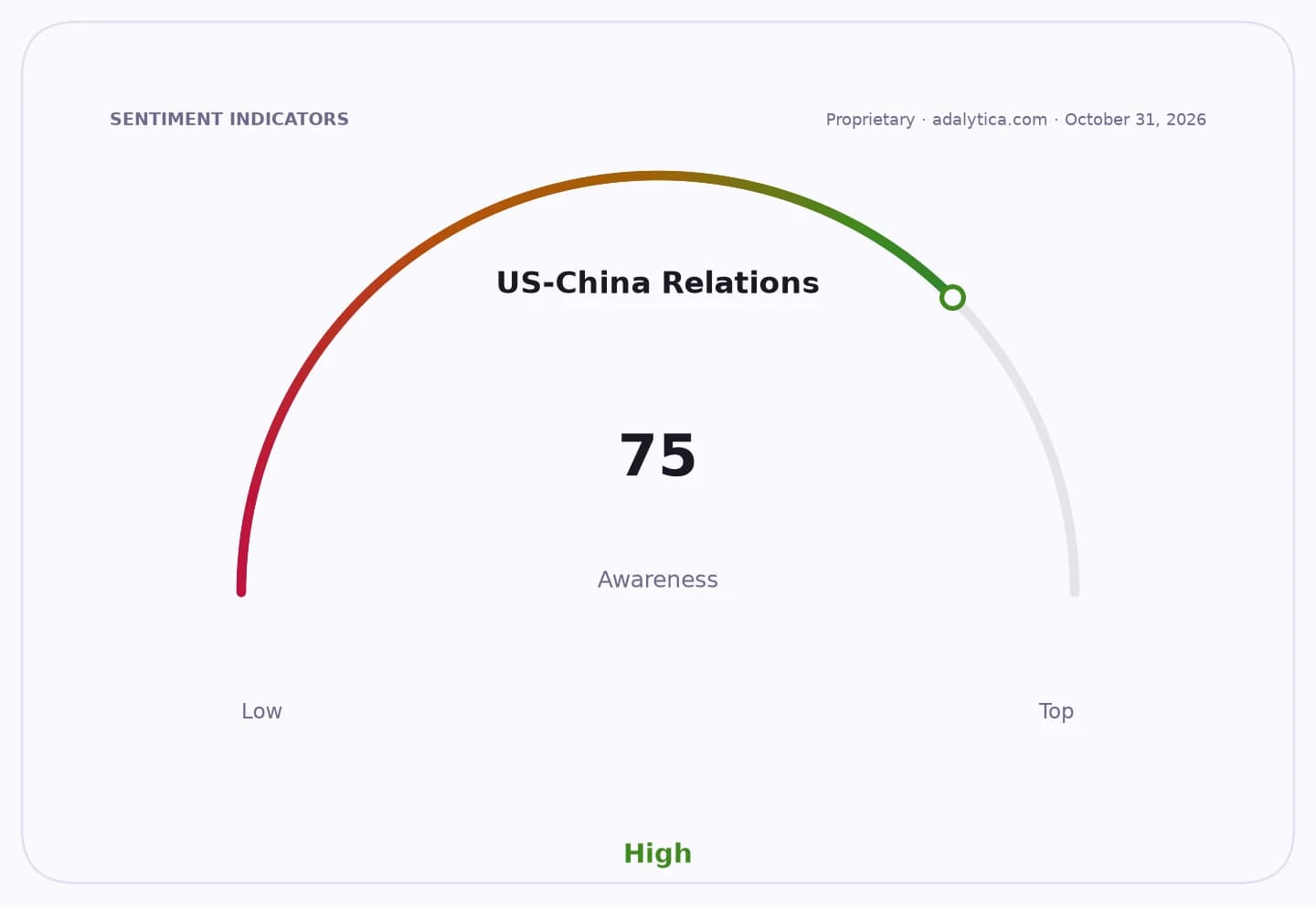
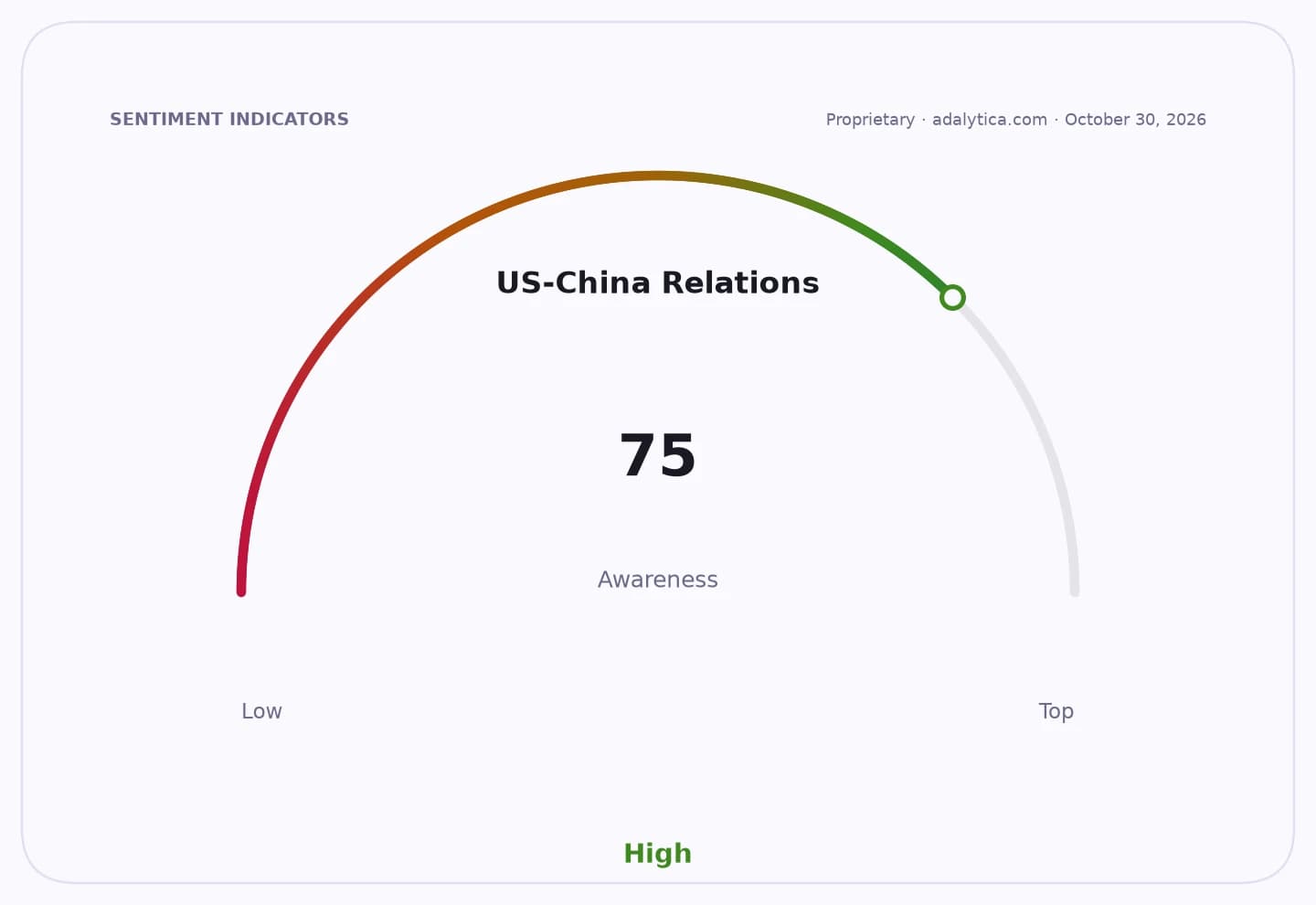
US-China Relations
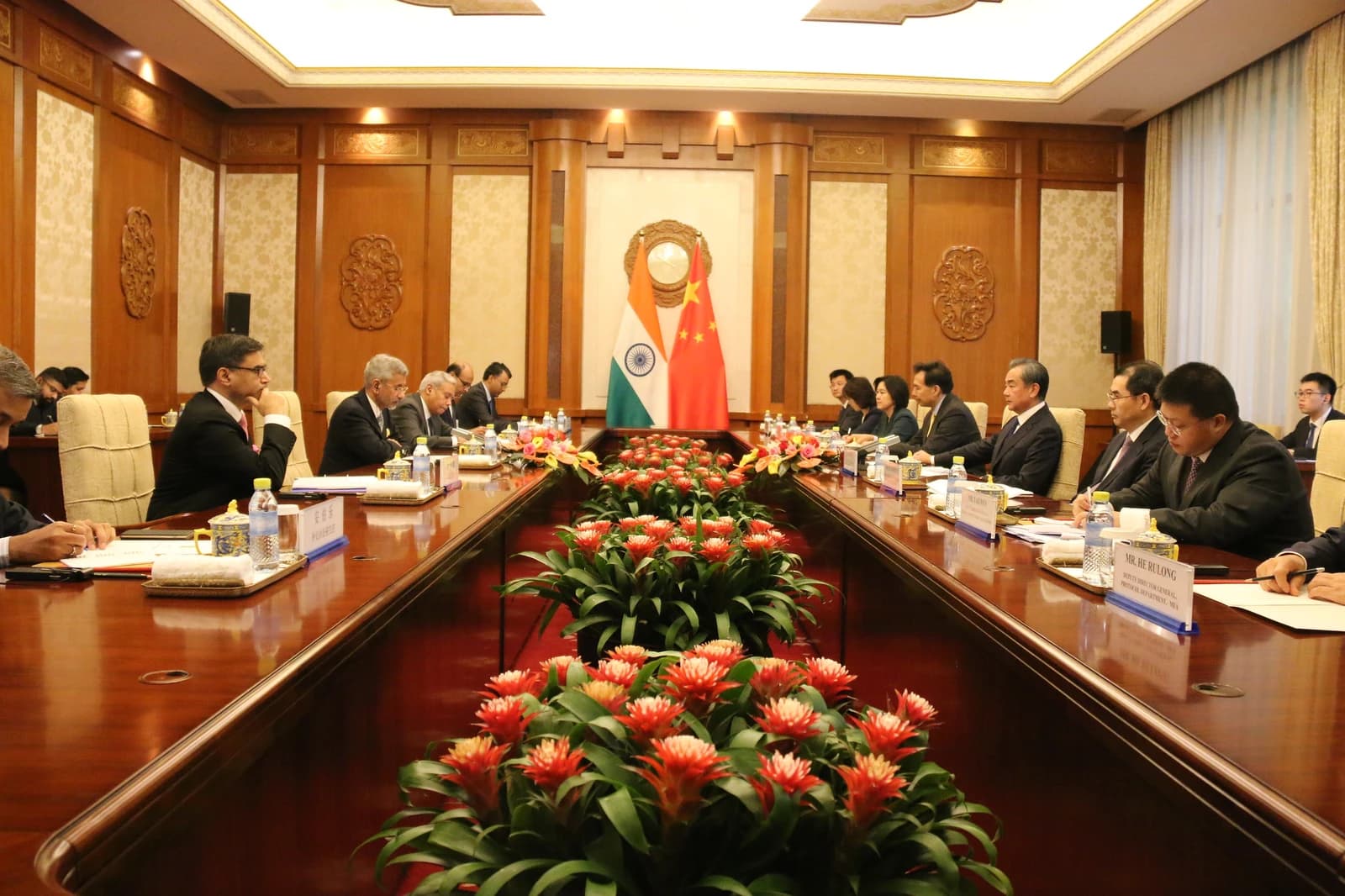
The event, hosted by Xinhua in Kenya and led by Chinese Ambassador Guo Haiyan, marked the 81st anniversary of Taiwan’s 1945 “restoration” to China and was framed as part of Beijing’s push to reinforce the One-China principle abroad. That matters because Taiwan remains one of the biggest geopolitical flashpoints in Asia, with any escalation carrying implications for global trade, semiconductors, shipping and risk appetite across emerging markets.
Sentiment Indicators
Guo said the exhibition was meant to strengthen support for Beijing’s position and cited the Cairo Declaration, the Potsdam Proclamation and Japan’s surrender document as the legal and historical basis for China’s claim. China has also made the messaging more formal at home: its National People’s Congress Standing Committee designated Oct. 25 as a commemoration day for Taiwan’s restoration in 2025.
The Nairobi appearance also shows how Beijing is using African platforms to bolster its international narrative. Kenya, which Beijing says reaffirmed opposition to Taiwan independence during President William Ruto’s 2025 state visit to China, is being held up as evidence of support from a partner with growing strategic and economic weight in East Africa.
The timing is notable for markets because Taiwan’s geopolitical risk premium remains closely tied to semiconductor supply chains. Taiwan Semiconductor Manufacturing Co. shares fell 7.8% over the last three sessions to $405.30, well below the 50-day moving average of $434.52, while its relative strength index slipped to 35.4, a sign of weakening momentum. The stock remains above its 200-day moving average, but the latest drop leaves investors more sensitive to any fresh headline risk around the strait.
Broader China exposure has also cooled. The iShares MSCI China ETF finished at $33.03 on Oct. 30, down from $34.26 a day earlier and below both its 50-day and 200-day moving averages, while the iShares MSCI Taiwan ETF slipped to $100.92 after recent gains. That combination points to fading near-term appetite for China and Taiwan exposure even before factoring in the storm.
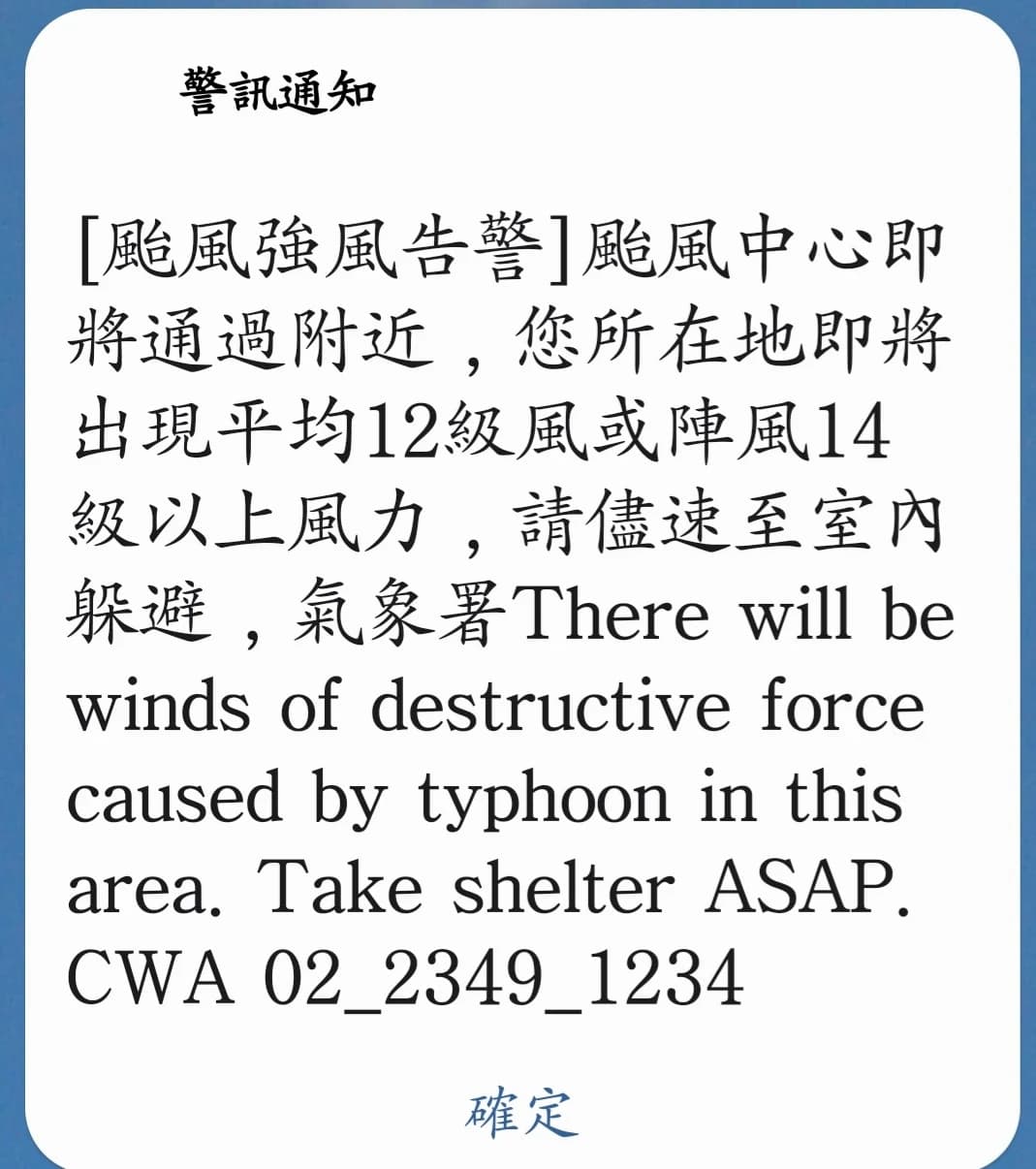
Separately, Typhoon Champi has caused one death, injured more than 500 people and knocked out power to over 280,000 households in Taiwan, while disrupting travel and schools. As the storm weakens and moves north toward the Chinese coast, it adds another layer of operational risk for the region, where logistics, manufacturing and port activity are already highly exposed to weather shocks.
The political message from Nairobi, combined with the weather disruption in the strait, leaves investors watching for any escalation in rhetoric from Beijing, Taipei or Washington. For now, the immediate test is whether China keeps pushing its reunification campaign through diplomatic events abroad or turns the same messaging into a harder line if regional tensions rise further.
| Entity | Gains | Losses |
|---|---|---|
| China | ▲stronger One-China messaging | ▼higher diplomatic friction |
| Kenya | ▲deeper Beijing ties | ▼pressure over Taiwan stance |
| TSMC and Taiwan equities | ▲none | ▼geopolitical risk premium |
| Regional investors | ▲clearer policy signaling | ▼volatility in semis and Asia assets |