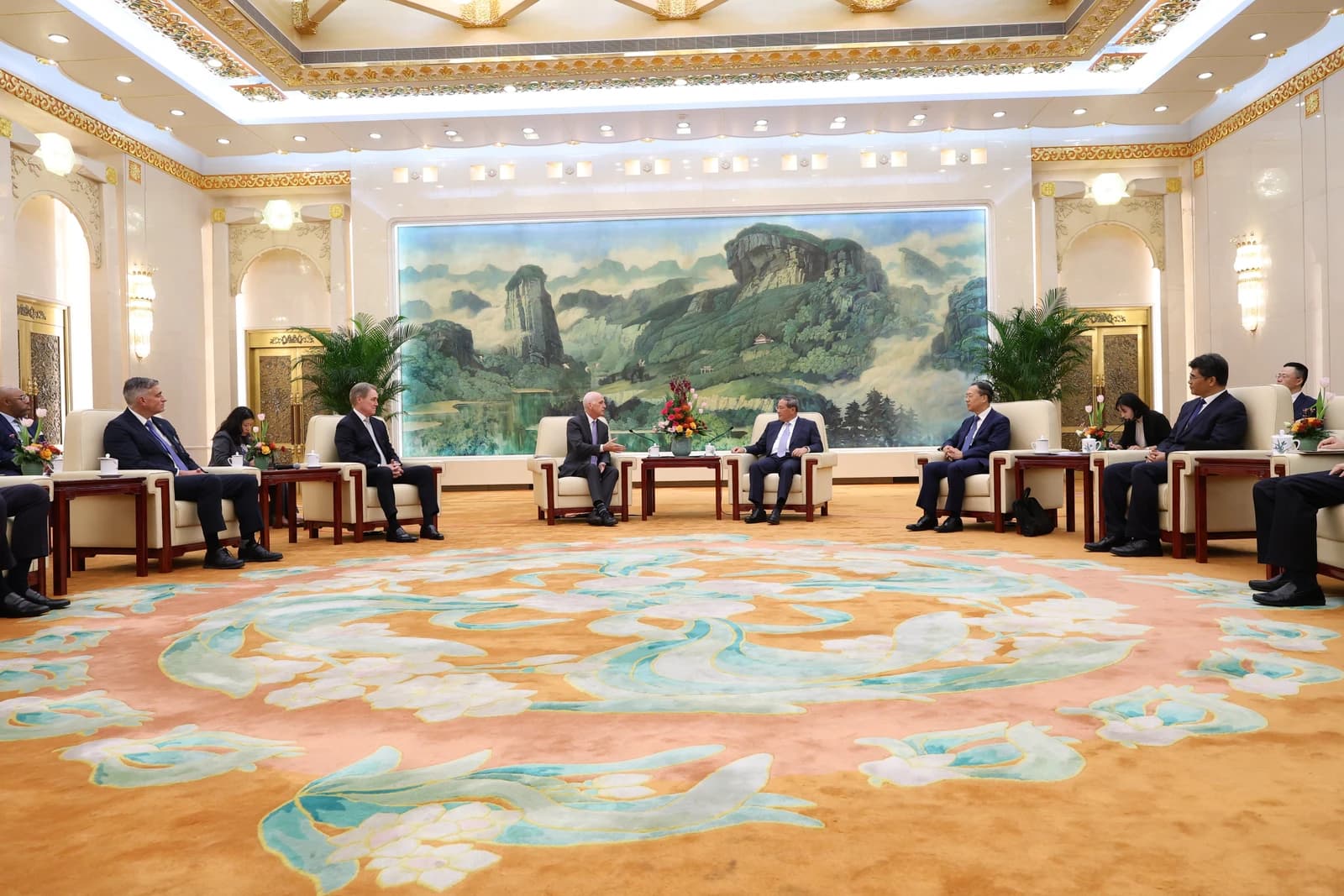
China is pushing back against Washington’s demand that Beijing join nuclear disarmament talks, a sign the world’s two largest economies remain far apart on one of the most sensitive issues in global security.
China Pushes Back on U.S. Nuclear Talks
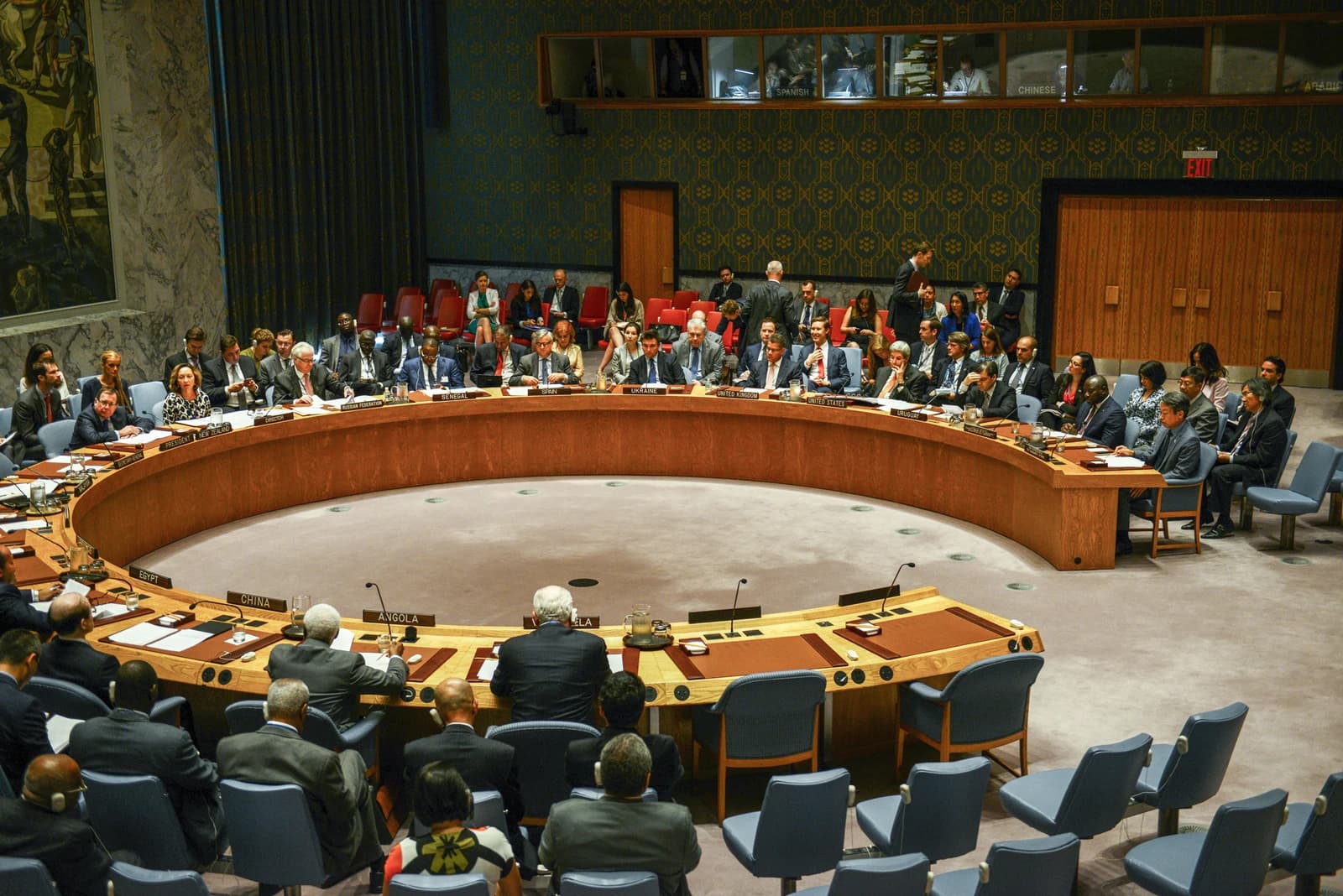
Beijing’s foreign ministry said it was “unfair, unreasonable and unrealistic” for the U.S. to expect China to take part in what it calls nuclear arms reduction negotiations at this stage. The comment came after President Donald Trump said Washington was discussing cuts to nuclear arsenals with Russia and China.
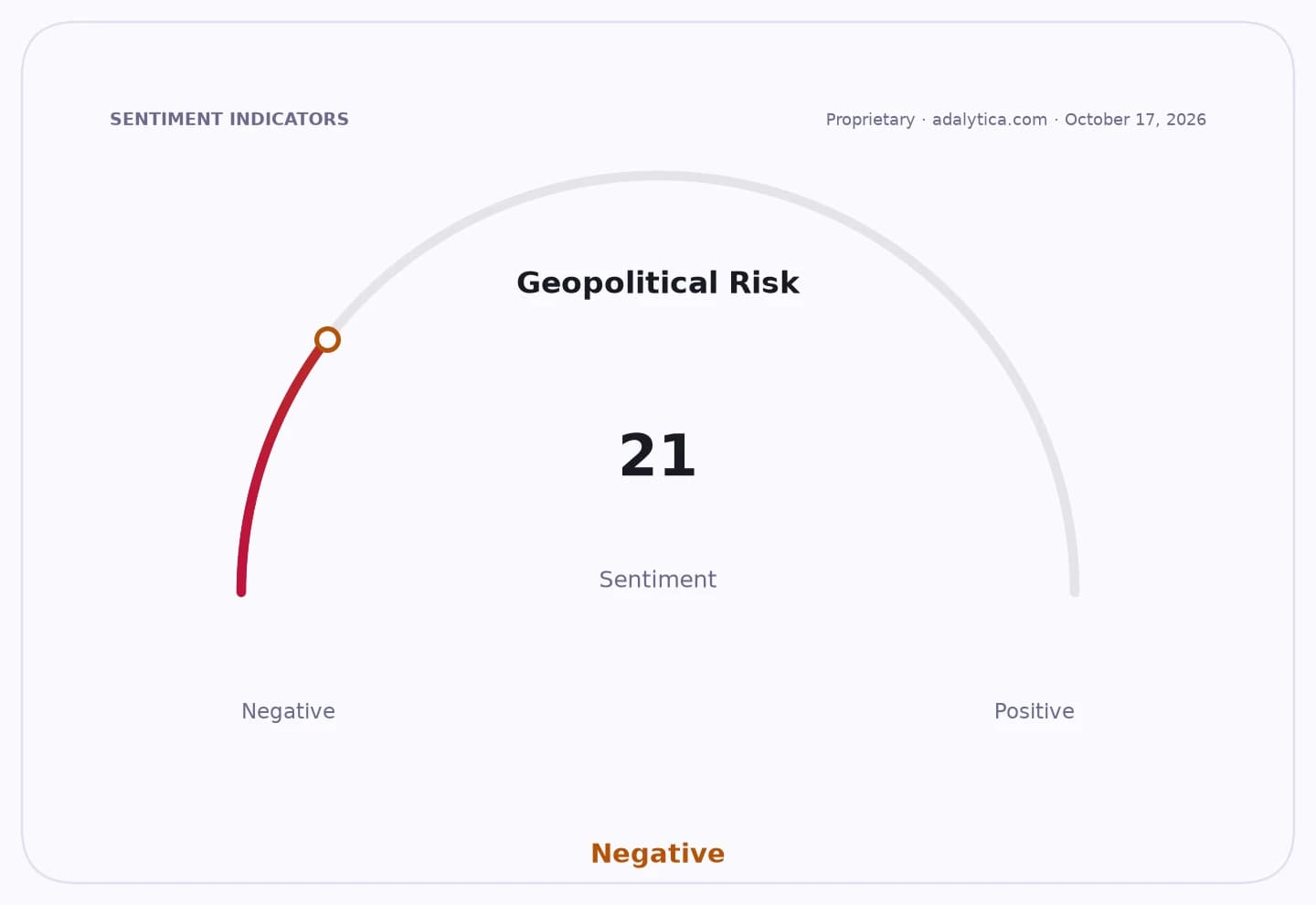
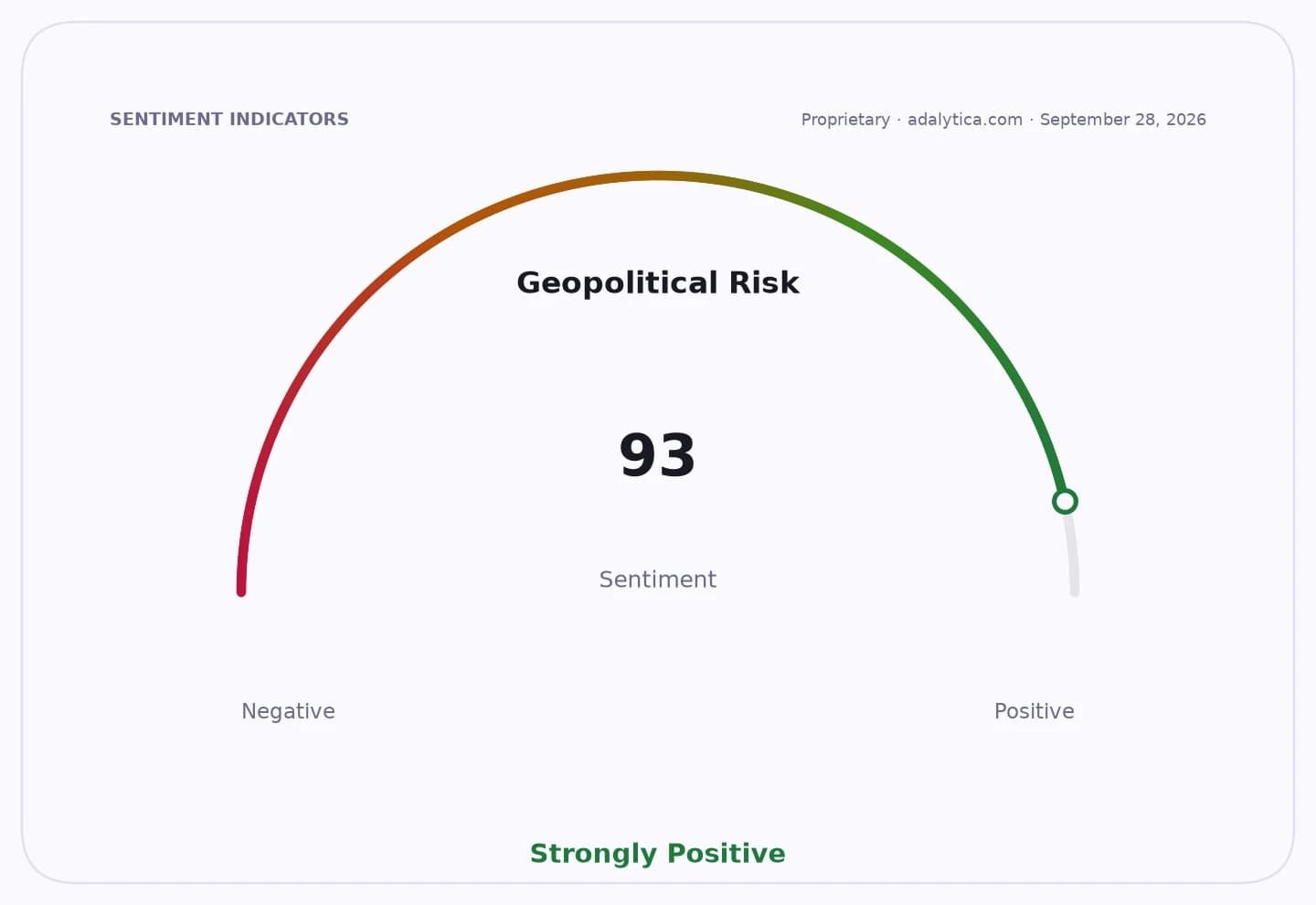
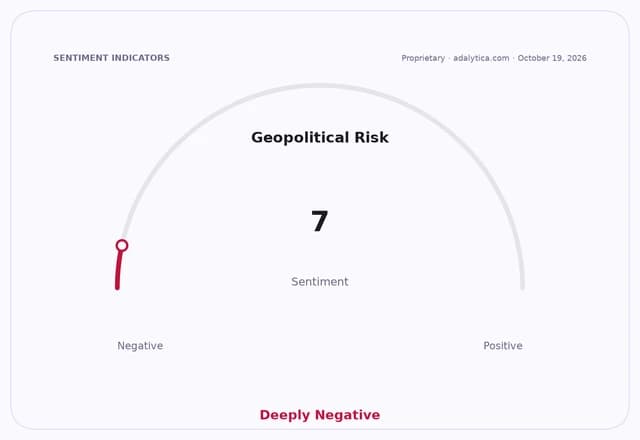
Sentiment IndicatorsⓘProprietary · adalytica.com · October 19, 2026
This is a snapshot — live sentiment, awareness and momentum for 130+ markets update continuously in the dashboard.Open AlphaPulse
The economic significance is not in the diplomacy alone, but in what it says about the durability of the U.S.–China split. When nuclear talks stall, broader strategic trust deteriorates too, raising the odds of more defense spending, tighter export controls and a longer period of policy friction across technology, semiconductors, critical minerals and shipping routes. For markets, that means geopolitics is no longer a background risk — it is a capital-allocation theme.
Investors should read this as another reminder that the premium on security assets is likely to stay elevated. Defense contractors, missile defense suppliers, cyber-security firms and companies tied to supply-chain reshoring stand to benefit if Washington and Beijing remain locked in a tougher strategic competition. By contrast, globally exposed sectors that rely on stable trade relations, especially manufacturers with heavy China revenue or China-linked input chains, remain vulnerable to renewed policy shocks.
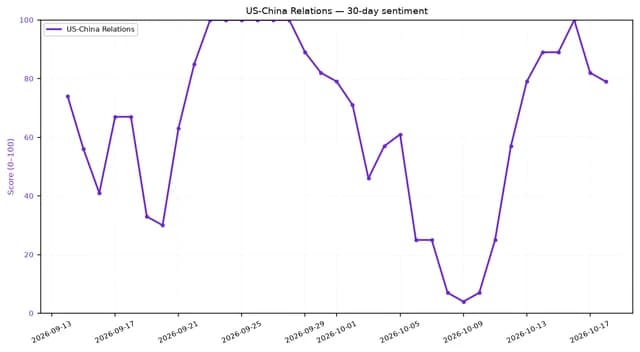
The backdrop is already tense. U.S.-China relations have been strained by disputes in the South China Sea, Taiwan-related sanctions and rising military activity in Asia. Adalytica’s US–China Relations Sentiment gauge has surged to 79, in “Greed” territory, while its global stability gauge sits at just 7, or “Extreme Fear,” underscoring how quickly geopolitical risk is becoming a market variable rather than a headline footnote.
The market message is clear: the longer nuclear and security diplomacy remains stuck, the more capital will flow toward resilience, rearmament and strategic autonomy. For investors, that argues for staying positioned in defense, cybersecurity and supply-chain insulation plays while being selective on China-sensitive cyclicals until the geopolitical temperature cools.
| Entity | Gains | Losses |
|---|---|---|
| Defense contractors | ▲Higher procurement demand | ▼None immediately |
| Cybersecurity firms | ▲More budget priority | ▼Lower urgency if détente returns |
| China-sensitive industrials | ▲— | ▼Higher policy and trade risk |
| U.S.-China relations | ▲Strategic focus in Washington | ▼Diplomatic trust and market stability |