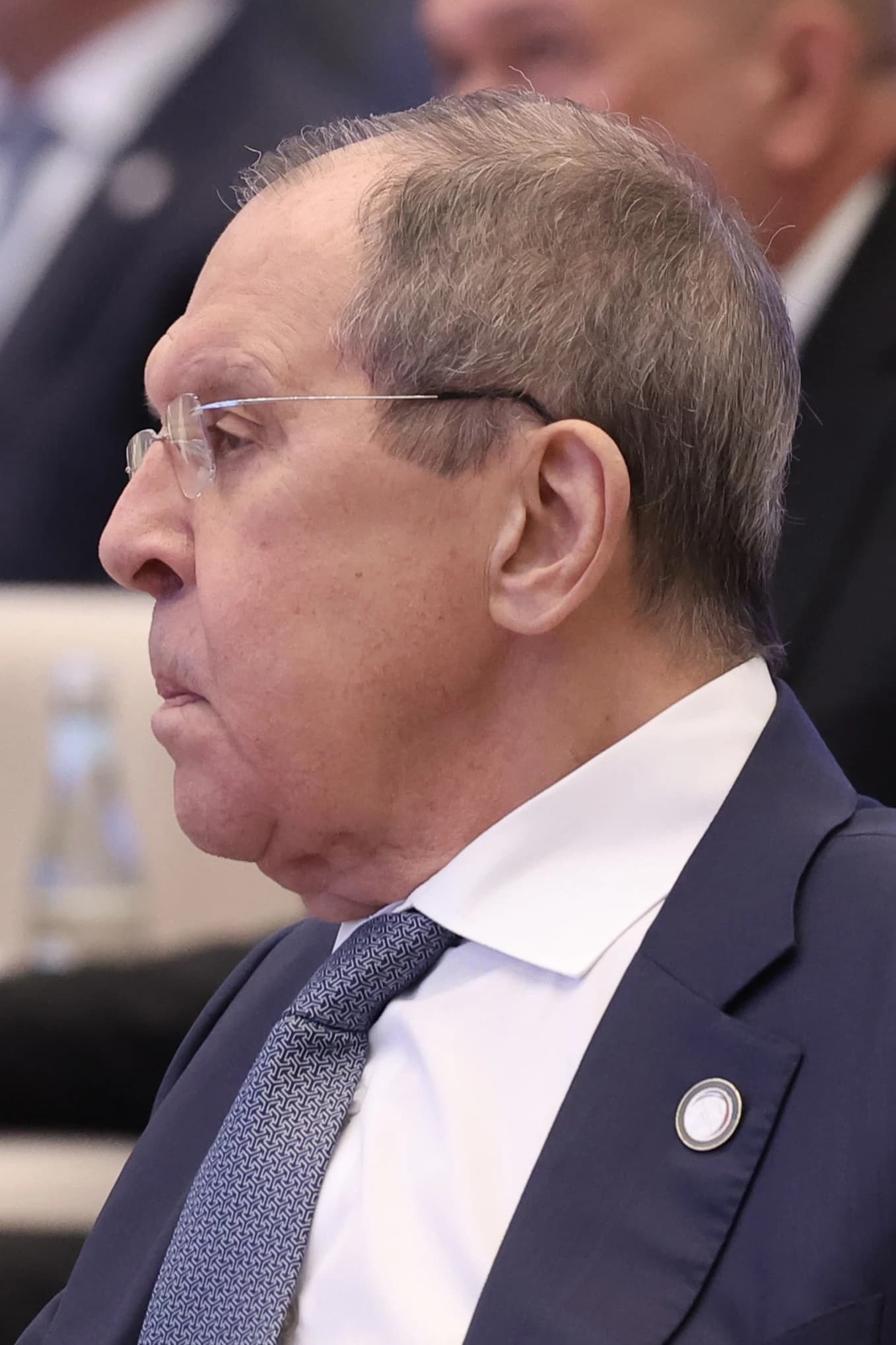
China said it will keep backing the Palestinian cause and the two-state solution, underscoring Beijing’s effort to position itself as a diplomatic counterweight in a conflict that still shapes broader ties between China, the United States and the wider Middle East.
China backs Palestinian two-state solution
Foreign Minister Wang Yi made the remarks at a meeting in Baku with Palestinian Foreign Minister Varsen Aghabekian Shahin, saying the Palestinian issue “should not be pushed to the back burner” and urging “all peace-loving countries” to support a two-state settlement between Israel and Palestine, according to China’s foreign ministry.
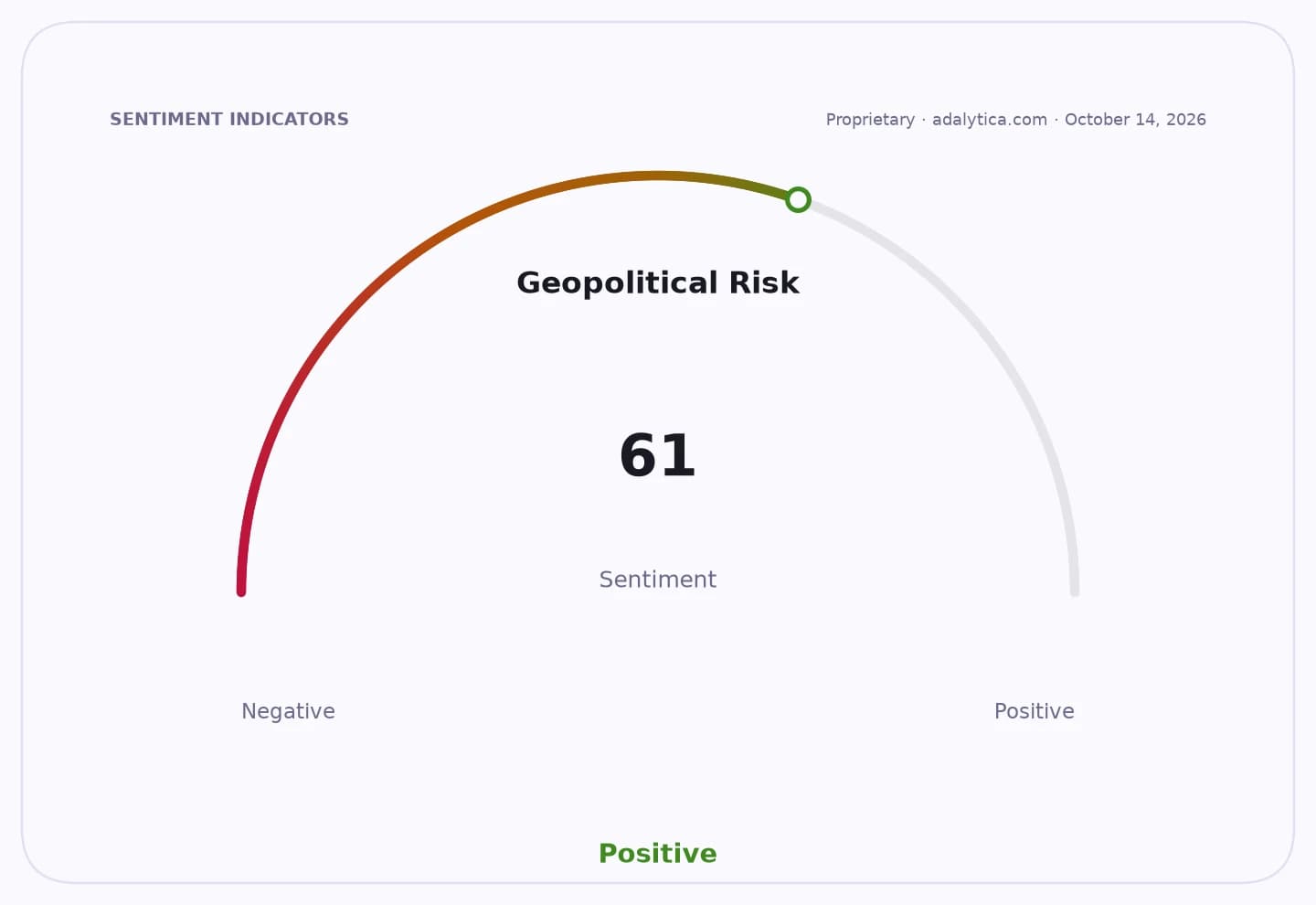
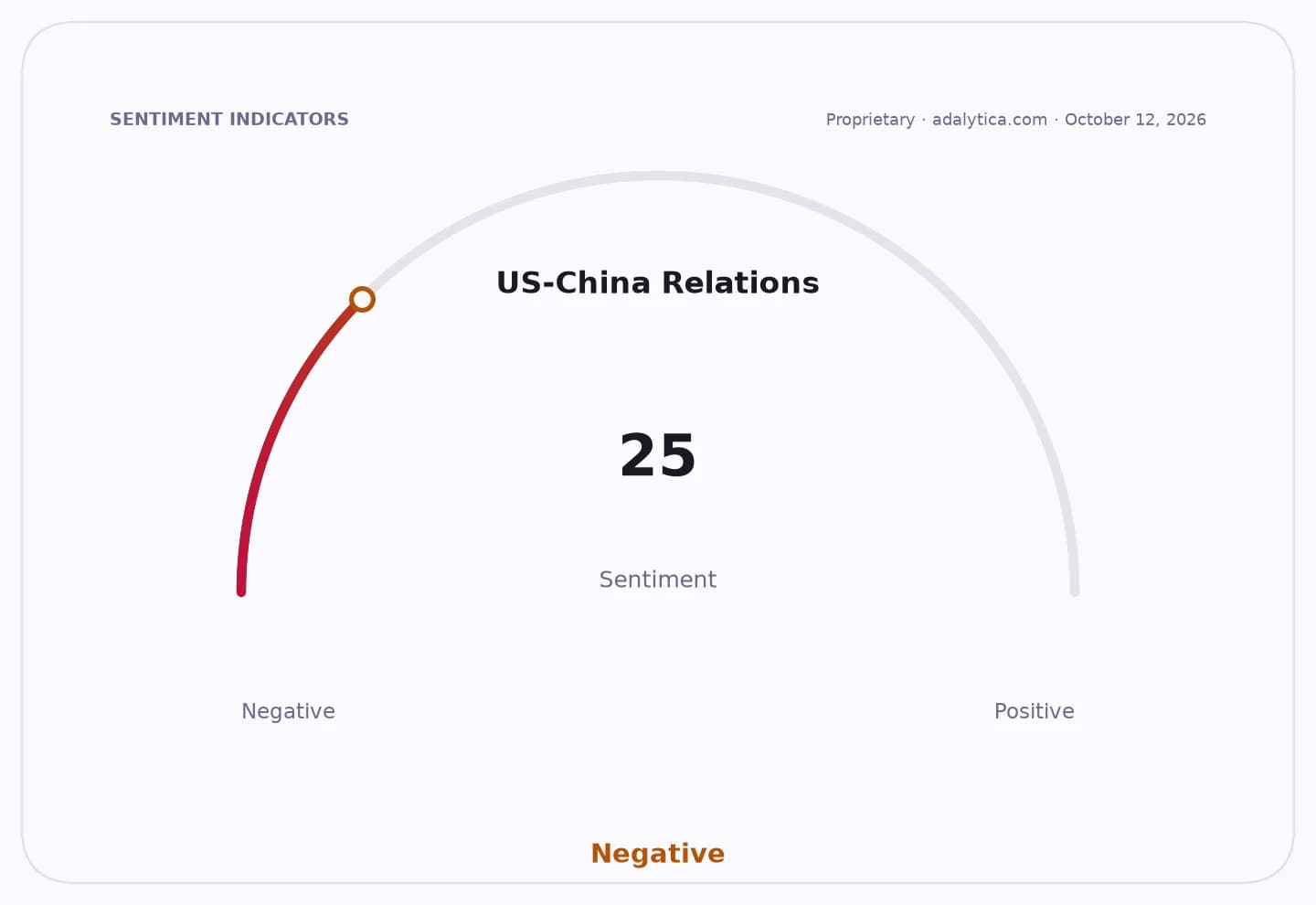
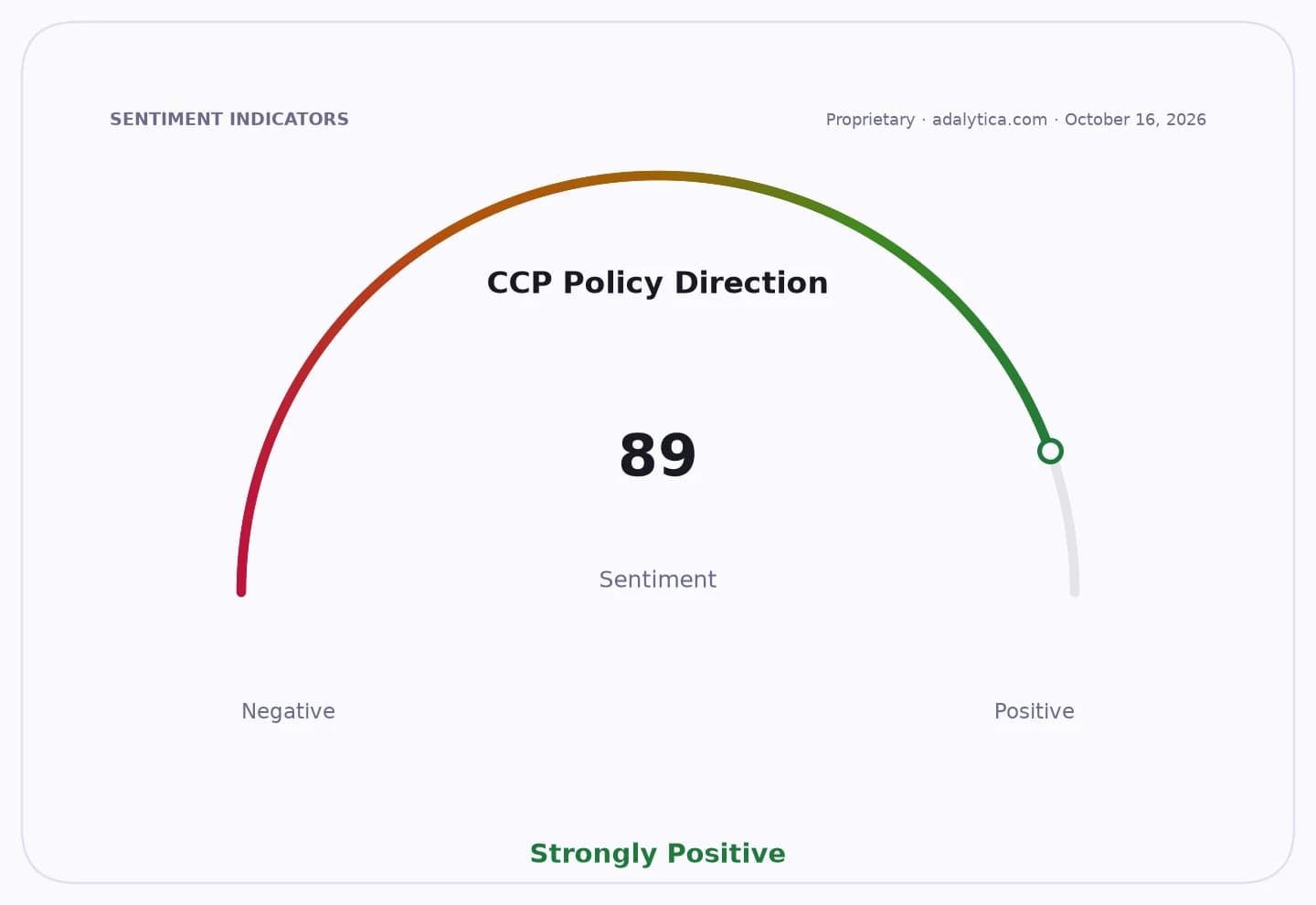
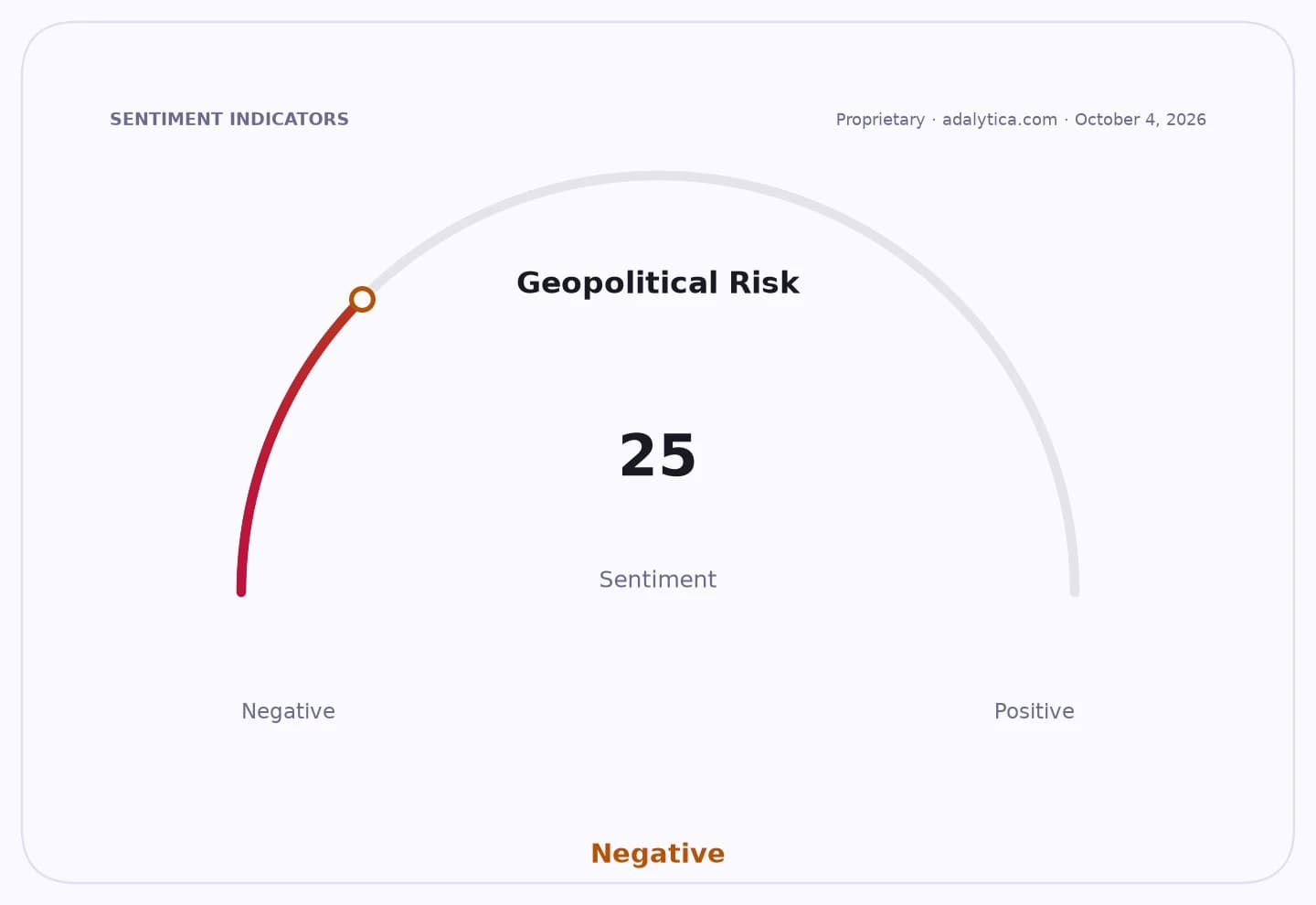
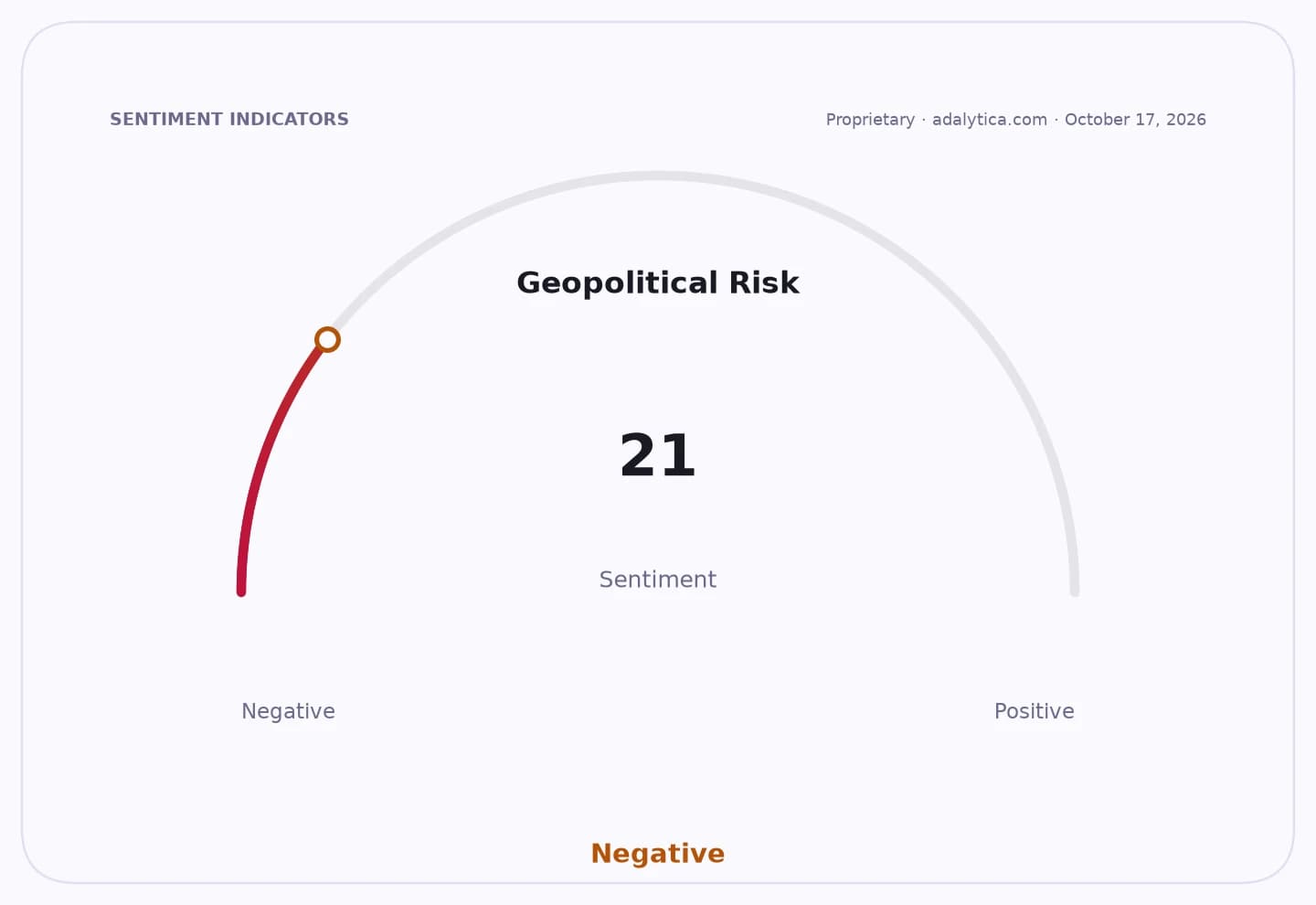
Sentiment IndicatorsⓘProprietary · adalytica.com · October 17, 2026
This is a snapshot — live sentiment, awareness and momentum for 130+ markets update continuously in the dashboard.Open AlphaPulse
For investors, the immediate market impact is limited, but the geopolitical message matters. China is signaling that it intends to stay engaged on one of the world’s most sensitive flashpoints at a time when global stability remains fragile. That matters for energy markets, emerging-market sentiment and the broader risk backdrop, especially when conflicts in the Middle East can quickly spill into shipping lanes, oil prices and investor appetite for risk assets.
The statement also fits a wider pattern of Chinese diplomacy. Beijing has tried to cast itself as a supporter of developing countries and a more neutral voice in Middle Eastern disputes, even as Washington remains the dominant security player in the region. That positioning can help China deepen political ties with Arab governments and the Palestinian Authority while reinforcing its argument that the U.S.-led order is not the only route to conflict resolution.
Markets are not likely to trade on the remark alone, but investors should not dismiss the signaling value. China’s posture on the Palestinian issue is part of its larger strategy of expanding influence beyond Asia through diplomacy, trade and infrastructure ties. Every time Beijing leans into a major global dispute, it is also making a broader case for a more multipolar world — one that could shape alliances, commodity flows and capital allocation over the long run.
For long-term investors, the takeaway is simple: geopolitical risk is becoming a permanent feature of the global investing landscape, not a temporary shock. China’s comments are another reminder that Middle East politics, great-power competition and markets remain tightly linked, and that diversification across regions and sectors still matters. Worth watching.
| Entity | Gains | Losses |
|---|---|---|
| China | ▲Diplomatic influence | ▼None immediately |
| Palestinian leadership | ▲International backing | ▼Limited leverage |
| U.S. regional posture | ▲— | ▼Diplomatic narrative |
| Oil and risk assets | ▲Elevated attention | ▼Higher geopolitical uncertainty |