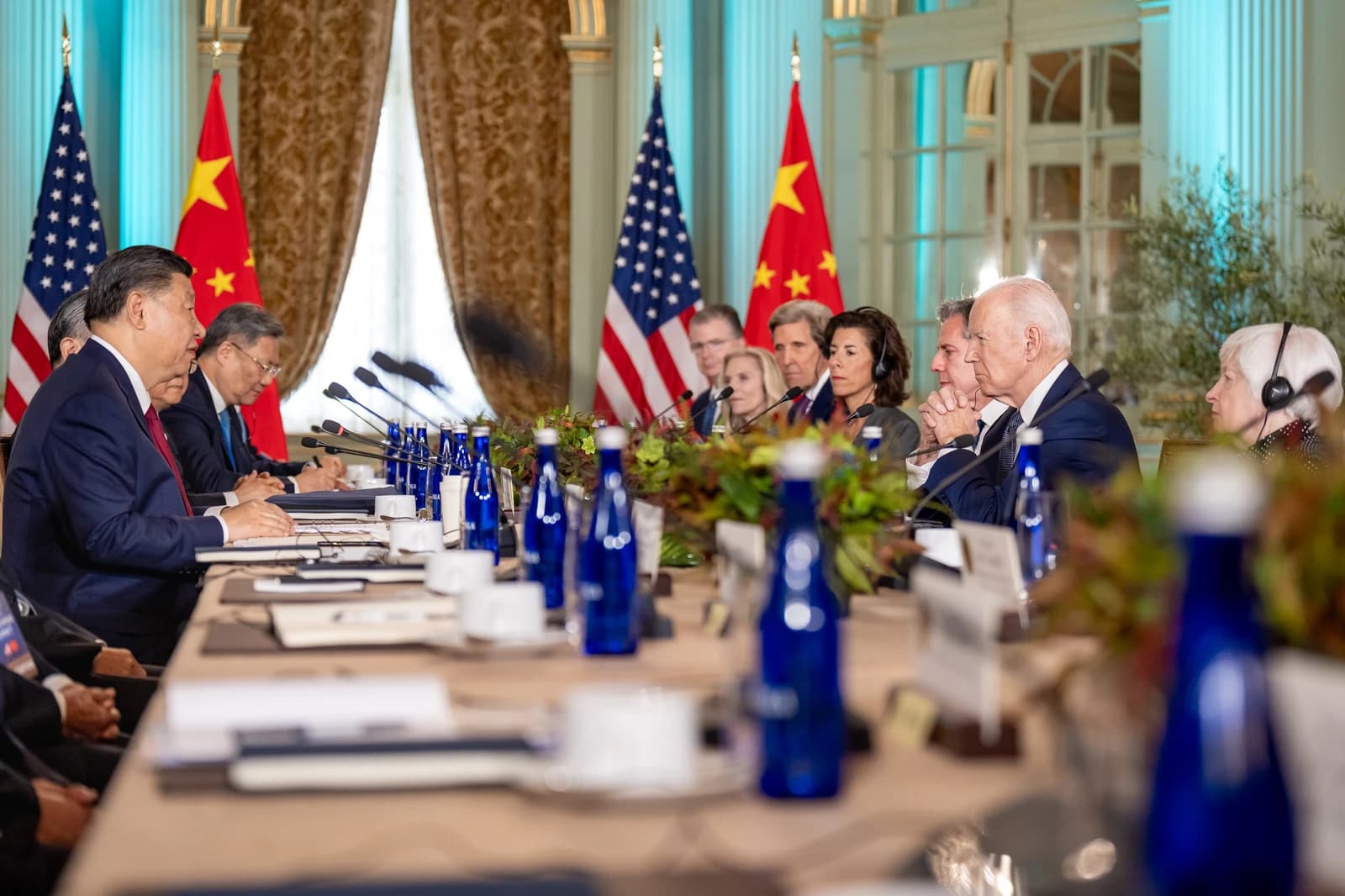
Trump could gain an immediate diplomatic advantage by tying China to any effort to cool the confrontation with Iran, because Beijing is one of Tehran’s few economic lifelines and the move could help cap energy prices, reduce pressure on U.S. forces and shift the burden of enforcement away from Washington.
China, Iran, and Oil Prices
The logic is straightforward: China remains a major buyer of Iranian crude and, according to U.S. officials, has already “significantly reduced” support for Tehran. That gives Beijing unusual leverage over Iran at a moment when the White House is trying to prevent a regional clash from turning into a broader shock to oil markets and American military posture. For Trump, bringing China into the process would turn a rival into a practical intermediary without requiring Washington to soften its own alliance commitments.
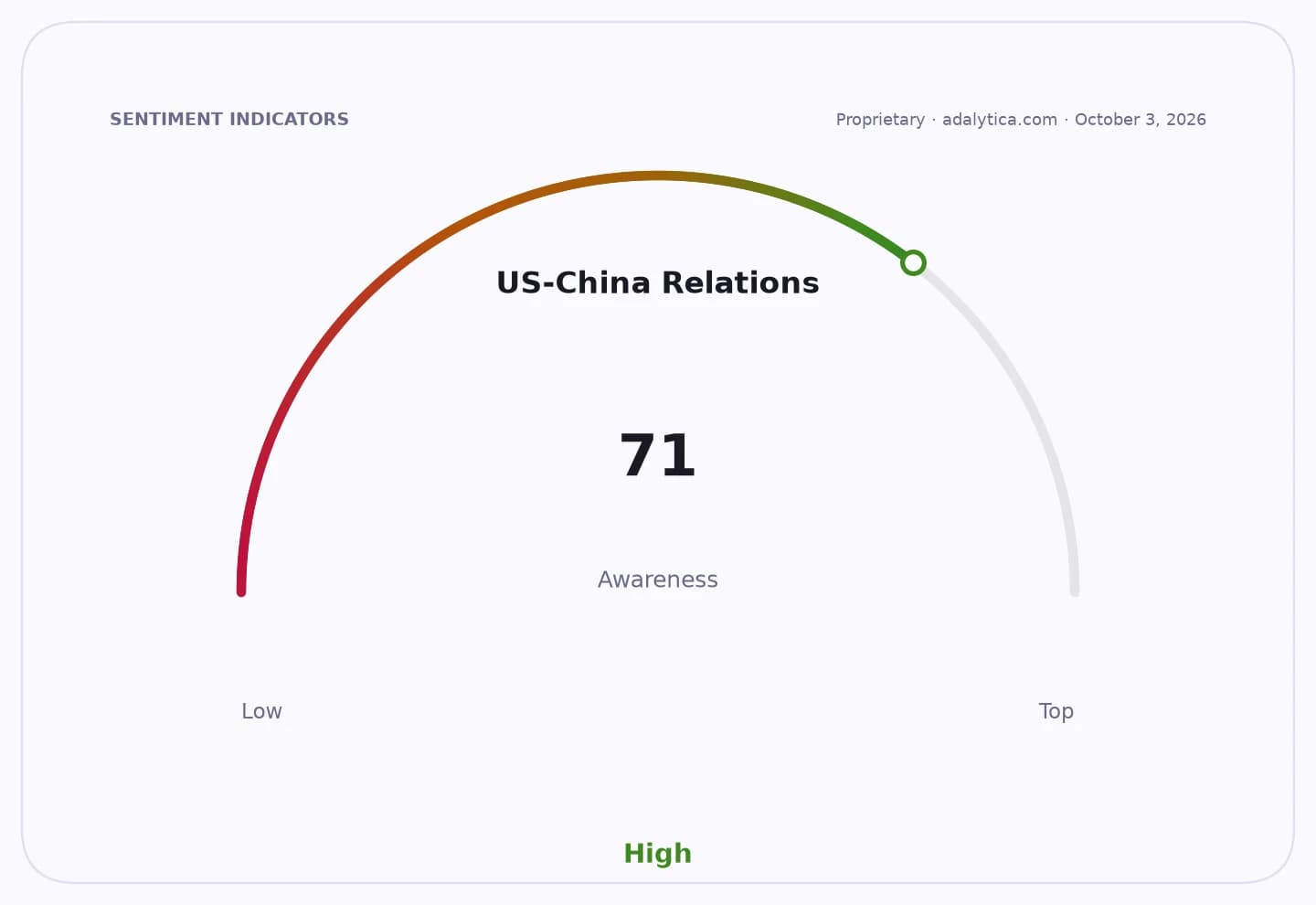
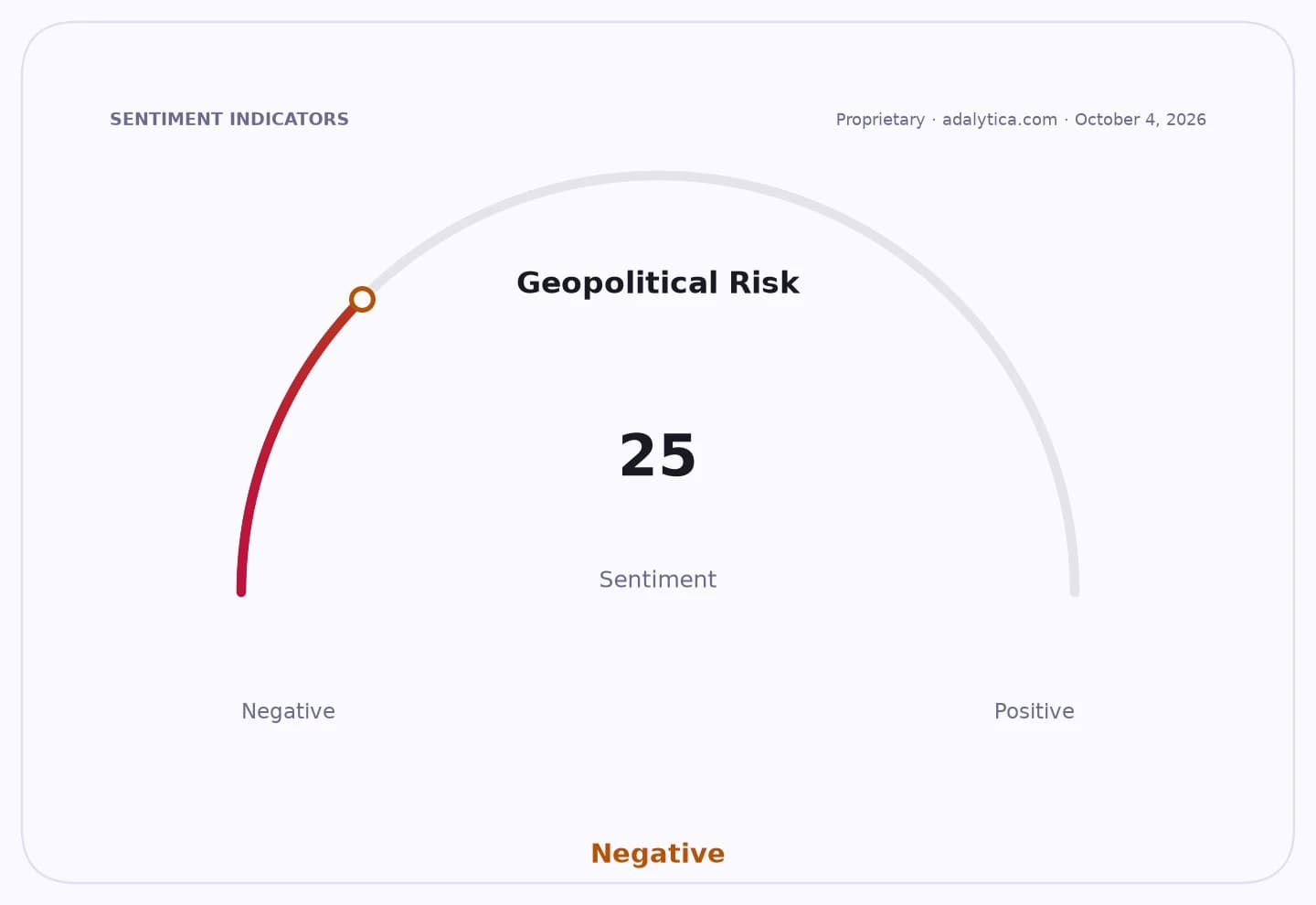
Sentiment IndicatorsⓘProprietary · adalytica.com · October 4, 2026
This is a snapshot — live sentiment, awareness and momentum for 130+ markets update continuously in the dashboard.Open AlphaPulse
That matters economically because the Strait of Hormuz remains one of the world’s most important energy chokepoints. Any disruption there would risk a sharp move higher in crude, feeding into inflation expectations, transport costs and margins across energy-intensive industries. The market context reflects that sensitivity: U.S. oil proxy USO has surged to about 147.37 from 120.49 in late July and remains far above its 50-day moving average, while Brent-linked BNO trades at 63.10, near the top of its recent range. XLE, the energy sector ETF, has also held firm at 62.82 after a sharp run-up earlier in the year. Those prices suggest traders are still assigning a meaningful geopolitical premium to Middle East risk.
The investor case is two-sided. A credible ceasefire path involving China would be bearish for crude and for energy equities that have benefited from the conflict premium, while it would be supportive for airlines, transport, consumers and broader equities that are sensitive to fuel costs. It could also ease pressure on the dollar and trim demand for defensive positioning. On the other hand, if Beijing concludes that backing off Iran is a low-cost way to improve ties with Washington, it could leave Tehran more isolated and more willing to bargain — but it could just as easily push Iran toward escalation if leaders see diplomacy as a trap.
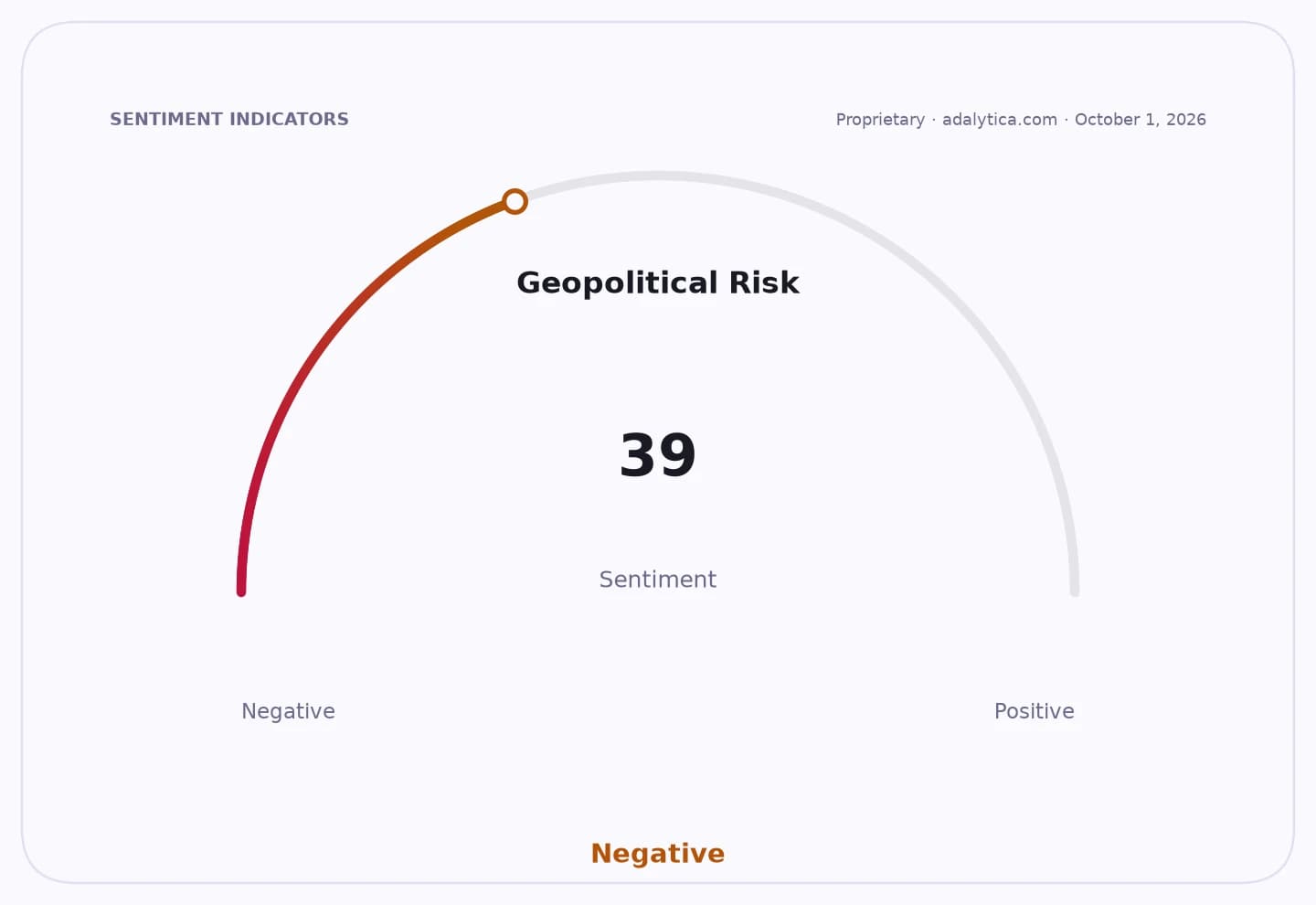
Geopolitical Risk — 30-day sentimentadalytica.com
Explore this data interactively — full history, time series and cross-market comparisons.Open AlphaPulse
There is also a strategic prize for Trump. If China is seen as helping keep the Strait of Hormuz open, Washington can present the result as both deterrence and dealmaking, rather than a unilateral military deployment. That could reduce the need for sustained carrier-group concentration in the Gulf and lower the risk of a wider U.S.-China confrontation spilling into the Middle East. In geopolitical terms, the arrangement would amount to forced cooperation between superpowers; in market terms, it would be a direct challenge to the oil-risk trade that has kept energy assets bid.
For investors, the key question is whether the current spike in oil and geopolitical fear is a temporary premium or the start of a more durable supply shock. Any sign that Beijing is willing to press Tehran meaningfully would likely pressure crude and energy shares first, while a breakdown in diplomacy would keep the market focused on the downside tail risk of Hormuz disruption and a renewed military cycle.
| Entity | Gains | Losses |
|---|---|---|
| Trump administration | ▲Lower oil-risk burden | ▼Less unilateral leverage |
| China | ▲Diplomatic relevance with Washington | ▼Exposure to Iran fallout |
| Iranian leadership | ▲Possible off-ramp | ▼Greater external pressure |
| Oil bulls / energy equities | ▲Higher prices from conflict | ▼Any credible ceasefire path |