Summer travel is getting more expensive because the broad inflation rate is no longer the main driver of holiday pricing; capacity, wages, fuel and strong demand are. That means consumers can see a cooler CPI print and still face higher hotel rates, pricier flights and more expensive package holidays when they book a peak-season break.
Travel Prices Stay High Despite Cooler CPI
The latest U.S. consumer data show headline CPI at 332.568 in June 2026, slightly below May, while core CPI was essentially flat at 336.065. The forecast for July points to only a modest 0.89% monthly increase in headline prices and 0.33% in core. On paper, that is a clear deceleration from the inflation surge that defined the early 2020s. Economically, though, it does not translate into cheaper vacations. Travel is a service-heavy, peak-capacity business, and the pricing power sits in the specific markets where demand overwhelms supply.
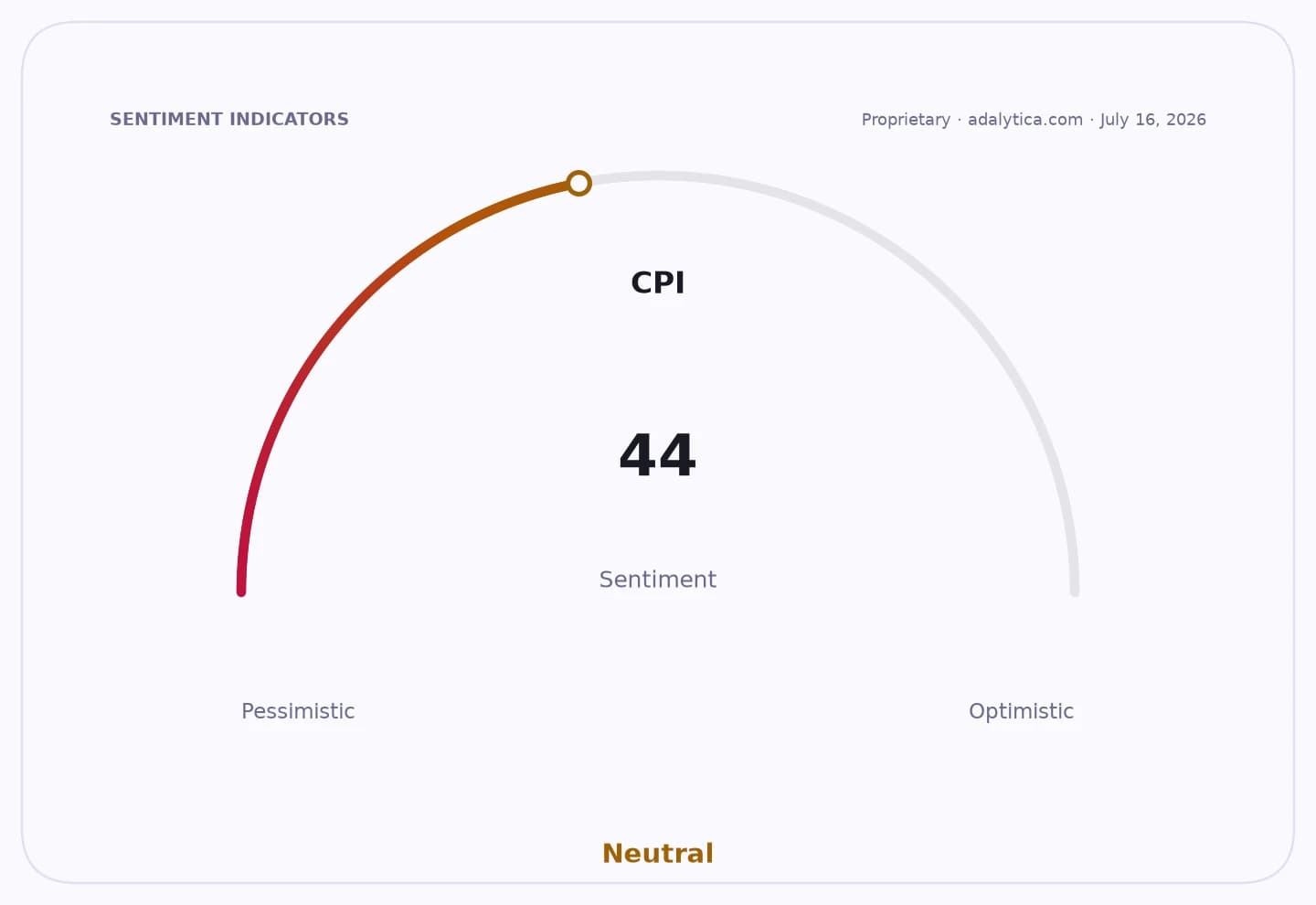
Sentiment IndicatorsⓘProprietary · adalytica.com · July 16, 2026
This is a snapshot — live sentiment, awareness and momentum for 130+ markets update continuously in the dashboard.Open AlphaPulse
That is the key distinction investors need to watch. The CPI basket is broad and averages across goods and services; summer leisure travel is narrow, seasonal and highly elastic to supply constraints. Hotels, airlines and online travel agencies can raise rates when occupancy and load factors tighten, even if the overall price level is stabilizing. The unemployment rate at 4.2% suggests the labor market remains resilient enough to support discretionary spending, while still leaving travel operators with elevated wage costs. In other words, cooling inflation does not automatically restore the pre-pandemic cost structure for a week at the beach.
The market response in travel stocks reflects that split. Marriott International has climbed to 371.08 from 270.24 in October 2025, while Hilton sits at 324.10, both well above their 200-day moving averages. Expedia has also recovered to 266.45 from a February trough near 187.70. Those moves suggest investors still see revenue resilience in leisure travel despite a softer macro inflation backdrop. But the technical picture also shows volatility: Marriott’s RSI has cooled to 43.4 and Hilton’s to 36.0, signaling momentum has eased after a strong run. That matches a market that believes pricing can hold, but not without pushback from consumers.
The company filings reinforce the point. Expedia said U.S. domestic travel demand improved and supported air ticket price growth, while Marriott reported higher revenues across multiple regions, including 2% growth in U.S. and Canada room counts and stronger gains in EMEA and Greater China. Delta’s latest filing showed passenger revenue rising as capacity and yields moved higher, but also highlighted a steep jump in fuel and labor costs. That combination is the real reason vacations stay expensive: demand is still healthy enough for suppliers to pass along higher costs, and peak-season inventory remains finite.
There are winners and losers in that setup. Consumers face higher all-in trip costs even if inflation headlines are calmer. Hotels and travel platforms benefit from pricing discipline and resilient demand, though they risk margin pressure if wage and fuel costs keep climbing. Airlines sit in the middle: they can raise fares in strong periods, but are more exposed to input costs and demand swings than hotel operators.
For investors, the implication is that “lower inflation” is not the same as “lower travel prices.” The more relevant question is whether travel demand stays strong enough to sustain rate growth into the second half of 2026, especially if consumer confidence softens or if airfare capacity rises. If demand holds, Marriott, Hilton and Expedia can keep monetizing the summer season. If not, the sector’s recent strength could give way to margin compression as the pricing cycle normalizes.
| Entity | Gains | Losses |
|---|---|---|
| Hotels (MAR, HLT) | ▲Higher room rates | ▼Cost inflation |
| Online travel agencies (EXPE) | ▲Strong booking demand | ▼Slower pricing power |
| Consumers | ▲Softer headline inflation | ▼Higher vacation bills |
| Airlines | ▲Yield improvement | ▼Fuel and wage pressure |