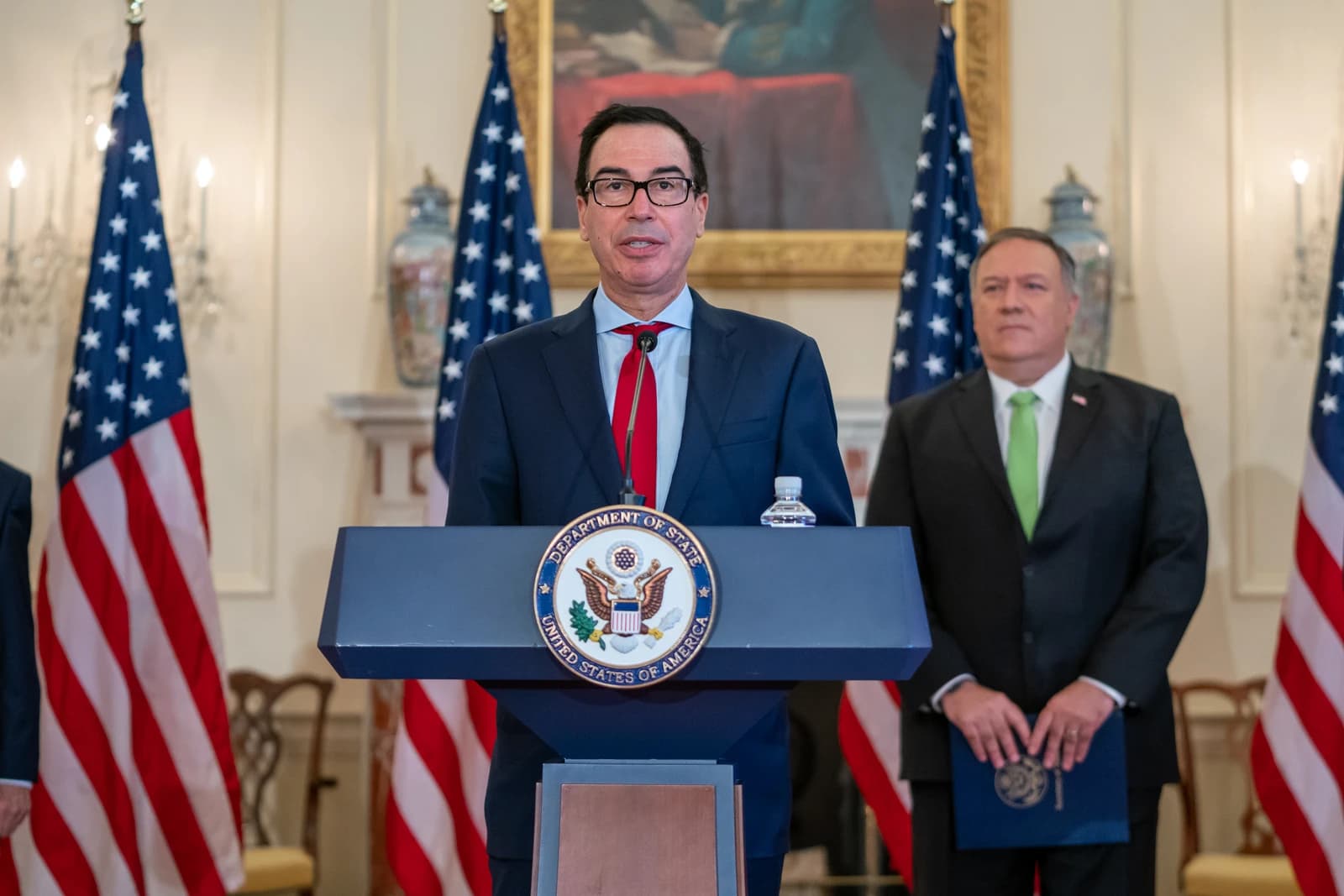
The Trump administration is proposing new Treasury rules that would give banks more room to probe the real owners of business accounts when fraud or money-laundering red flags appear, a move that could reshape compliance work across U.S. lenders without requiring blanket immigration checks on every customer.
Treasury Proposes New FinCEN Bank Ownership Rules

For investors, the immediate significance is not that banks will be forced to police immigration status at every branch. It’s that the Treasury Department’s Financial Crimes Enforcement Network, or FinCEN, wants to widen banks’ ability to look through business accounts when suspicious activity suggests shell companies, straw owners or other channels used for fraud. Treasury says the goal is to better combat money laundering and terrorist financing while cutting down on unnecessary compliance burdens.
Sentiment Indicators
That balance matters because the financial system is already under pressure from fraud, sanctions enforcement and increasingly sophisticated criminal networks. The administration says the rule would let covered institutions collect additional information about beneficial owners when needed and remove the current requirement to reverify those owners every time an existing customer opens a new account. In plain English, banks would get more flexibility to investigate who really controls a business, but with fewer repetitive checks on routine account openings.
That could be a mixed bag for the large money-center banks that already spend heavily on anti-money-laundering controls. On one hand, clearer rules may reduce duplication and help compliance teams focus on higher-risk accounts instead of applying the same paperwork to everyone. On the other, the proposal underscores that Washington is still tightening the screws on banks’ role as gatekeepers, and that means more scrutiny, more systems work and potentially more cost if supervisors decide current controls still fall short.
The market impact is likely to be subtle rather than immediate. Big banks such as Bank of America, JPMorgan Chase and Wells Fargo have already disclosed the operational and reputational risks tied to anti-money-laundering enforcement in recent filings, and recent banking ETFs show the sector has been resilient even as regulation remains a live issue. The SPDR Financial Select Sector ETF and the SPDR S&P Bank ETF have both held up above their 200-day moving averages, suggesting investors are not pricing in a broad regulatory shock. But the latest drop in the bank ETF from recent highs also shows enthusiasm can fade quickly when compliance costs or legal risks come back into view.
Economically, the administration is trying to close off channels that can be used to move illicit money through small businesses and opaque ownership structures. That’s important because financial crime is not just a law-enforcement problem; it distorts competition. Legitimate firms can be undercut by bad actors that hide behind false ownership, and lenders face higher losses when fraud bleeds into credit and payment systems. Treasury Secretary Scott Bessent framed the proposal as a way to help financial institutions protect law-abiding businesses and workers from cartels and criminal groups.
For investors, the long-term question is whether this becomes another compliance headwind or a modest cleanup of rules that were too rigid. My take: it is more likely to be the latter for the best-run banks. The largest institutions have already built scale advantages in risk management, and those same systems can become a moat if regulation makes smaller players’ compliance models harder to maintain. That is one reason diversified financial exposure can still make sense for long-term investors, even when policy headlines sound threatening.
The proposal now goes to public comment for 60 days after publication in the Federal Register. Expect banks, trade groups and civil-liberties advocates to fight over how much discretion lenders should have to ask about immigration status and beneficial ownership. For investors, the key takeaway is simple: this is another reminder that compliance is a permanent cost of doing business in financial services, but also a potential advantage for the firms with the deepest systems and the strongest controls.
| Entity | Gains | Losses |
|---|---|---|
| Treasury / FinCEN | ▲Stronger enforcement tools | ▼Less room for ambiguity |
| Large U.S. banks | ▲Clearer risk rules | ▼Higher compliance scrutiny |
| Criminal networks | ▲— | ▼Harder access to bank channels |
| Small businesses with clean records | ▲Better fraud protection | ▼More documentation when flagged |