President Trump’s plan to create an AI Force and appoint an AI czar is the clearest sign yet that Washington wants a bigger hand in one of the market’s most important growth engines, and investors should treat that as both a policy risk and a potential moat-builder for the biggest players.
Trump AI Force Could Benefit Big Tech

Why does that matter? Because artificial intelligence is no longer a science project. It is now a capital-allocation decision, a regulatory issue, and a global competitive race. If the administration really follows through, the companies spending the most on chips, cloud capacity, and model development — along with the startups trying to break into the frontier — could face higher compliance costs, slower product rollouts, and more scrutiny over safety, cybersecurity, and cross-border access.
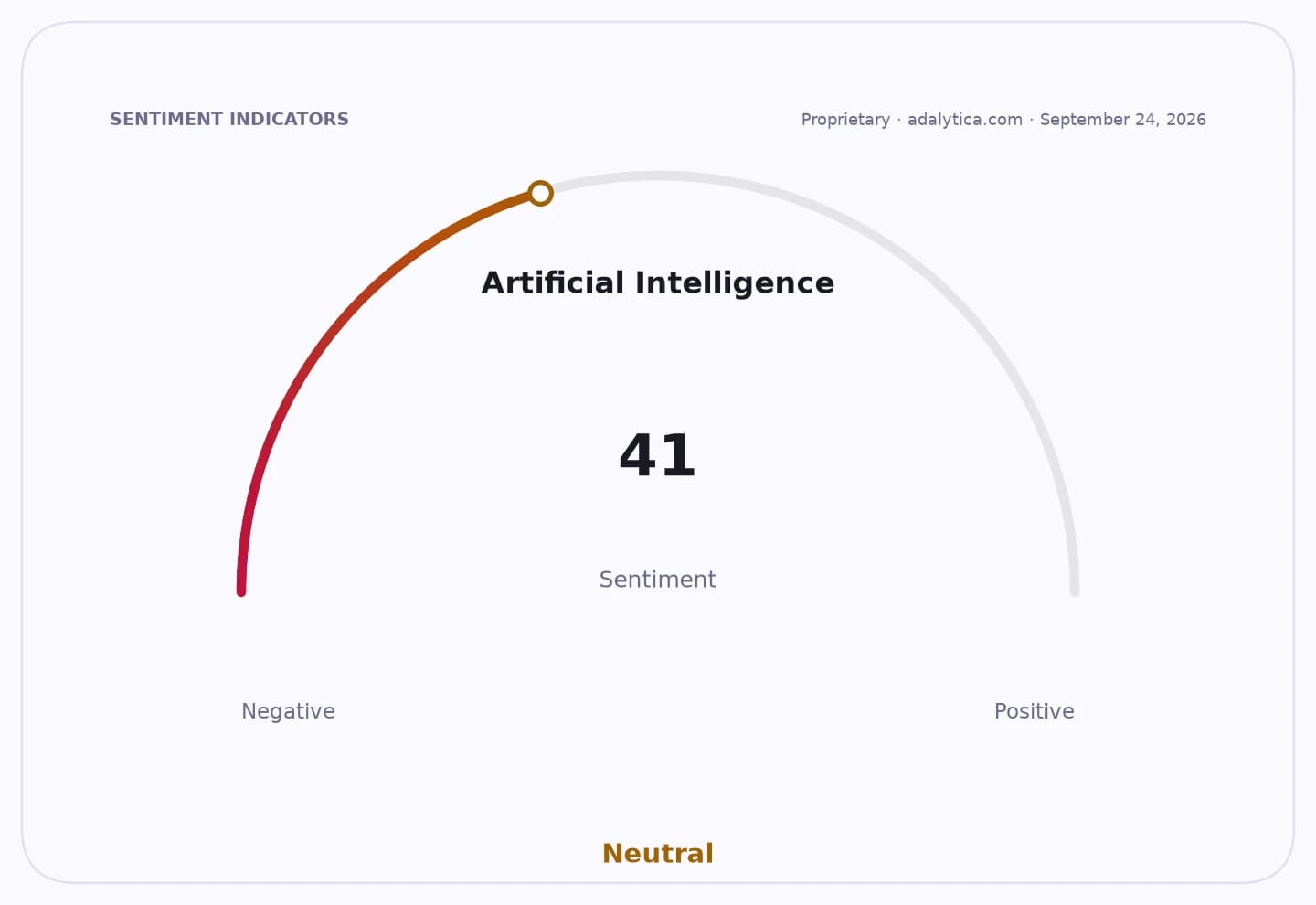
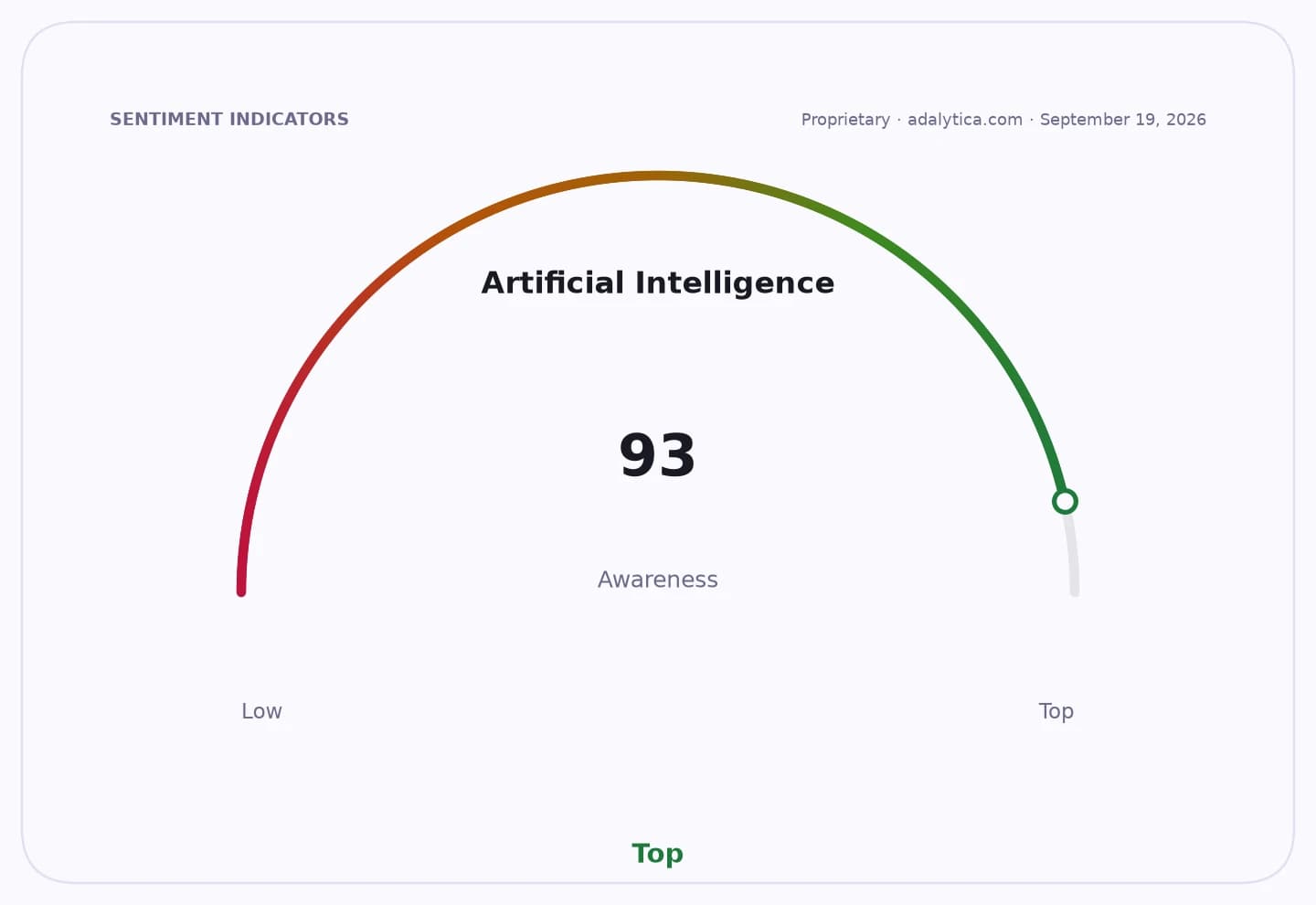
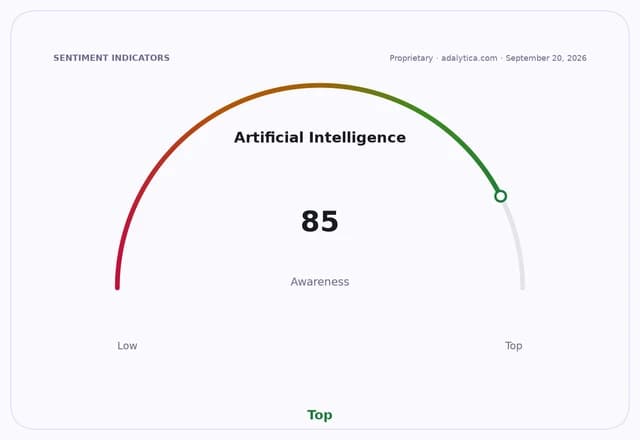
Sentiment IndicatorsⓘProprietary · adalytica.com · September 20, 2026
This is a snapshot — live sentiment, awareness and momentum for 130+ markets update continuously in the dashboard.Open AlphaPulse
That is why Patrick McGee’s line that AI firms are “not jogging...they’re still sprinting” lands so well. The sector is already moving at breakneck speed, and the government is trying to build guardrails without choking off the upside. That tension sits at the center of the story for investors: the more serious the regulation, the more expensive and difficult it becomes to scale AI. But the same rules can also entrench the biggest companies, which have the balance sheets, legal teams, and infrastructure to absorb compliance burdens that smaller rivals cannot.
You can already see that dynamic in the stock market. Nvidia has been volatile but remains near the top of the AI trade, while Microsoft and Alphabet have held up better because their cloud businesses, distribution, and cash flow give them room to keep investing. Nvidia’s recent trading around the low $220s, with its 50-day moving average near $214, suggests a market that still expects AI demand to stay strong even as regulatory headlines build. Microsoft, trading near $494, remains above its 200-day moving average around $430, and Alphabet, near $350, is holding above its 50-day average around $345. Those are not panic charts. They are the charts of companies investors still believe will be around for the long haul.
That is the real investor takeaway. Regulation may slow the pace at the margins, but it is unlikely to stop the AI buildout. The winners will be the companies that can keep shipping, keep earning, and keep navigating policy changes without losing the race. For long-term investors, that argues for focusing less on every headline and more on the businesses with durable moats, massive free cash flow, and the ability to compound through years of change.
If Trump’s AI Force leads to clearer rules, that could eventually be a good thing for the market. Uncertainty is expensive. A framework that sets expectations around safety, security, and model deployment could favor the strongest franchises and filter out weaker competitors. But if the rules become too heavy-handed, the near-term winners may be the ones already large enough to pass through the gate — not the ones trying to build it.
For now, AI remains one of the most powerful secular themes in the market, and this latest push in Washington is a reminder that the road to that future will be shaped as much by regulators as by engineers. Investors should keep the big platforms and chip leaders on the watchlist, but only with a long-term mindset and a diversified portfolio.
| Entity | Gains | Losses |
|---|---|---|
| Nvidia | ▲Regulatory moat for a dominant supplier | ▼Smaller rivals facing higher compliance costs |
| Microsoft | ▲Scale and cash flow cushion | ▼AI startups with thinner margins |
| Alphabet | ▲Strong distribution and infrastructure | ▼Fast-moving frontier labs |
| Washington regulators | ▲More oversight and leverage | ▼Companies seeking faster deployment |