Trump’s approval rating has slipped to 32%, near a record low, as Democrats enter the US midterm election with an eight-point lead over Republicans, a political shift that could reshape fiscal, regulatory and trade policy if it translates into control of Congress.
Trump approval falls to 32% before midterms

The polling drop matters economically because it points to weakening public support for an administration already being judged on inflation, living costs and the conflict in Iran. For investors, a Democratic surge raises the odds of divided government or a legislative check on Trump’s agenda, which could affect everything from tariffs and taxes to energy policy and federal spending.
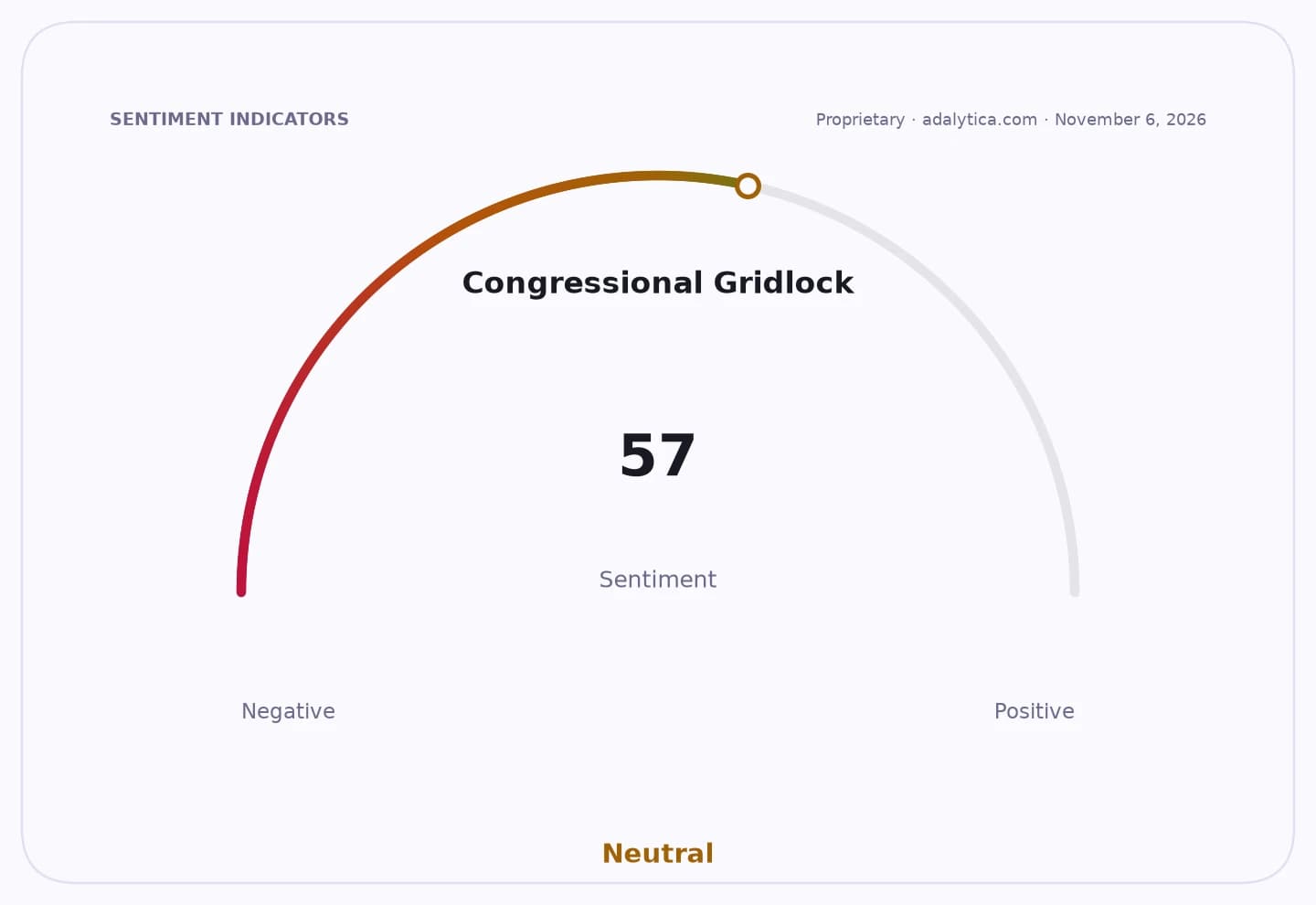
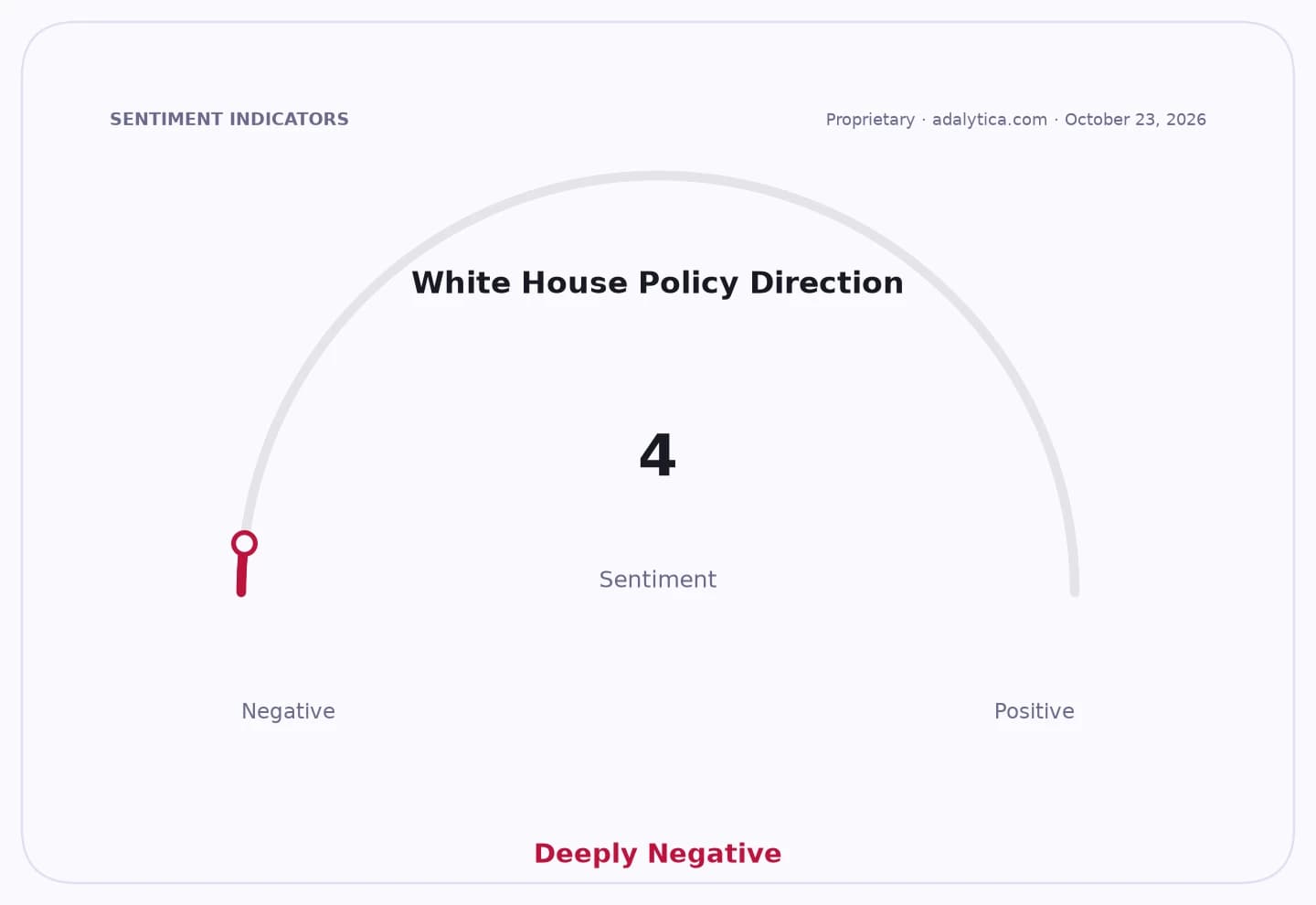
Sentiment Indicators
The data also suggests turnout is running hot, with nearly 59 million early votes cast out of a projected 120 million, while a Supreme Court decision rejecting voter exclusion efforts removes one legal hurdle from the contest. That combination increases the chance of a high-stakes election outcome that markets may need to price quickly once results begin to clarify.
Shares of Trump Media & Technology Group, which trades under DJT, reflect that uncertainty. The stock closed at $5.22 on Wednesday after peaking at $16.09 in December, and it now sits well below its 50-day moving average of $8.07 and 200-day moving average of $9.19, with an RSI reading of 21.3 that points to deeply oversold conditions under standard technical analysis.
Adalytica’s US Presidential Approval Sentiment gauge also shows the political mood deteriorating fast, with a neutral 43 reading after a 25-point one-day drop and a 57-point slide over the past week. That lines up with the market’s broader focus on whether the election becomes a referendum on Trump’s leadership and whether Democrats can convert discontent into legislative control.
For investors, the next catalyst is the election result itself, with the biggest risk being a policy reset on spending, regulation and tariffs if Democrats capitalize on the approval slump. A sharp market reaction is likely once control of Congress becomes clearer, especially for sectors sensitive to trade, energy and government policy.
| Entity | Gains | Losses |
|---|---|---|
| Democrats | ▲Chance to win Congress | ▼Risk of overpromising |
| Republicans | ▲Base turnout energy | ▼Control of Congress |
| Trump administration | ▲None if checks remain | ▼Approval, agenda momentum |
| DJT shareholders | ▲Volatility-driven trading | ▼Weak sentiment, price pressure |