President Donald Trump is heading into the midterm fight with weak public support, internal strains and foreign-policy controversies that could shape both the political calendar and markets tied to Washington risk.
Trump approval, Ukraine comments, market risks
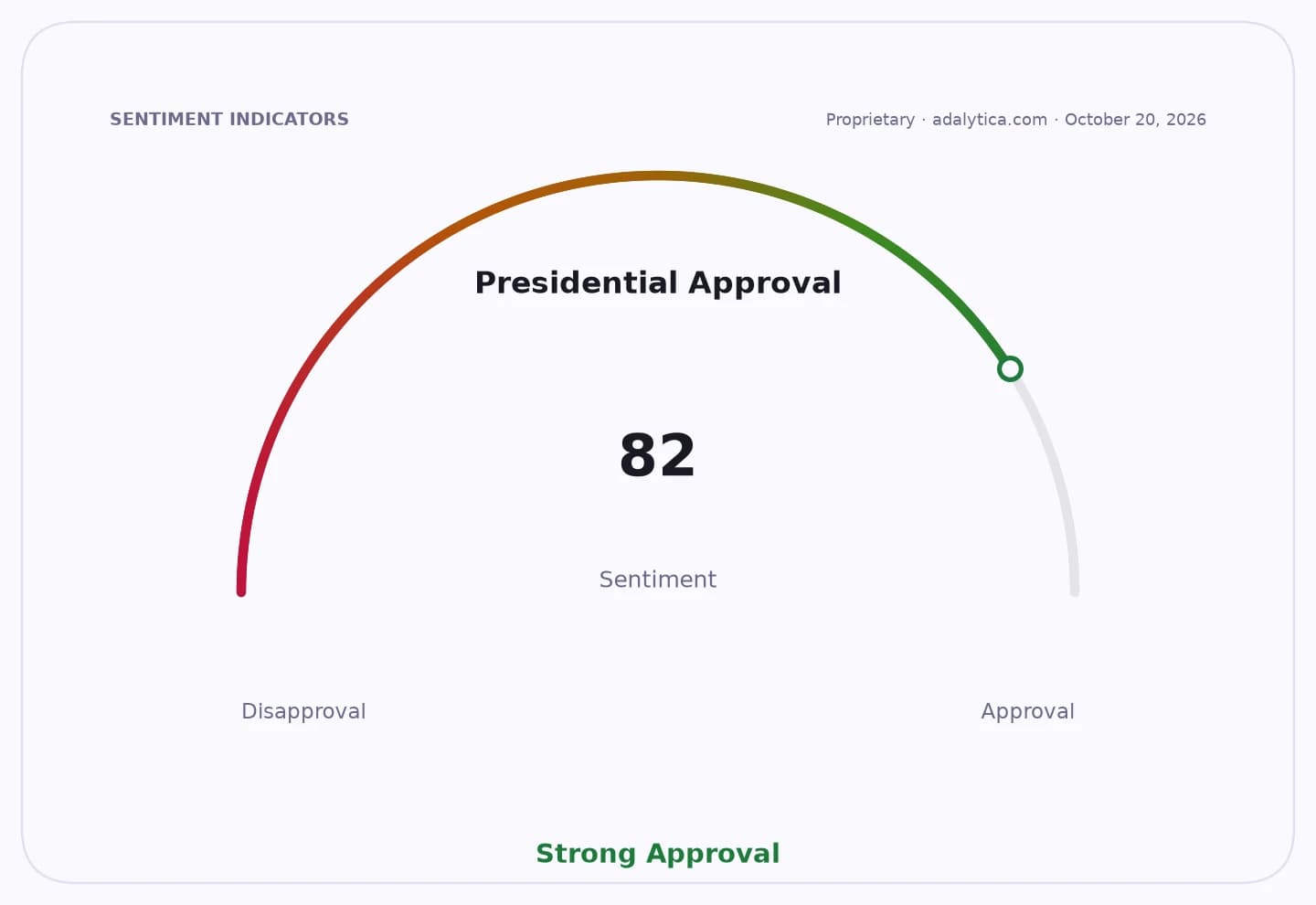
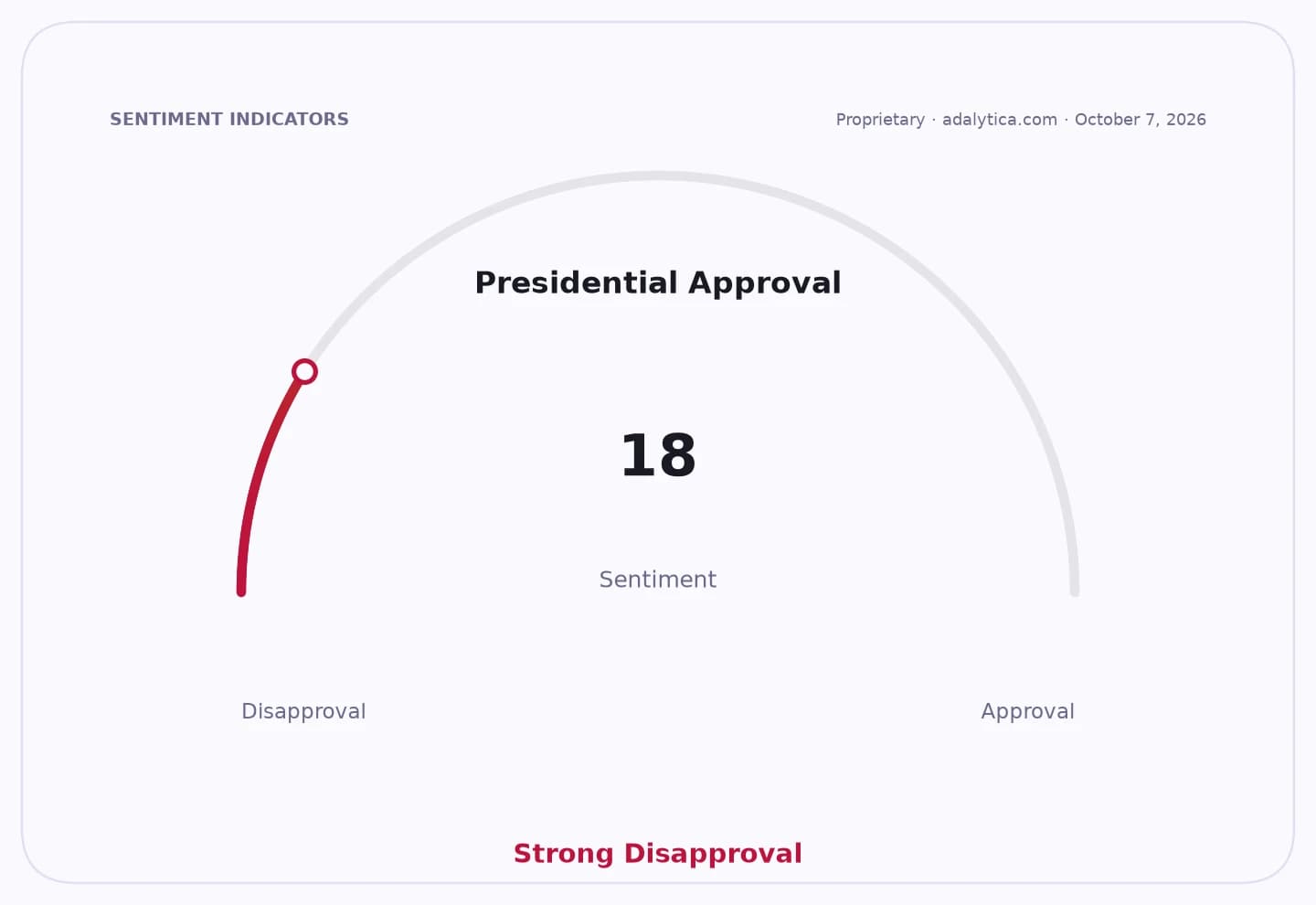
The most important development is not any single statement from the White House, but the widening gap between Trump’s political ambitions and the public’s view of his presidency. A recent poll showing roughly two-thirds of Americans disapprove of his policies points to a durable legitimacy problem that can narrow his room to maneuver on taxes, regulation, spending and trade. For investors, that matters because presidents with sagging approval often struggle to sustain coherent legislative coalitions, and policy volatility tends to rise as political pressure builds.
That backdrop helps explain why Trump’s recent comments on Ukraine, Iran and the Nobel Peace Prize are resonating beyond the usual partisan noise. His call for a new president in Ukraine underscores the risk of sharper U.S. policy swings on the war, where American support remains central to European security planning and to markets that track energy, defense and sovereign-risk exposures. At the same time, Vice President JD Vance’s public acknowledgment of disagreements with Trump over the Iran conflict suggests the administration is not fully aligned on one of the most market-sensitive geopolitical flashpoints.
The political significance is compounded by Trump’s effort to tighten control over his message operation, including the appointment of a loyalist as spokeswoman. That may improve discipline in the short term, but it also reinforces the sense of a presidency relying more heavily on loyalty than on broad institutional buy-in. The result is a narrower inner circle and a higher chance that policy decisions will be driven by political survival rather than economic predictability.
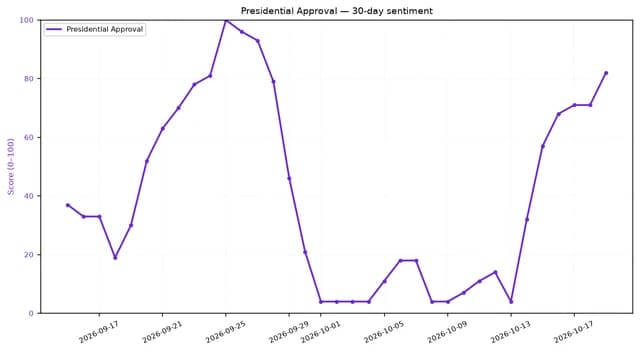
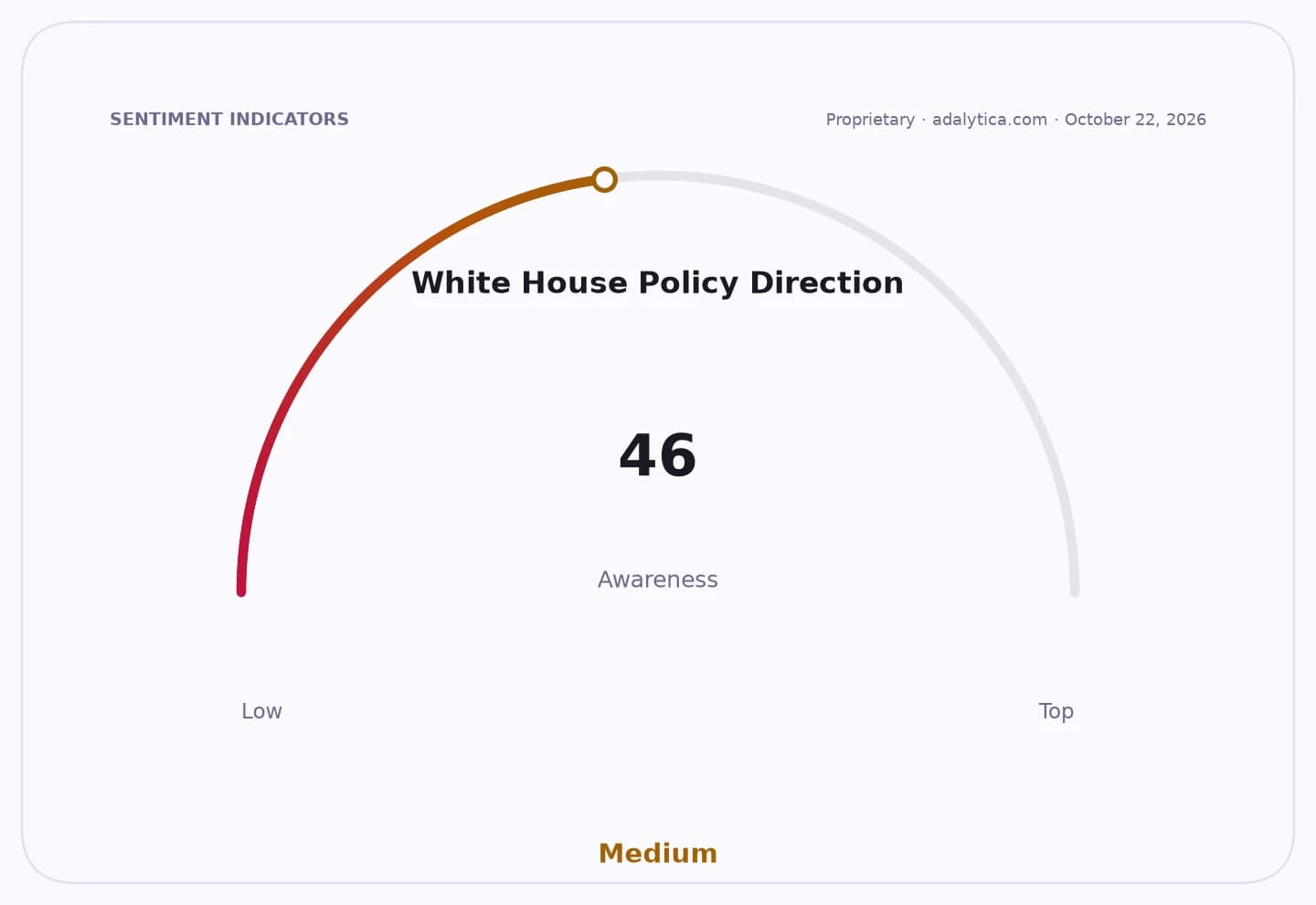
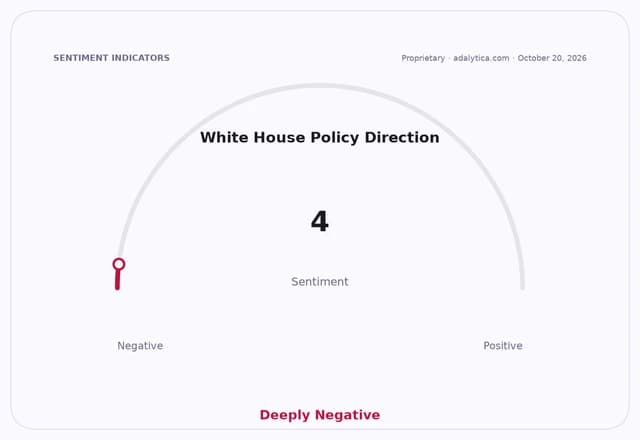
Markets have already shown how sensitive they are to shifts in White House policy direction. Sentiment readings for U.S. policy direction have fallen sharply, while broader trade signals around the S&P 500 have swung toward fear even as the index itself has remained near record territory. That divergence suggests investors are willing to look through the noise for now, but they are not pricing in a stable policy environment. If Trump’s approval remains weak and internal divisions widen, that disconnect could close quickly through higher volatility in equities, currencies and risk assets most exposed to geopolitical headlines.
The bull case is that Trump’s administration can still push through pro-growth measures if it regains momentum after the election cycle. The bear case is that a polarized White House, weak approval and ongoing friction with allies and advisers lead to more ad hoc decision-making, less legislative effectiveness and greater market sensitivity to every turn in foreign policy. For investors, the key question is not whether Trump remains politically dominant, but whether he can convert that dominance into durable policy execution.
| Entity | Gains | Losses |
|---|---|---|
| Trump loyalists | ▲More influence | ▼Broader policy debate |
| Democratic opponents | ▲Campaign momentum | ▼Opportunity for bipartisan compromise |
| Defense contractors | ▲Higher geopolitical spending | ▼Predictability in policy |
| Equity investors | ▲Clarity if policy steadies | ▼Volatility if divisions deepen |