Democrats are moving quickly to investigate Donald Trump and his allies after their sweeping midterm gains, but the bigger economic and political story is that their ability to impose real penalties is likely to be far more limited than many voters expect.
Trump allies face Democratic investigations after midterms
The party’s 46-seat House pickup and nine-seat Senate gain came with a clear mandate from a record-sized electorate: more than 123 million Americans voted, the second-highest turnout since 1914, and exit polls showed the economy and corruption at the center of voters’ concerns. That gives Democrats a powerful platform to open investigations into alleged self-dealing, abuse of power and attempts to subvert government institutions — but not necessarily the tools to turn those probes into criminal convictions or sweeping punishment.
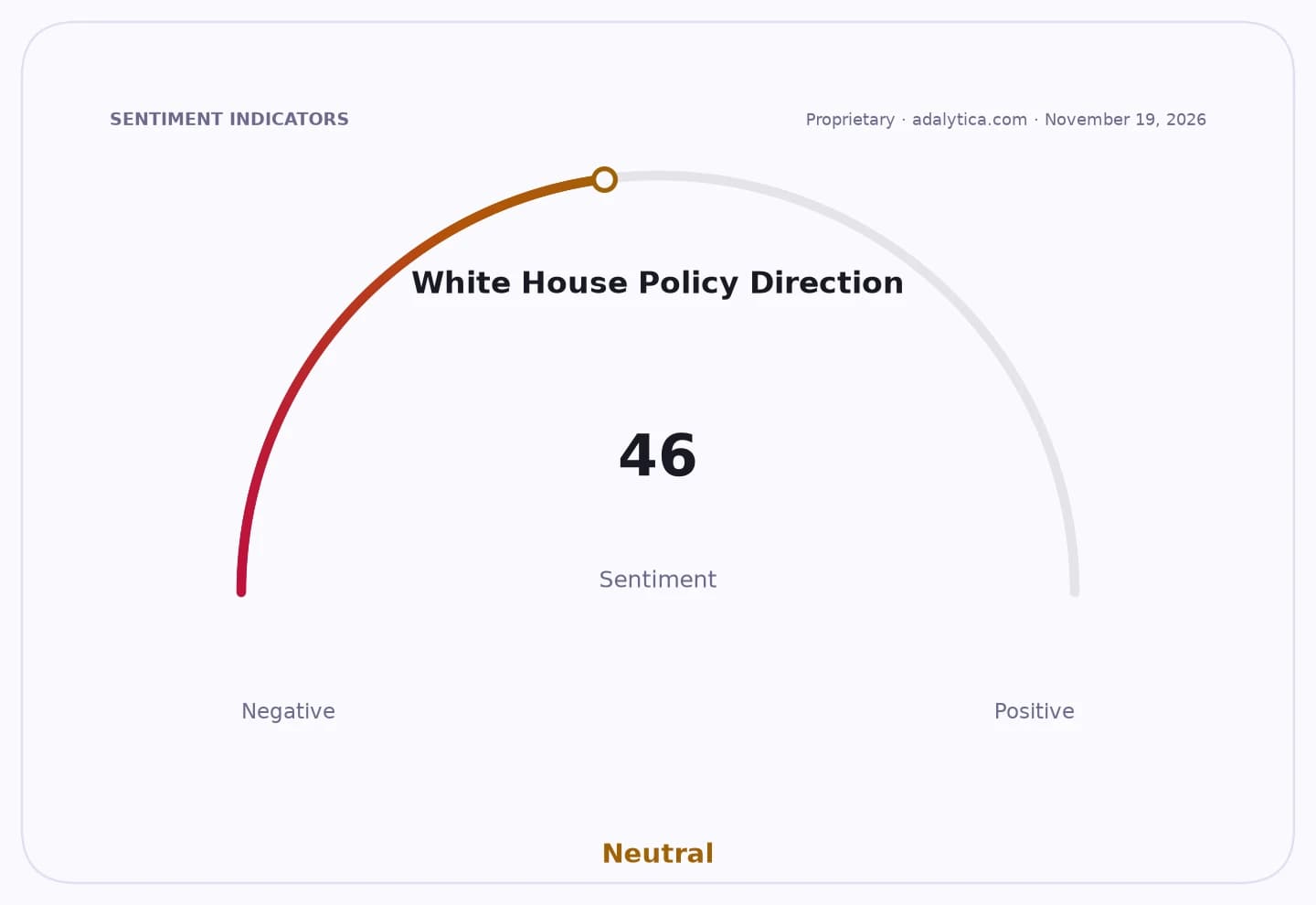
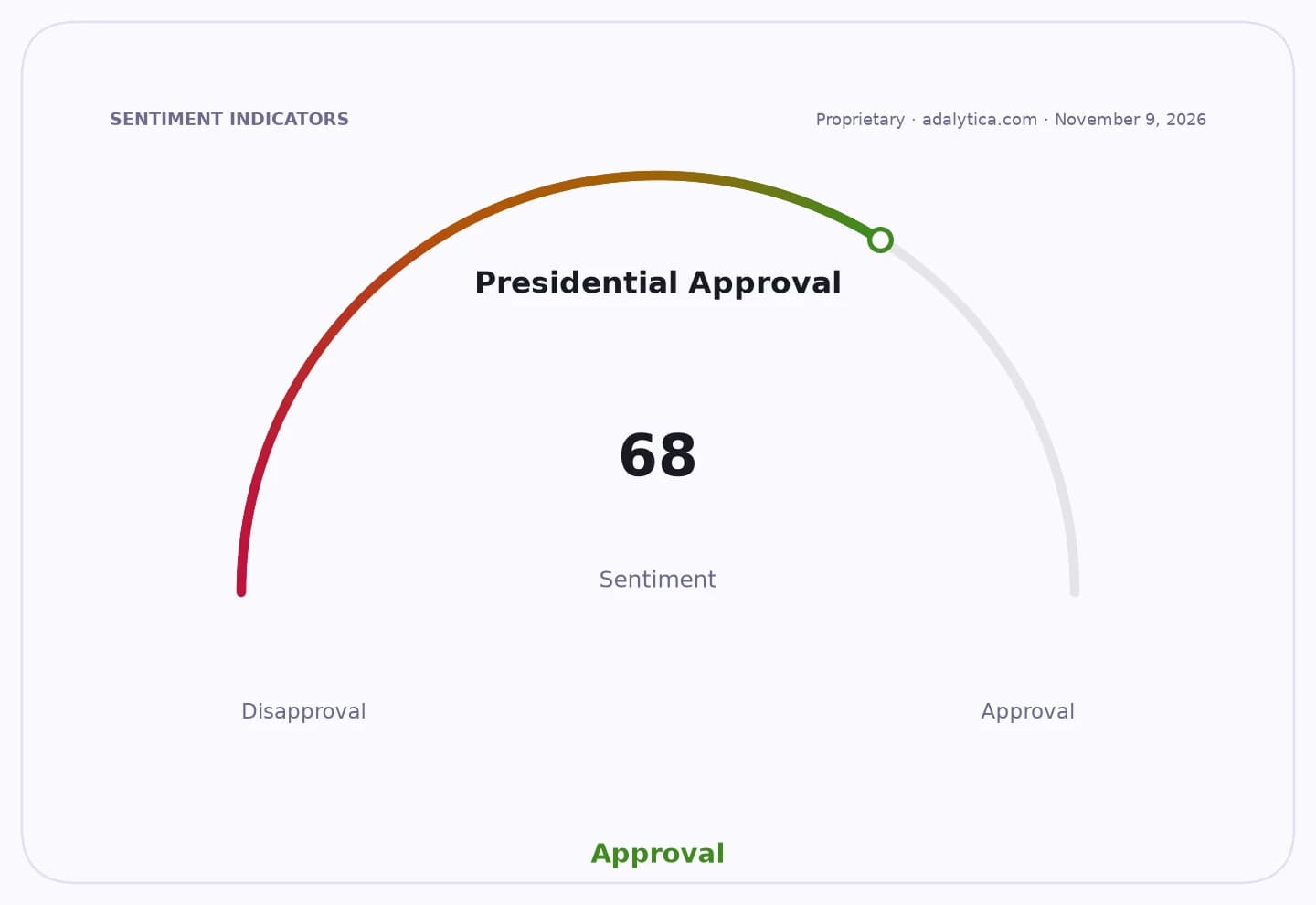
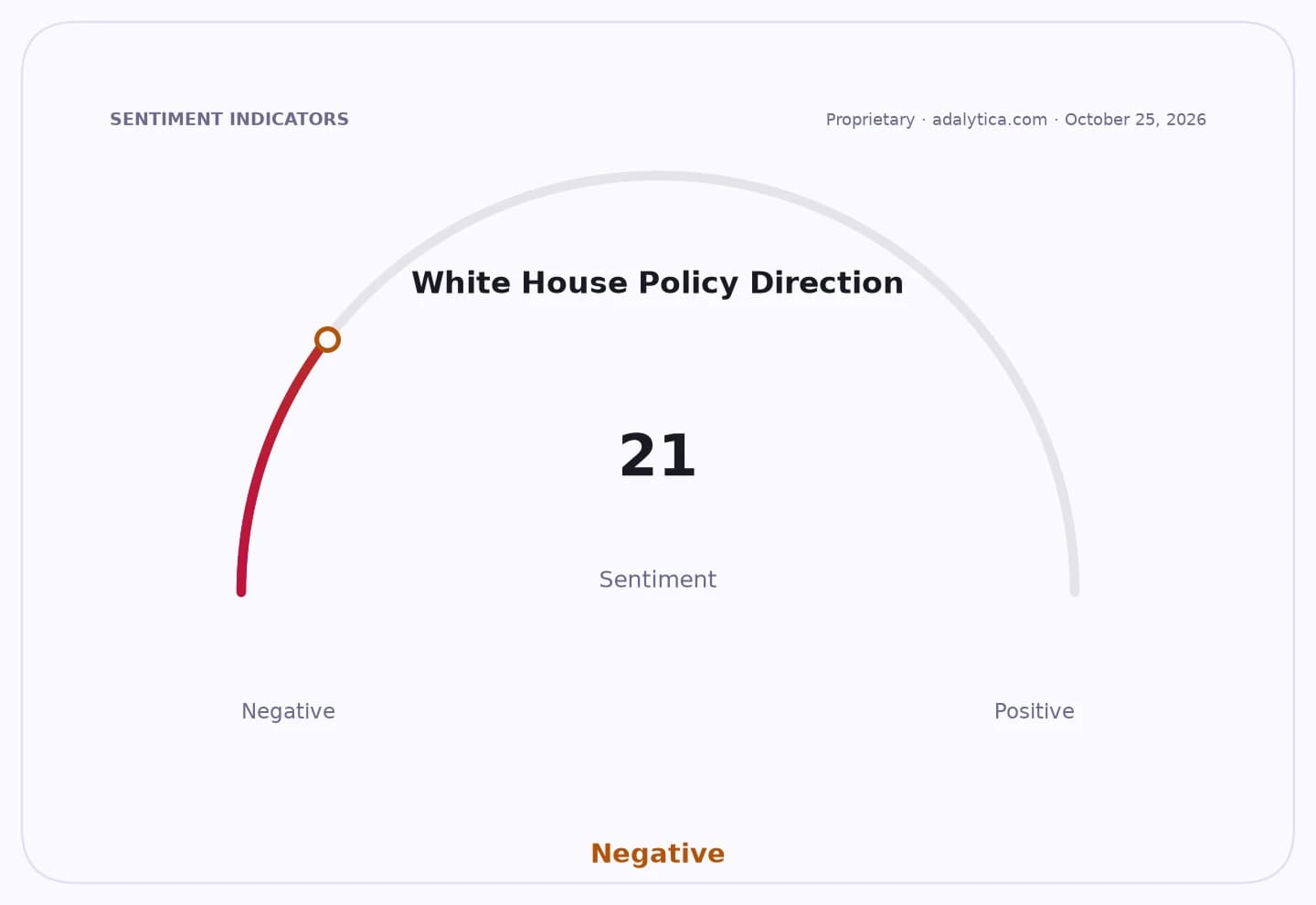
Sentiment Indicators
That matters because accountability rhetoric can shape policy, market confidence and expectations around rule of law, even when Congress lacks the power to force outcomes. Rep. Robert Garcia has already sent document-retention letters to nearly a dozen Trump allies and family members, including Donald Trump Jr., Jared Kushner, Susie Wiles, Stephen Miller, Todd Blanche and Kristi Noem, signaling that a first round of oversight battles is coming.
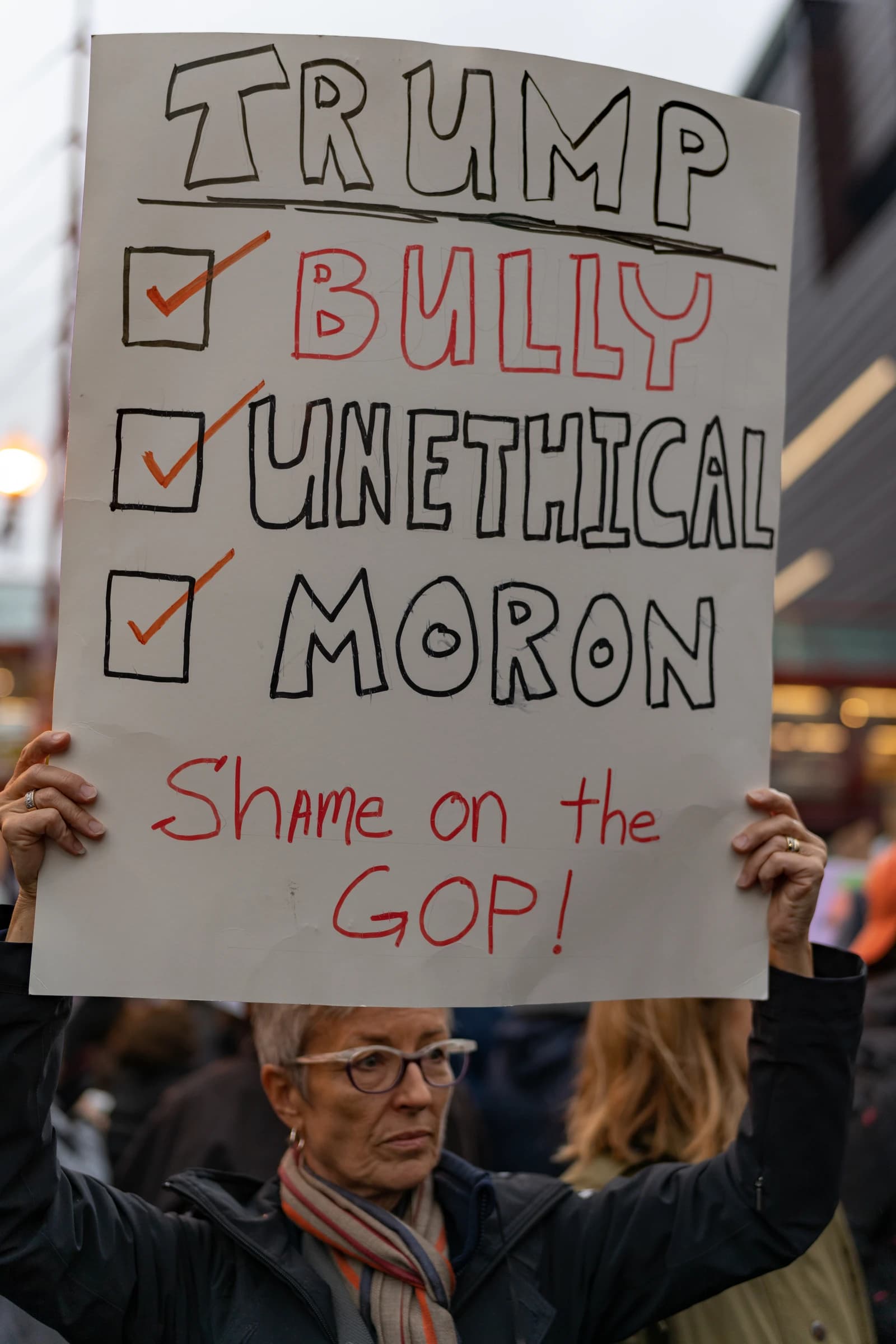
The constraint is political and legal. Many of those called to testify could invoke the Fifth Amendment or simply refuse to cooperate, while a Trump-led Justice Department would be unlikely to compel testimony. Pardons could also blunt the impact of any criminal exposure. For investors, that means the real risk is not a wave of immediate prosecutions, but a prolonged period of congressional disruption, headline risk and policy uncertainty.
The market backdrop underscores that tension. Adalytica’s US Presidential Approval Sentiment gauge sits at 93, labeled “Extreme Greed,” after a 75-point jump over the past week, while its Global Stability Sentiment gauge is at 25, or “Fear,” reflecting a fragile political and geopolitical environment. The S&P 500 signal has also been volatile, with its sentiment reading at 28 and awareness at 73, suggesting markets remain alert to Washington risk even as broader risk appetite fluctuates.
Democrats say the investigations are meant to do more than punish individuals. Sen. Elissa Slotkin has argued the real objective is to “Trump-proof” government by closing loopholes that let future presidents enrich themselves or politicize federal power. That is the part with the clearest economic significance: tighter ethics rules, stronger oversight and more durable guardrails could affect how agencies regulate companies, distribute contracts and police conflicts of interest for years.
Still, the gap between voter expectations and congressional reality is likely to define the next phase of the fight. Democrats can expose misconduct, embarrass Cabinet officials and lay the groundwork for legislation, but they are far less likely to deliver the kind of perp walks some voters may be expecting. The next catalyst is likely to come from committee subpoenas, testimony fights and any signs that oversight action is turning into broader legislation.
| Entity | Gains | Losses |
|---|---|---|
| Democrats | ▲Oversight leverage | ▼Perceived if prosecutions stall |
| Trump allies and family | ▲Delay through legal defenses | ▼Exposure to hearings and subpoenas |
| Investors | ▲Clarity on policy risk if rules tighten | ▼Headline volatility and Washington uncertainty |
| Voters seeking accountability | ▲Government reform efforts | ▼Immediate criminal outcomes |