Pressure is building on President Donald Trump to resume strikes on Iran just as U.S. military planners warn that keeping forces on heightened alert into the new year could erode readiness and stretch resources across the Middle East.
Trump Iran strike risk lifts oil and defense shares
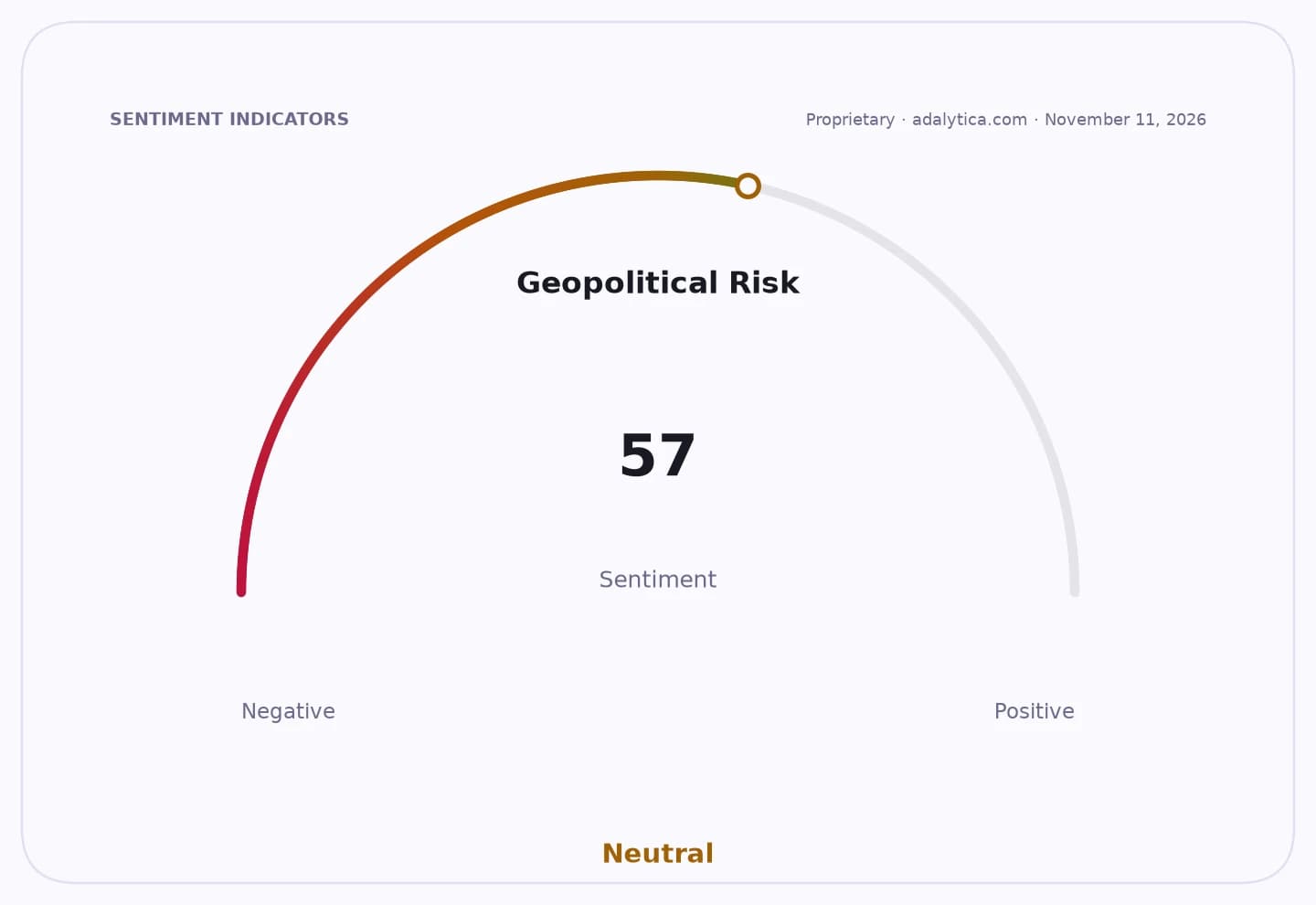
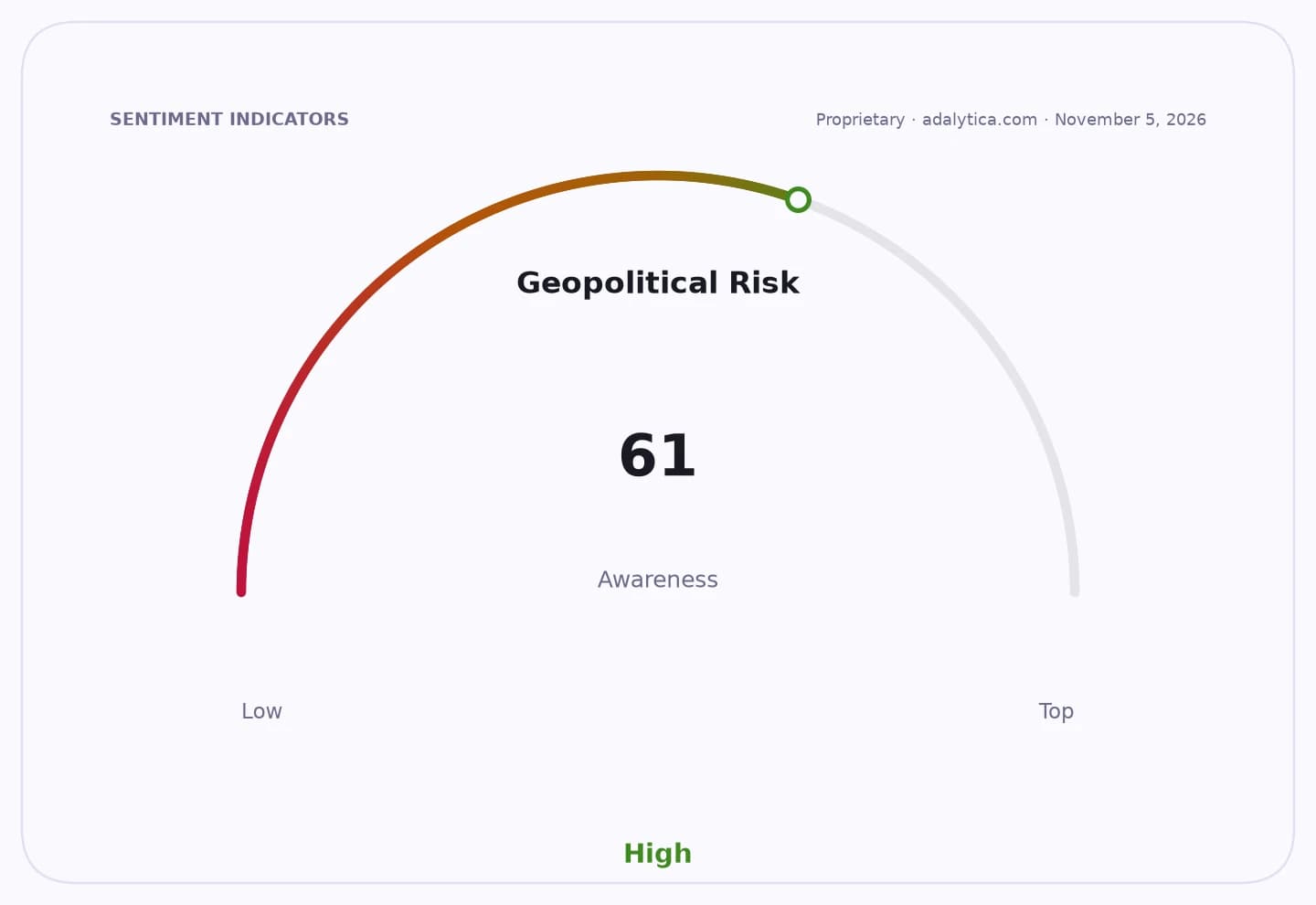
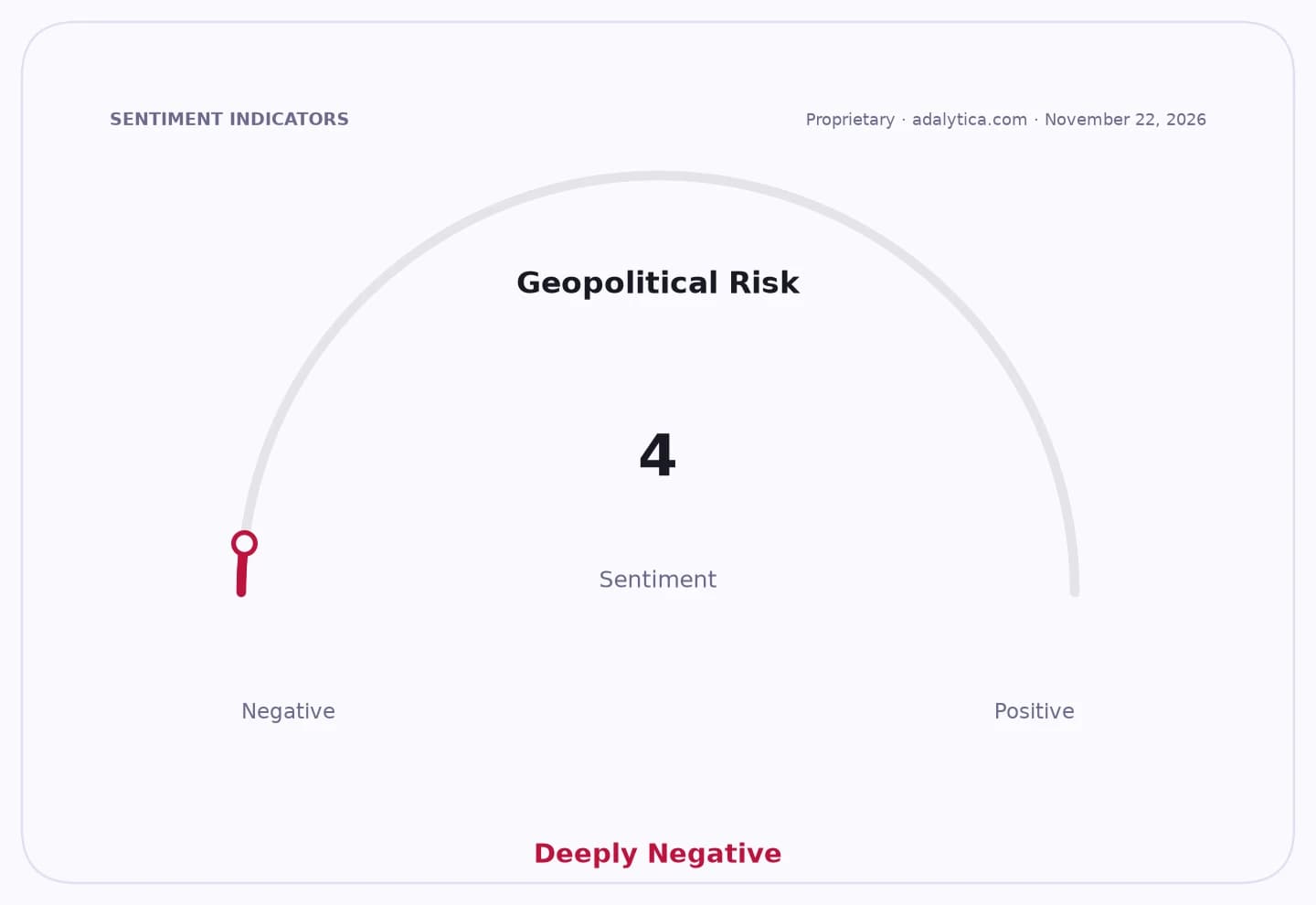
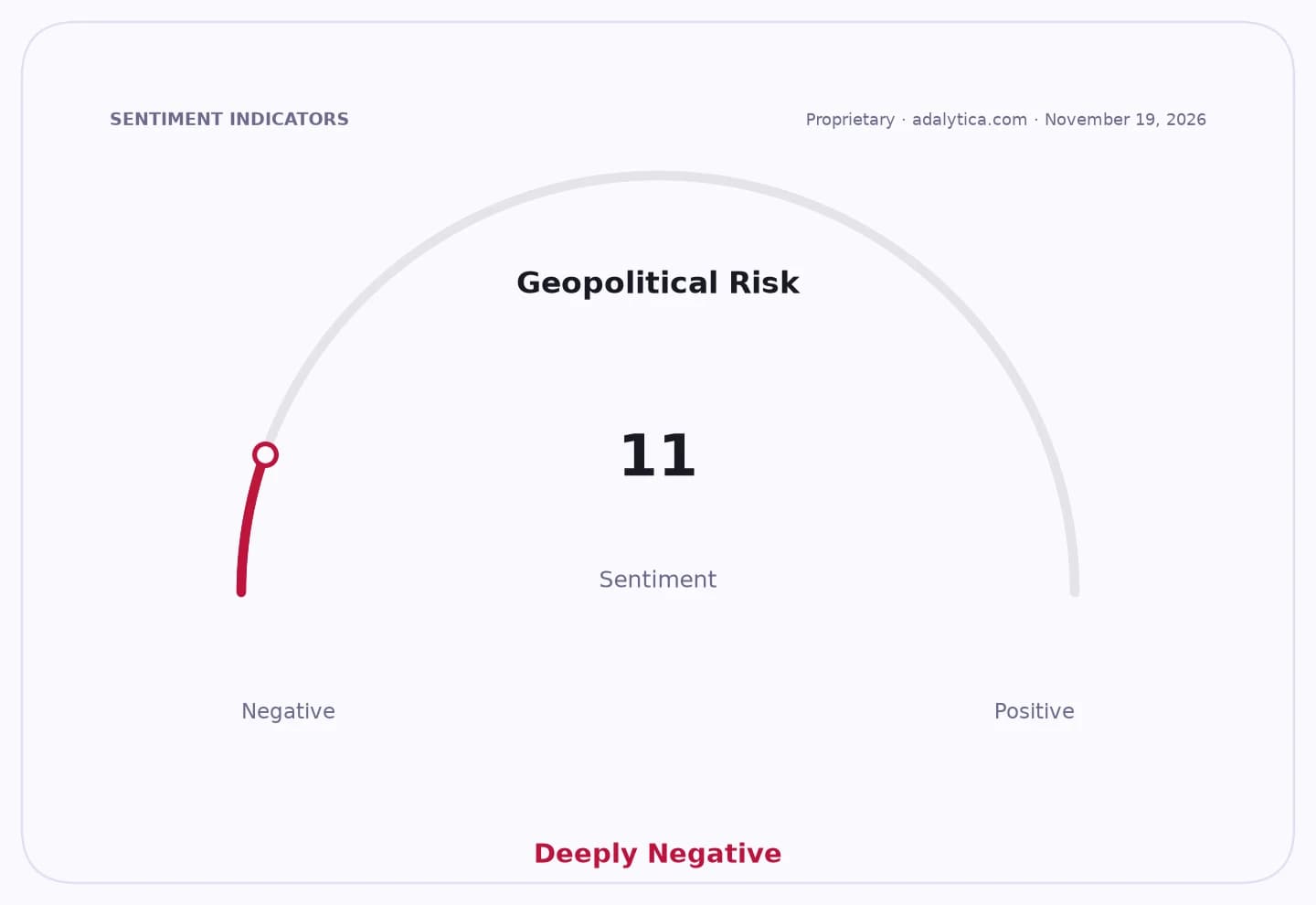
Geopolitical Risk
The risk for investors is straightforward: a wider conflict would threaten oil flows through the Strait of Hormuz, lift energy prices and add another layer of geopolitical stress to already fragile markets. Crude traders, defense contractors and the broader dollar-rates complex are all exposed if Washington moves from deterrence back to active bombardment.
Sentiment Indicators
Geopolitical Risk
The Financial Times reported that hardliners in Washington and Israel are urging Trump to restart the campaign against Tehran, while U.S. Central Command has cautioned that an extended military buildup beyond the end of December could wear down combat capability. The newspaper said planners also fear a Democratic-led Congress could push for tighter oversight and lower defense spending, making a long-running Iran operation politically and financially harder to sustain.
Trump himself added to the market focus on Friday by saying he would be prepared to repeat military action and that the U.S. cannot allow Iran to obtain a nuclear weapon. That keeps the prospect of fresh strikes on the table even after earlier suggestions that the conflict was effectively over.
The backdrop is a region already on edge, with attacks on shipping in the Strait of Hormuz at record levels and tanker fires underscoring the threat to global energy transit. Any escalation there would likely flow quickly into oil benchmarks, shipping costs and inflation expectations.
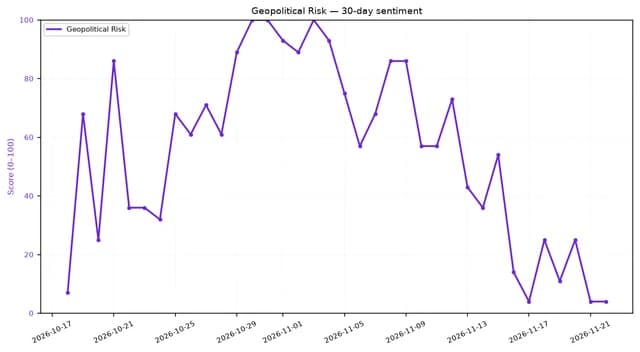
Oil futures have already been volatile, with Brent and U.S. crude swinging sharply this year on conflict risk and supply concerns. Adalytica’s Global Stability Sentiment gauge is at 4, in “Extreme Fear,” while its U.S. dollar trade signal also shows “Extreme Fear,” reflecting the market’s sensitivity to geopolitical shocks.
Defense stocks could benefit from a prolonged standoff if Washington and allies boost spending on missiles, air defense and force protection. But a stretched deployment also raises the chance of congressional pushback, higher fiscal costs and more pressure on the Pentagon’s operational tempo.
The next trigger is whether Trump backs the hawkish push with new orders or turns back toward diplomacy. Traders will be watching Middle East headlines, crude prices and any sign that Congress or the Pentagon is trying to slow the march toward another round of strikes.
| Entity | Gains | Losses |
|---|---|---|
| Defense contractors | ▲More orders, higher spending | ▼Oversight risks, budget pushback |
| Oil bulls | ▲Higher risk premium | ▼ |
| Iran | ▲ | ▼Military pressure, infrastructure risk |
| U.S. military readiness | ▲ | ▼Longer deployment strain |