President Donald Trump spent Wednesday bragging about a new White House ballroom and dodging blame for a Republican midterm drubbing that stripped his party of congressional control, underscoring a political setback that could weaken his leverage on taxes, spending and regulation.
Trump Midterm Loss Cuts GOP Policy Leverage
The unusual tableau matters economically because a divided Washington now makes big-ticket policy moves harder to pass, raising the odds of legislative gridlock just as voters cited high prices and corruption as central complaints. With Democrats seizing the upper hand in Congress, Trump’s ability to push an aggressive domestic agenda, extend tax cuts or secure fresh funding for priorities such as border security and infrastructure faces a sharper check.
Sentiment Indicators
Trump’s response was to spotlight the ballroom construction, which required demolishing the East Wing and has become a symbol of his detached post-election posture. He spoke for nearly 20 minutes at the site, describing the venue as “the safest place in Washington” and boasting about details ranging from underground kitchens to a five-story subterranean footprint.
The political optics are costly for investors because they reinforce uncertainty around the policy backdrop at a time when markets are sensitive to fiscal deficits, tariff risk and executive-branch shifts on antitrust, energy and trade. The AP Voter Poll found about two-thirds of voters said Trump did not have the right priorities, a warning sign for Republicans heading into the next round of budget fights and regulatory battles.
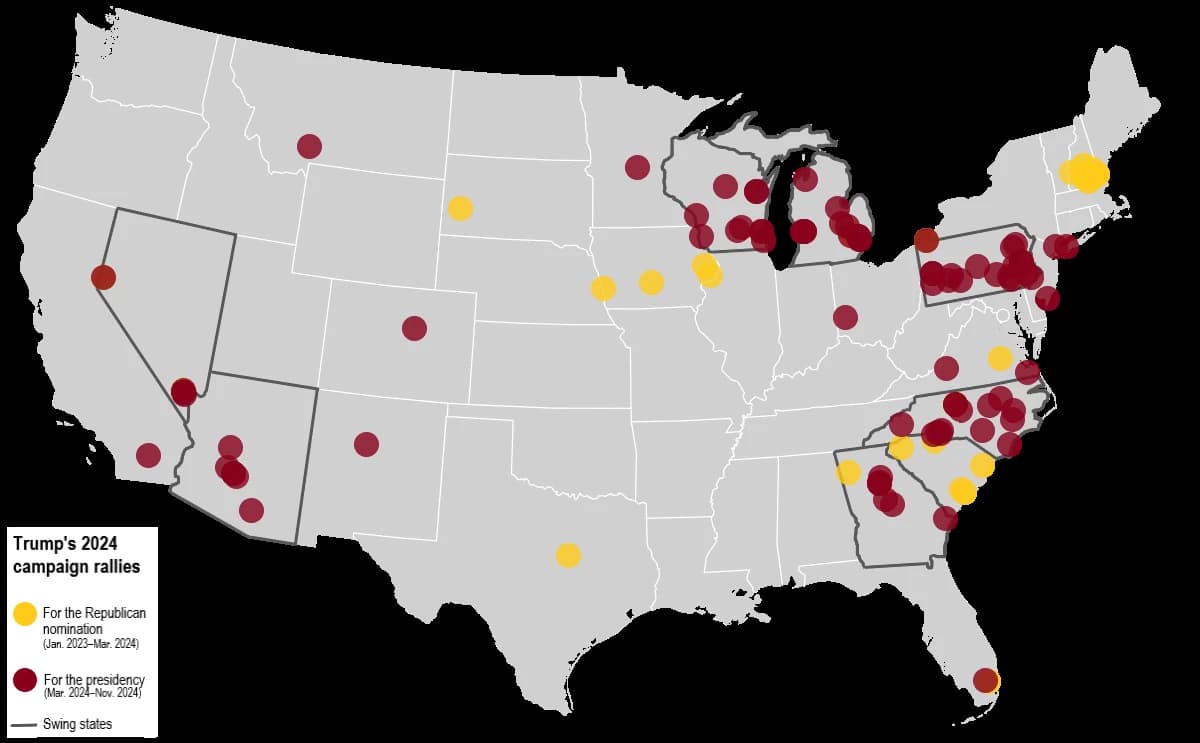
Trump also declined to accept much responsibility for the losses, saying, “If I were on the ballot I would have won,” and arguing that his rallies failed to “transfer love” to candidates. His allies lost in key states, including Texas, while his post-midterm blame game echoed the pattern he used after Republicans lost the House in 2018.
For investors, the main takeaway is that the election result raises the premium on policy volatility while reducing the odds of sweeping Republican legislative wins over the next two years. The next catalyst is how quickly party leaders regroup and whether the new congressional balance slows, dilutes or derails Trump’s fiscal and regulatory agenda.
| Entity | Gains | Losses |
|---|---|---|
| Democrats | ▲Congressional control | ▼None immediate |
| Trump White House | ▲Visibility for ballroom project | ▼Political credibility |
| Republican Party | ▲Limited unity around blame | ▼Midterm momentum, policy leverage |
| Investors | ▲More clarity on divided government | ▼Fewer pro-GOP policy bets |