European natural gas prices are sliding fast, with the benchmark TTF contract in Amsterdam approaching 81 euros per megawatt hour as weaker demand in Asia eases pressure on Europe’s winter supply balance.
TTF gas prices fall as Asian demand eases
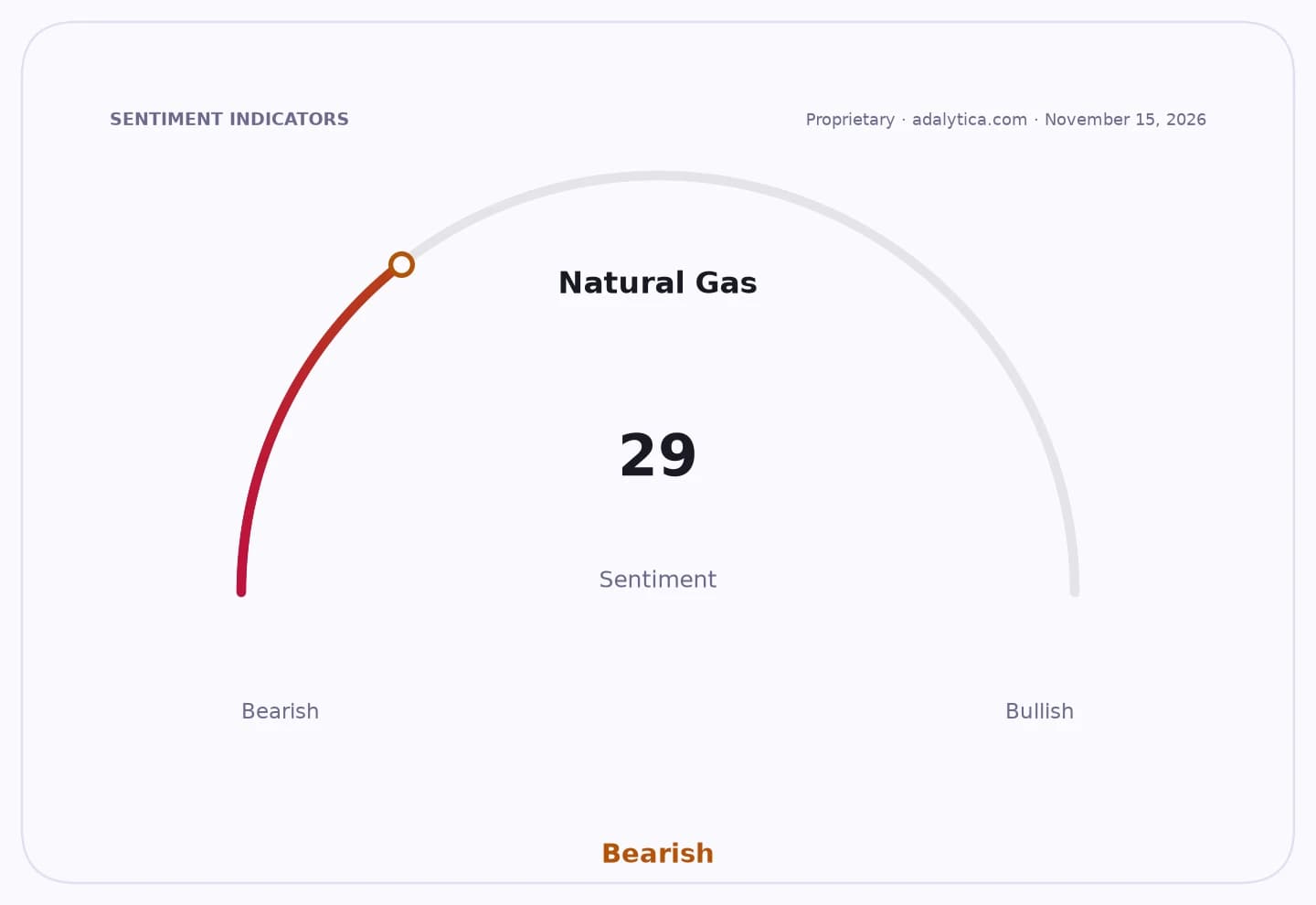
Natural Gas
That matters because gas is still the swing fuel for Europe’s power grid and industrial base. A move back toward 81 euros from 82.89 euros, or 81.26 euros in the December future, does not just reflect a daily market wobble — it signals that the region is entering the heating season with a little more breathing room than traders had feared. For households, utilities and energy-intensive manufacturers, every euro lower helps cap the pass-through into power bills, operating costs and inflation.
Sentiment Indicators
The immediate driver is a drop in Asian demand, which is helping keep European supplies stable. When cargoes that might otherwise have been pulled east stay available to Europe, the market relaxes. That is exactly the kind of second-order shift investors should watch: not a supply shock, but a demand miss elsewhere that improves Europe’s relative balance and undercuts the urgency for panic bidding.
For investors, the setup is two-sided. Lower gas prices are a tailwind for European consumers and industrials, particularly chemicals, metals and heavy manufacturing that have spent years battling energy-cost volatility. The flip side is weaker near-term pricing power for gas producers and LNG-linked exporters, while power utilities and gas importers may see margin relief. The move also reinforces the broader disinflation trade in Europe, which can support rate-sensitive assets if energy remains contained.
Technically, the market has been under pressure for a while, and the latest drop keeps sentiment cautious. Adalytica’s natural gas trade signals show neutral sentiment but extreme fear in awareness, a combination that often appears when traders are waiting for confirmation that a move lower can persist. U.S. gas futures are not telling a dramatically different story: NG=F has drifted higher in the latest sessions, but remains near the middle of its recent range, while U.S.-listed UNG has also rebounded. That divergence suggests Europe-specific fundamentals, not a global gas shortage, are steering the TTF move.
The bigger narrative is that Europe’s gas market is once again being defined by marginal shifts in global LNG flows. If Asia stays soft, Europe gets a reprieve. If winter demand in Europe turns colder than expected or geopolitical supply risks reassert themselves, the rally can reverse quickly. For now, though, the market is pricing a more comfortable start to the heating season — and that is a meaningful change for energy stocks, industrial margins and inflation expectations.
The investment takeaway is clear: the market is underestimating how much a softer Asian pull on LNG can support European risk assets while pressuring gas-linked pricing. Stay constructive on European industrials and consumer-sensitive assets that benefit from cheaper energy, and be selective on gas-exposed names if TTF keeps drifting lower.
| Entity | Gains | Losses |
|---|---|---|
| European industrials | ▲Lower input costs | ▼— |
| European households | ▲Easier winter bills | ▼— |
| LNG exporters / gas sellers | ▲— | ▼Softer pricing power |
| Utilities and importers | ▲Margin relief | ▼Higher-cost inventory pressure |