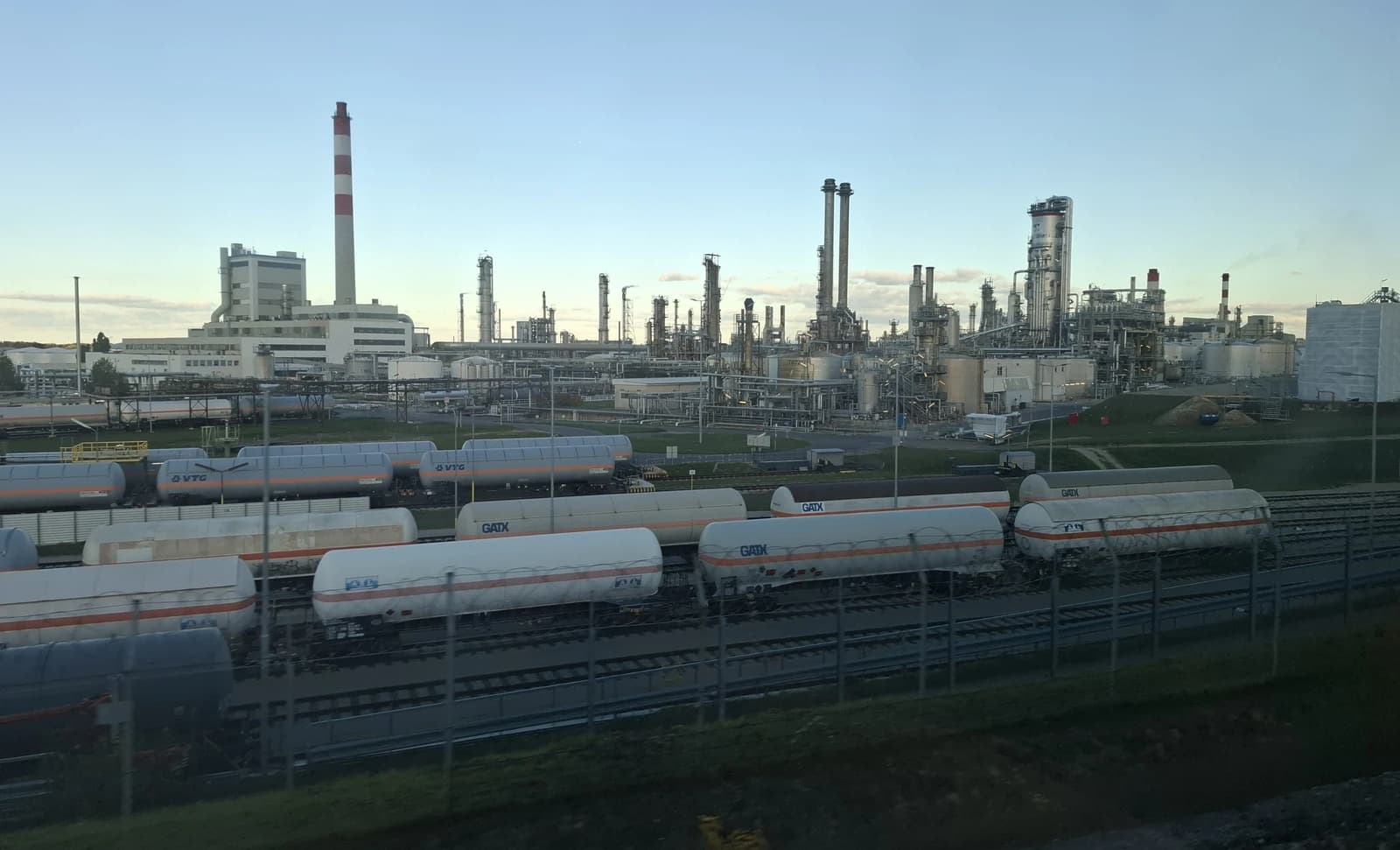
Europe has already pulled almost 3 billion cubic meters of gas from storage, tightening the market just as the region heads deeper into the winter season and keeping pressure on prices, utilities and industrial users.
Europe Gas Storage Drawdown Tightens Winter Market
Natural Gas
The drawdown matters because underground storage is Europe’s main buffer against cold snaps, pipeline disruptions and higher heating demand. With German storage around 61% and operators warning of bottlenecks, the region has less room to absorb a prolonged freeze without forcing more imports at higher spot prices.
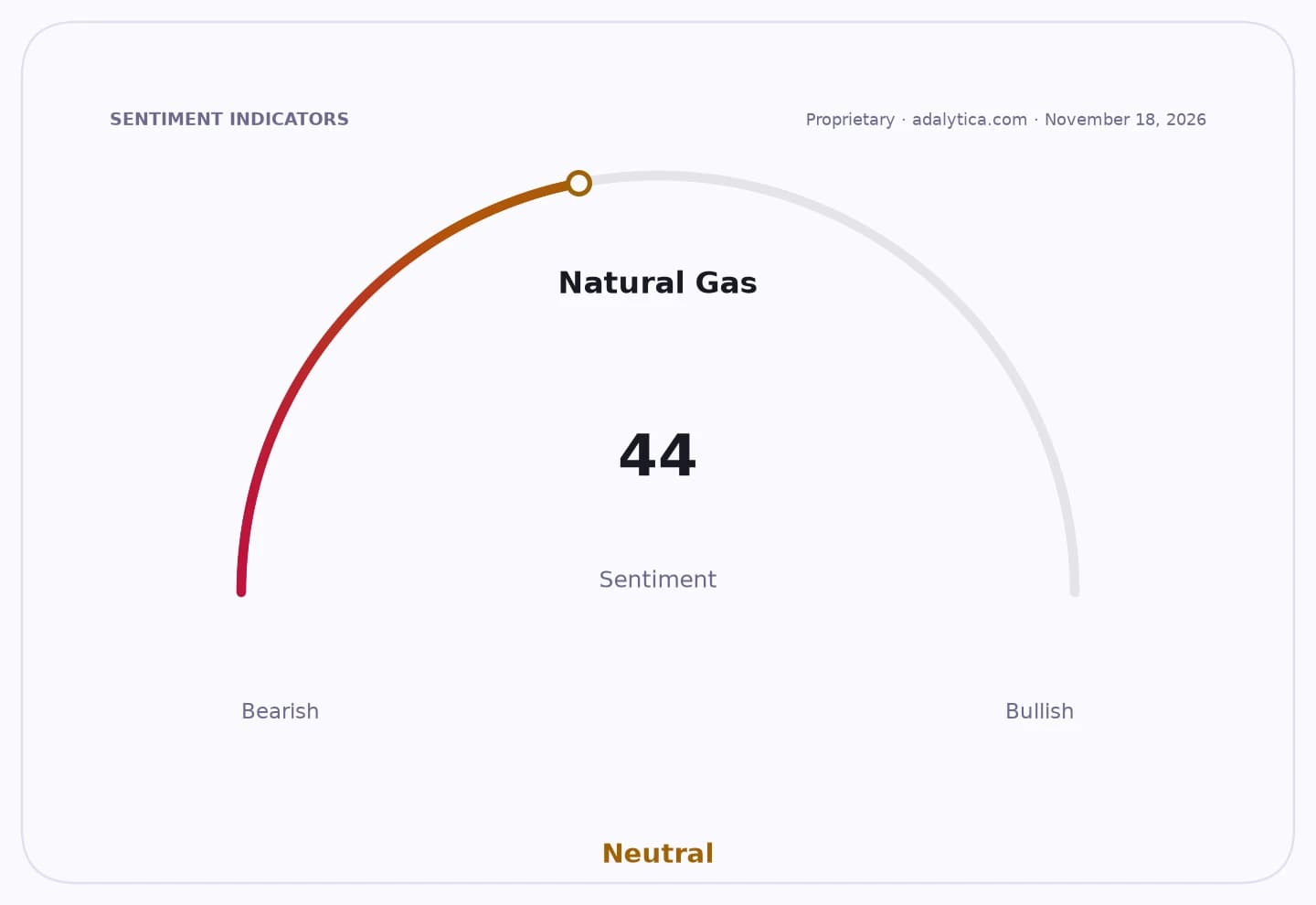
Sentiment Indicators
Natural gas prices have already been volatile, with the U.S. benchmark roughly around $5.63 per million British thermal units on Nov. 13 after surging as high as $14.20 earlier this year. The move underscores how quickly the market can reprice when storage trends turn tight and traders start anticipating a heavier call on liquefied natural gas cargoes and pipeline flows.
The broader energy tape is also sensitive to the tightening backdrop. The U.S. energy sector ETF XLE was trading near 64.96 on Nov. 13 after a sharp pullback from late-October highs above 70, while the natural gas ETF UNG was at 10.15, below its 200-day moving average of 11.02, showing that sentiment remains fragile even as winter demand risk builds.
Adalytica’s Natural Gas Market Trade Signals show sentiment at 29, labeled fear, with awareness still neutral, highlighting how quickly traders have turned cautious. That leaves European gas prices, storage withdrawals and weather forecasts as the key catalysts for the next leg of the trade.
| Entity | Gains | Losses |
|---|---|---|
| European gas suppliers | ▲Higher winter demand | ▼Storage scarcity risk |
| LNG exporters | ▲Stronger cargo demand | ▼Shipping and pricing volatility |
| Utilities and industrial users | ▲None | ▼Higher input costs |
| Natural gas bulls | ▲Winter tightness thesis | ▼If mild weather cuts demand |