U.S. natural gas prices are becoming less domestic and more global as record LNG exports and a wave of new terminals pull Henry Hub closer to benchmarks in Europe and Asia, raising the odds that overseas shocks will increasingly reach American fuel bills.
U.S. LNG exports push Henry Hub toward global pricing

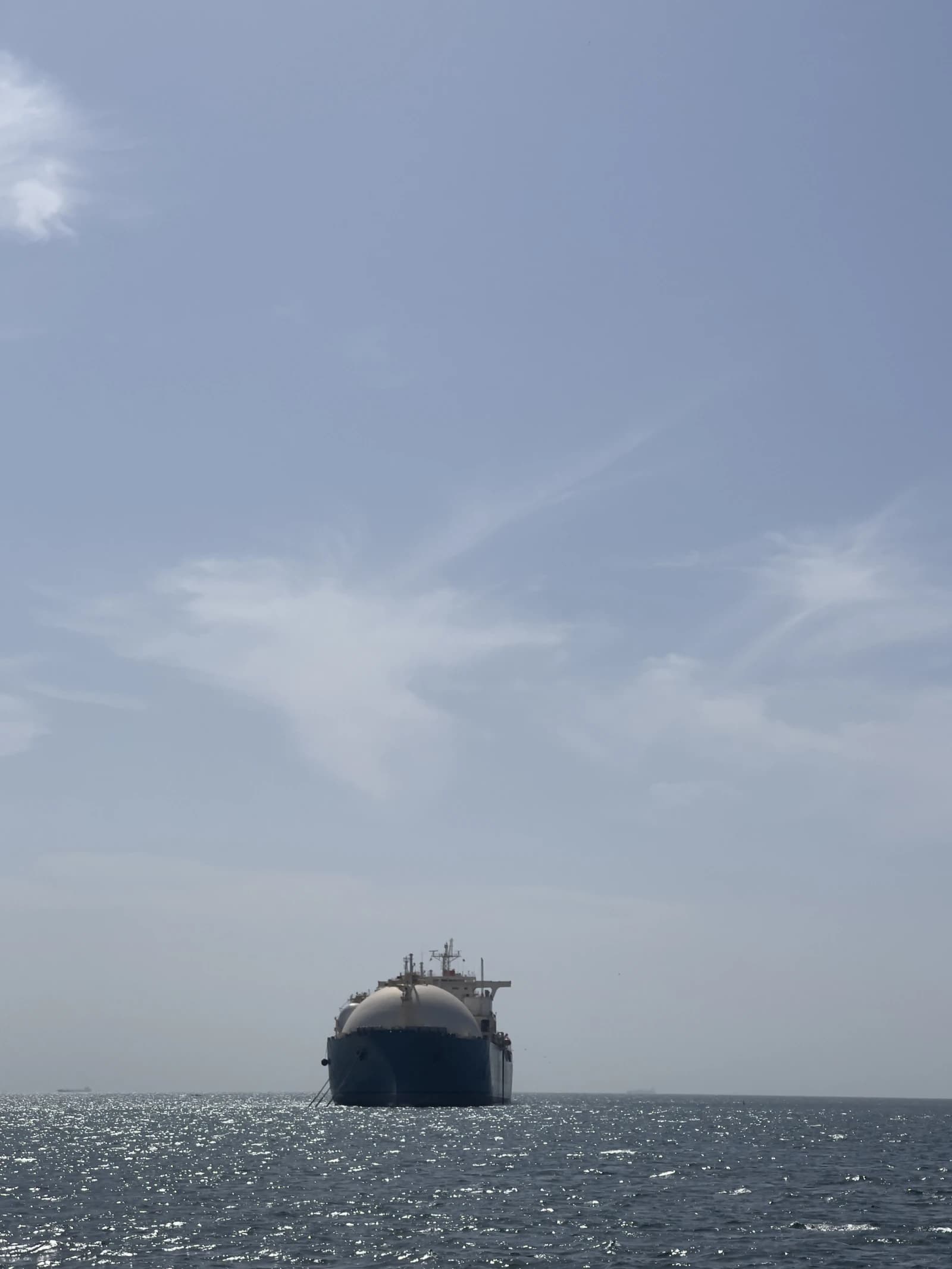
Discovery Energy’s new outlook says U.S. LNG exports hit a record 15.1 billion cubic feet a day in 2025 and are forecast to climb to 17.6 Bcf/d in 2026, meaning roughly one in six cubic feet of U.S. gas now leaves the country as liquefied exports. That shift matters because it changes the price-setting mechanism for the largest gas market in the world: instead of being driven mainly by domestic supply and weather, Henry Hub is increasingly linked to what buyers abroad are willing to pay.
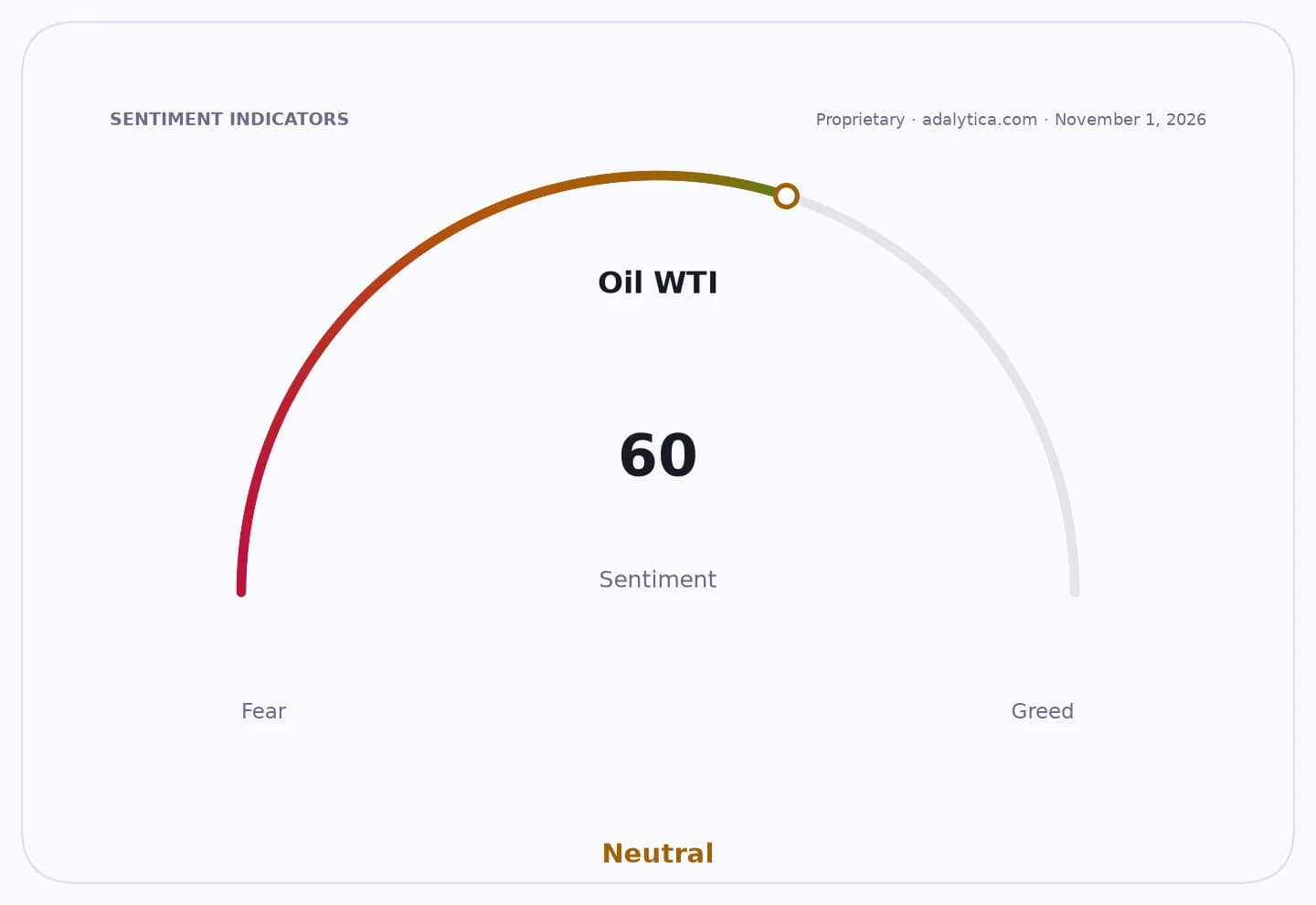
Sentiment Indicators
The report argues the economic consequence is a structural tightening of the domestic gas balance. As export feedgas rises, more U.S. production is exposed to global price spreads, and those spreads are still wide enough to support new liquefaction investment. On Oct. 13, Henry Hub traded at $3.12 per million British thermal units, while Europe’s TTF benchmark was $28.20 and Asia’s JKM was $26.09, underscoring why U.S. cargoes keep moving overseas. Flexible contracts tied to Henry Hub let exporters capture that arbitrage while keeping domestic gas tied, at least partly, to world demand.
For investors, the implication is a longer-duration earnings and valuation story for LNG exporters, pipeline operators and gas producers, but also greater volatility risk for industrial buyers and utilities. The outlook says sanctioned projects could nearly double U.S. LNG export capacity to about 237 mtpa by 2031 from roughly 122 mtpa today if they come online on schedule, with about 42 mtpa due in 2027 alone. That would deepen demand for gas molecules, pipelines and shipping, benefiting companies with exposure to liquefaction and feedgas volumes, while squeezing consumers that rely on stable input costs.
The thesis is reinforced by geopolitics. Europe’s retreat from Russian gas after 2022, the EU’s planned ban on Russian LNG under long-term contracts from Jan. 1, 2027, China’s tariff-driven pullback from direct U.S. purchases and the 2026 Iran war have all redirected cargoes and helped support the LNG build-out. Discovery Energy also says the price cap on domestic gas is loosening as each new export train comes online, with as much as a fifth of U.S. production potentially tied to global LNG markets by 2030.
That raises a split verdict for the sector. Bullish investors can point to a durable demand tailwind for U.S. LNG, especially as new plants such as Port Arthur, Rio Grande, Golden Pass and CP2 add capacity. Bears may focus on the risk that the market is baking in too much of a smooth start-up path, while long-dated forecasts remain far apart: futures and some forecasters cluster around $3.25 to $3.70 for later years, but the Energy Information Administration sees $5 to $6 in the early 2030s.
For gas consumers, the key message is that hedging can no longer be based on a purely U.S. weather story. Discovery Energy says companies should treat Henry Hub as partly global, separate commodity, regional basis and delivery charges, and plan for volatility rather than averages. That is becoming harder to ignore as LNG turns a once-domestic benchmark into a price increasingly set by events in Europe, Asia and the Gulf.
| Entity | Gains | Losses |
|---|---|---|
| U.S. LNG exporters | ▲Wider arbitrage, higher volumes | ▼Capacity execution risk |
| U.S. gas producers | ▲Stronger demand for feedgas | ▼More price volatility |
| Industrial gas buyers | ▲Better hedging visibility | ▼Higher input-cost risk |
| European and Asian buyers | ▲More supply diversification | ▼Compete for U.S. cargoes |